


Introduction
Lake Ashi at a Glance
| Detail | Information |
|---|---|
| Location | Hakone, Kanagawa, Japan |
| Also known as | Lake Ashinoko |
| Type | Volcanic caldera lake |
| Famous for | Mount Fuji views, Hakone Shrine and lake cruises |
| Best experience | Hakone sightseeing cruise |
| Recommended time | 2–4 hours |
| Best for | Couples, photographers, families and nature lovers |
| Ideal combination | Lake Ashi + Hakone Shrine + Owakudani + Hakone Ropeway |
Why Is Lake Ashi Famous?
Lake Ashi History and Significance
Lake Ashi holds both geological and cultural importance, making it a key attraction in Hakone. Formed by volcanic activity, it offers a unique caldera lake experience. The lake is also closely tied to Japanese spirituality, especially through nearby shrines. Combined with its connection to Mount Fuji views, it represents a powerful blend of natural beauty and cultural heritage.
Formation as a Volcanic Caldera Lake
Lake Ashi was formed over 3,000 years ago following volcanic eruptions in the Hakone region. This created a caldera lake, giving it its unique shape and depth. The surrounding volcanic landscape adds to its dramatic scenery, making it one of Japan’s most fascinating natural formations. Visitors can experience a true caldera lake environment while enjoying peaceful and scenic views.
Cultural Importance and Hakone Shrine
The lake is closely connected to Hakone Shrine, a historic spiritual site located along its shores. The famous Torii Gate of Peace stands partially in the water, creating an iconic and symbolic view. This connection highlights the lake’s cultural significance and its role in Japanese religious traditions and spiritual travel experiences.
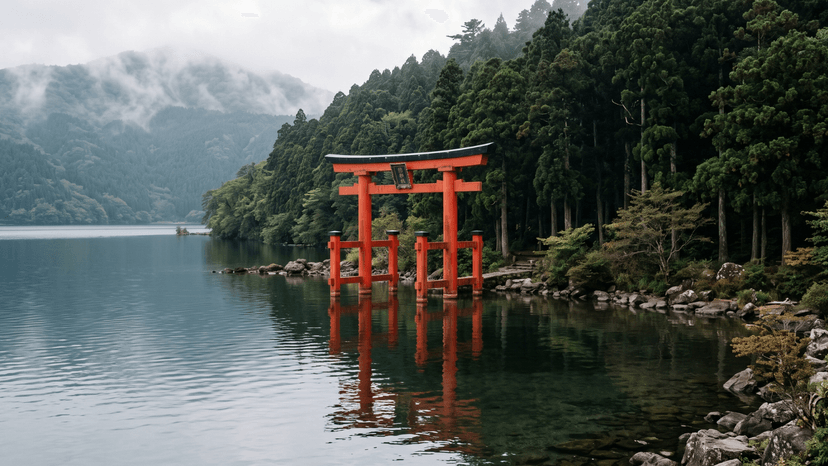
The famous Heiwa no Torii (Torii Gate of Peace) at Hakone Shrine standing gracefully along the shores of Lake Ashi.
Connection to Mount Fuji Views
On clear days, Mount Fuji can be seen from Lake Ashi, creating one of Japan’s most iconic landscapes. The calm water often reflects the mountain, producing stunning mirror-like views. These reflection views make Lake Ashi a popular destination for photography and sightseeing, especially for visitors seeking classic Mount Fuji scenery combined with a peaceful lakeside setting.
Things to Do Around Lake Ashi
Lake Ashi offers a variety of experiences combining nature, culture, and scenic beauty. Visitors can enjoy cruises, explore historic shrines, and walk along peaceful lakeside trails. With stunning views of Mount Fuji and surrounding mountains, the area provides a perfect mix of relaxation and adventure, making it a must-visit destination in any Hakone travel guide.
- Take a scenic sightseeing cruise
- Ride the Hakone Pirate Ship
- Visit Hakone Shrine and torii gate
- Walk lakeside and forest trails
Lake Ashi Sightseeing Cruise
The Hakone Sightseeing Cruise is one of the most popular ways to explore the lake. This cruise connects key ports and offers panoramic views of the surrounding landscape. The Lake Ashi sightseeing cruise experience allows visitors to enjoy scenic volcanic lake views, fresh air, and unique perspectives of Mount Fuji, making it a highlight of any Hakone itinerary.
Hakone Pirate Ship Experience
The Hakone Pirate Ship provides a unique and memorable boat tour across Lake Ashi. Designed like a historic pirate ship, it adds a fun and immersive element to sightseeing. This Japanese pirate ship cruise offers comfortable seating and open decks, allowing visitors to enjoy panoramic views of the lake and surrounding mountains in a distinctive and entertaining way.
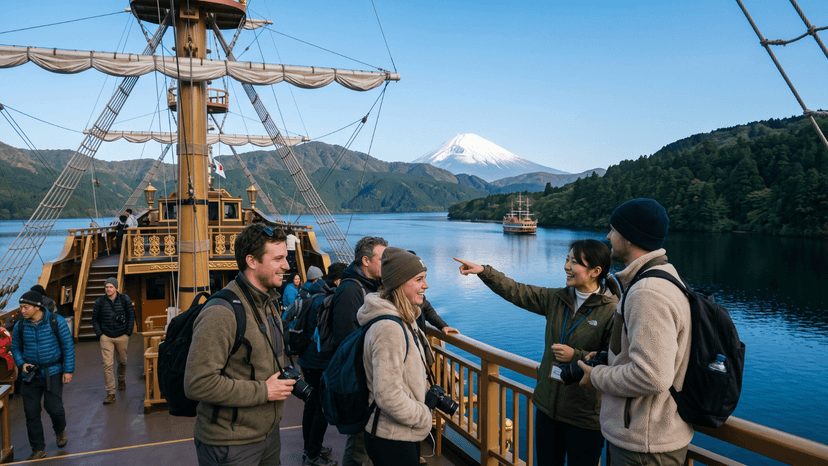
The joy of witnessing Mount Fuji from the upper deck of a Hakone Pirate Ship—a quintessential moment on Lake Ashi.
Visit Hakone Shrine and Torii Gate
A visit to Hakone Shrine offers a peaceful lakeside shrine experience surrounded by forest and water. The iconic Torii Gate of Peace standing in the lake creates one of Japan’s most photographed scenes. This spot combines spiritual significance with natural beauty, making it a must-see location for visitors exploring Lake Ashi.
Walk Lake Ashi Trails
Exploring Lake Ashi walking trails allows visitors to experience the area’s peaceful lakeside atmosphere. These trails offer scenic viewpoints, forest paths, and access to historic routes like the Old Tokaido Road. Walking around the lake provides a relaxing way to enjoy nature, capture photographs, and discover hidden spots away from busy tourist areas.
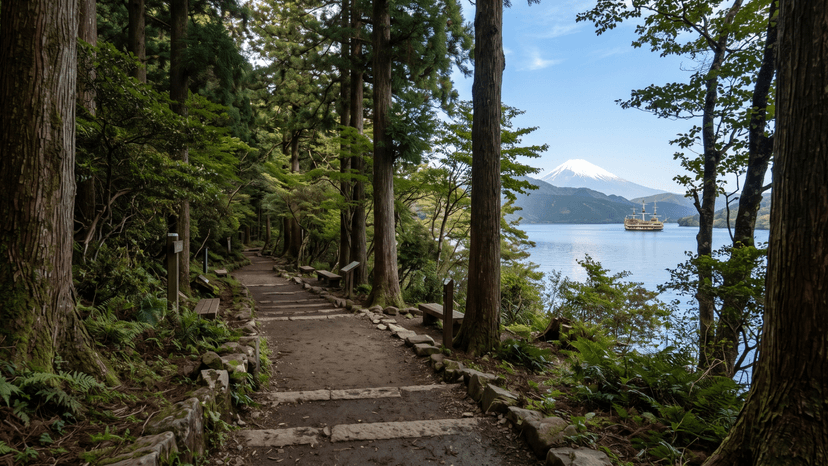
Walking along the historic forest paths and Old Tokaido cedar trails bordering Lake Ashi.
Why Visit Lake Ashi?
Lake Ashi is worth visiting because it brings several of Hakone's best experiences together in one area. You can cross the lake by sightseeing boat, visit a historic shrine, photograph the famous torii gate and, on clear days, see Mount Fuji in the distance. It is also an important part of the Hakone Loop, meaning visitors can easily combine Lake Ashi with Owakudani, the Hakone Ropeway and other attractions in a single day. For first-time visitors to Hakone, this combination makes Lake Ashi one of the easiest places to experience the area's scenery, culture and volcanic landscape in one trip.
Best Viewpoints of Lake Ashi
Lake Ashi offers some of the most scenic viewpoints in Hakone, combining lake, mountains, and occasional Mount Fuji views. From elevated parks to scenic drives, each location provides a unique perspective of this volcanic lake. These viewpoints are perfect for photography, relaxation, and enjoying the peaceful lakeside atmosphere that defines Hakone sightseeing highlights.
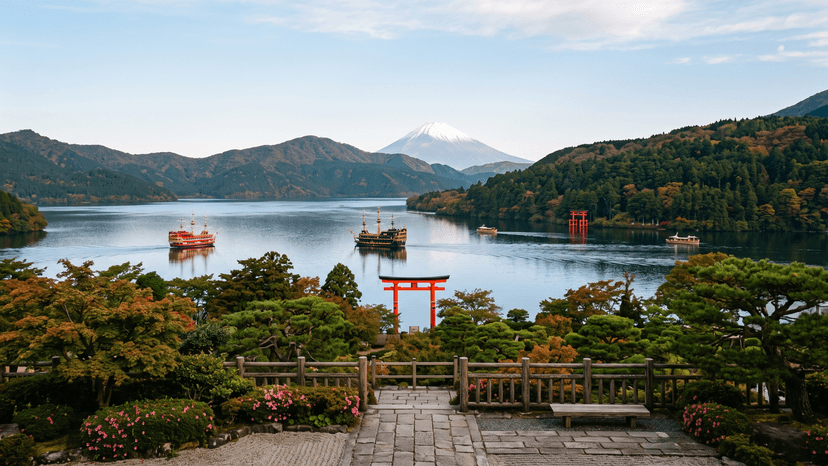
A panoramic scenic overlook from Onshi Hakone Park offering breathtaking vistas of Lake Ashi and Mount Fuji.
Onshi Hakone Park Views
Onshi Hakone Park is one of the best places for panoramic lake views. Located on a peninsula, it offers elevated vantage points overlooking Lake Ashi and surrounding mountains. On clear days, visitors may also spot Mount Fuji. The park’s walking paths and open spaces make it ideal for relaxing while enjoying wide scenic landscapes.
Narukawa Art Museum Viewpoint
The Narukawa Art Museum viewpoint is famous for its stunning combination of Lake Ashi and Mount Fuji views. Large windows frame the landscape, creating a perfect viewing experience regardless of weather conditions. This spot is especially popular among photographers seeking classic Japanese scenery with reflections of Mount Fuji over the lake.
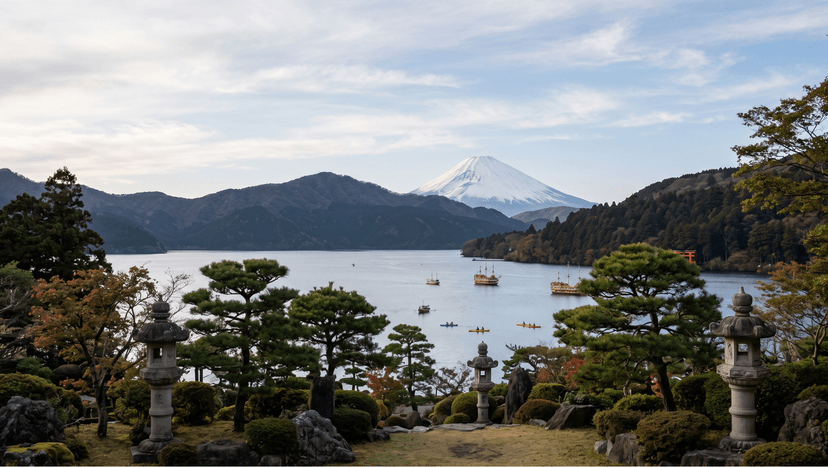
The serene overlook from Narukawa Art Museum gardens, framing Mount Fuji across the calm waters of Lake Ashi.
Ashinoko Skyline Drive
Driving along the Ashinoko Skyline offers a scenic route with breathtaking views of Lake Ashi and surrounding mountains. This elevated road provides multiple viewpoints along the way, making it ideal for a relaxed scenic drive. It is a great option for travelers who want to explore the area at their own pace while enjoying panoramic landscapes.
Lake Ashi Sightseeing Cruise Guide
The Hakone Sightseeing Cruise is a must-do experience when visiting Lake Ashi. It offers scenic volcanic lake views, fresh mountain air, and iconic sights like the torii gate and Mount Fuji on clear days. The cruise connects major ports around the lake, making it both a sightseeing activity and a practical transport option within the Hakone travel route.
Cruise Routes and Stops
Lake Ashi cruise routes typically connect key ports such as Moto-Hakone, Togendai, and Hakone-machi. These stops allow visitors to explore nearby attractions, including shrines and viewpoints. The routes are well-organized, making it easy to travel across the lake while enjoying scenic views and accessing different parts of Hakone efficiently.
Ticket Prices and Options
Lake Ashi sightseeing cruise price varies depending on distance and ticket type. Standard one-way tickets are affordable, while round-trip options provide better value. Visitors using the Hakone Free Pass can enjoy discounted or included rides. Choosing the right ticket depends on your itinerary and whether you plan to explore multiple stops around the lake.
Best Time for Cruise Experience
The best time for a Lake Ashi cruise is in the morning when visibility is clearer and chances of seeing Mount Fuji are higher. Afternoon cruises offer warmer weather but may have more clouds. Calm weather conditions enhance reflections and photography opportunities, making timing an important factor for the best sightseeing experience.
Hakone Ropeway and Lake Route
The Hakone Ropeway and Lake Ashi route form a key part of the famous Hakone sightseeing loop. This multi-transport journey combines ropeways, boats, and trains, offering diverse views of volcanic landscapes and lakes. It is one of the most efficient and scenic ways to explore Hakone, connecting major attractions while providing a memorable travel experience.
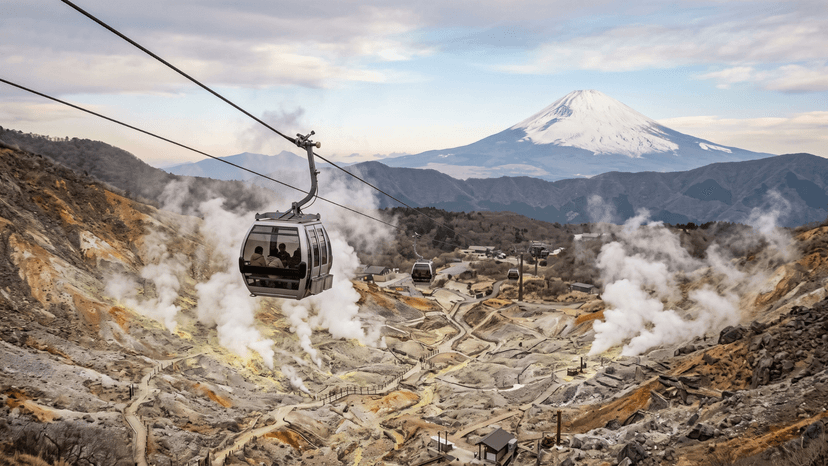
Riding the Hakone Ropeway above the active volcanic vents of Owakudani Valley with Mount Fuji in the backdrop.
Hakone Ropeway Experience
The Hakone Ropeway offers panoramic ropeway views over mountains, valleys, and volcanic terrain. This aerial journey provides a unique perspective of Hakone’s landscape, making it a highlight for visitors. The ride is smooth and scenic, allowing travelers to enjoy breathtaking views from above.
Owakudani Volcanic Valley Stop
A stop at Owakudani introduces visitors to an active volcanic valley with steaming vents and sulfuric landscapes. The famous Black Eggs experience, where eggs are boiled in volcanic waters, is a unique local attraction. This stop adds an adventurous and cultural element to the Hakone travel experience.
Completing the Hakone Loop
Completing the Hakone loop itinerary involves combining ropeway rides, lake cruises, and rail transport such as the Hakone Tozan Railway. This multi-transport route allows visitors to explore the region efficiently while enjoying diverse landscapes. It is one of the most popular travel routes in Japan for experiencing both nature and cultural attractions in one day.
How to Visit Lake Ashi from Tokyo
Reaching Lake Ashi from Tokyo is straightforward, making it ideal for a day trip. Travelers can combine trains, cable cars, and cruises for a scenic journey. The route is well-connected and efficient, allowing visitors to experience Hakone’s natural beauty without difficulty. Planning transport in advance ensures a smooth and enjoyable travel experience.
Route via Odawara Station
The most common route is via Odawara Station, accessible by Shinkansen or local trains from Tokyo. From there, travelers can transfer to Hakone transport systems like buses or the Hakone Tozan Railway. This route is fast, reliable, and connects directly to the Lake Ashi area, making it a popular choice for visitors.
Hakone Free Pass Option
The Hakone Free Pass offers unlimited access to multiple transport modes, including trains, buses, ropeways, and cruises. It provides excellent value for travelers exploring Hakone’s loop route. This pass simplifies travel planning and reduces costs, making it highly recommended for visitors planning to explore Lake Ashi and nearby attractions.
Prefer a Private Hakone Day Trip?
If you want to explore Lake Ashi without managing multiple train, bus and ropeway connections, a private Hakone tour can make the day much easier. Karvaan Tours offers private transportation with hotel pickup and drop-off, allowing travelers to combine Lake Ashi with attractions such as Hakone Shrine, Owakudani and other Hakone highlights in one flexible itinerary. Explore the Tokyo Private Full-Day Tour by Car with Hotel Pick-Up.
Travel Time and Tips
Travel time from Tokyo to Lake Ashi is typically 1.5 to 2 hours depending on the route. Start early to maximize your day and avoid crowds. Check weather conditions for Mount Fuji visibility and plan your itinerary accordingly. Using IC cards and pre-booked passes ensures a smoother journey and saves time during transfers.
Half-Day Lake Ashi Itinerary
09:00 – Arrive around Moto-Hakone
09:15 – Visit Hakone Shrine
10:15 – Photograph the Torii Gate of Peace
10:45 – Explore the lakeside area
11:30 – Take the sightseeing cruise
12:00–13:00 – Continue toward Togendai or enjoy lunch
Full-Day Hakone Loop
Morning: Hakone-Yumoto → Gora → Owakudani
Midday: Owakudani → Togendai
Afternoon: Lake Ashi cruise → Moto-Hakone
Late afternoon: Hakone Shrine → return toward Hakone-Yumoto
Private and Guided Tour Options
Private and guided tours offer a structured way to explore Lake Ashi and Hakone. These tours include transport, expert guides, and curated itineraries. They are ideal for travelers seeking convenience and deeper insights into the region’s history, culture, and natural features.
Private Car Option
If convenience is more important than using multiple public transport connections, traveling by private car can make a Hakone day trip considerably easier. It also gives you greater flexibility to combine Lake Ashi with Owakudani, Hakone Shrine, scenic viewpoints and other attractions. For travelers staying in Tokyo, a private tour with hotel pickup can be particularly useful for families, couples or groups who prefer a door-to-door experience.
For the best chance of seeing Mount Fuji, early morning on a clear day is generally your safest choice. Fuji visibility can change quickly around Hakone, so even a clear forecast does not guarantee a view.
Best Season
Spring: Cherry blossoms and fresh greenery
Summer: Lush mountain scenery, but more cloud cover can affect Fuji visibility
Autumn: Colorful foliage and excellent photography opportunities
Winter: Often the clearest Mount Fuji visibility, although temperatures are colder
Best Time of Day
Morning generally offers better visibility before clouds build around Mount Fuji.
Best Days
Weekdays are usually preferable if you want fewer crowds.
Lake Ashi Photography Tips
Capturing the beauty of Lake Ashi requires careful timing and composition. With scenic landscapes and iconic landmarks, the lake offers excellent photography opportunities. Understanding the best spots and lighting conditions helps create stunning images
Best Photography Spots
Top photography spots include the Torii Gate of Peace and lakeside viewpoints with Mount Fuji in the background. These locations offer iconic compositions that capture the essence of Hakone’s natural and cultural beauty.
Lighting and Timing Tips
Early morning and sunset provide the best lighting for photography. Soft natural light enhances colors and reduces shadows. Visiting during these times allows photographers to capture the lake’s beauty in ideal conditions.
Capturing Mount Fuji Reflections
To capture Mount Fuji reflections, choose calm weather conditions and position yourself near still water. Use a balanced composition that includes both the mountain and its reflection. This technique creates visually striking and memorable images.
Nearby Attractions Around Lake Ashi
Exploring nearby attractions enhances your visit to Lake Ashi. Hakone offers a mix of cultural sites, museums, and scenic locations that complement the lake experience. Adding these spots to your itinerary provides a more complete travel experience.
Hakone Open-Air Museum
The Hakone Open-Air Museum features outdoor sculptures set against mountain scenery. It combines art and nature, offering a unique cultural experience for visitors exploring Hakone.
Hakone Checkpoint and Old Tokaido Road
The Hakone Checkpoint provides historical insights into Japan’s Edo period travel routes. Nearby, the Old Tokaido Road offers scenic walking paths through preserved landscapes, adding historical depth to your visit.
Gora Park and Other Spots
Gora Park is a beautiful landscaped garden featuring seasonal flowers and relaxing spaces. It is a great spot for a peaceful break and complements the natural beauty of Lake Ashi.
Lake Ashi Travel Tips
Planning ahead ensures a smooth and enjoyable visit to Lake Ashi. From transport to safety, these tips help travelers make the most of their experience while exploring Hakone.
- Start early for better Mount Fuji visibility
- Visit on weekdays to avoid crowds
- Check weather forecasts in advance
- Use Hakone Free Pass for convenience
- Allow extra time for transfers
Transport and Navigation Tips
Use the Hakone Free Pass for easy access to multiple transport options. Follow clearly marked routes and allow extra time for transfers. Efficient planning helps avoid confusion and ensures a smooth travel experience.
Safety and Visitor Guidelines
Swimming in Lake Ashi is not recommended due to safety and environmental conditions. Follow local guidelines, stay on marked paths, and respect natural surroundings to ensure a safe visit.
Planning Your Visit Efficiently
Combine key attractions into a single itinerary to save time. Start early, prioritize must-see spots, and allow flexibility for weather changes. Efficient planning ensures a balanced and enjoyable Hakone travel experience.
Is Lake Ashi Worth Visiting?
Yes, especially if you are visiting Hakone for the first time. Lake Ashi combines several experiences that are difficult to find together elsewhere: a volcanic lake, Mount Fuji scenery, a historic shrine, the famous Torii Gate of Peace and scenic boat rides. It is also easy to combine with Owakudani and the Hakone Ropeway, making it one of the most convenient highlights of a Hakone day trip. If Mount Fuji is your main reason for visiting, however, keep your expectations flexible because visibility depends heavily on weather and cloud conditions.