


Introduction to Owakudani Valley
Owakudani Valley is one of the most fascinating natural attractions in Hakone, known for its dramatic volcanic landscape and steaming vents. Formed by volcanic activity, this “Great Boiling Valley” offers a rare glimpse into Japan’s geothermal forces. Visitors can witness sulphur vents, rugged terrain, and unique local experiences like black eggs. Its accessibility via the ropeway and inclusion in the Hakone loop make it a must-visit destination for travellers seeking nature, adventure, and a unique volcanic experience.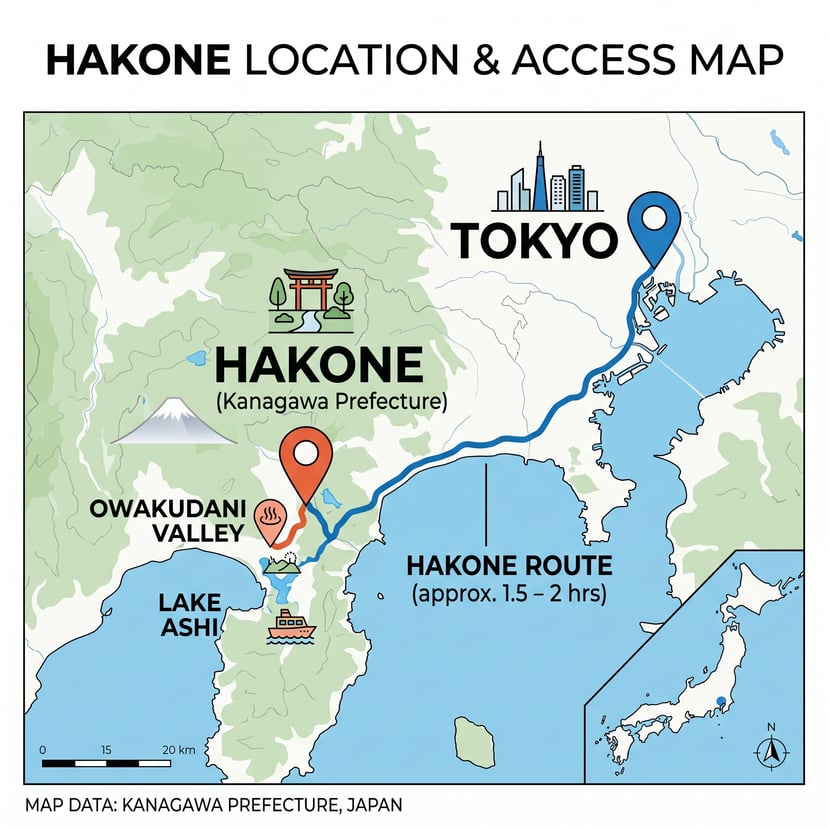
Transportation guide detailing each leg of the journey to Owakudani.
Where Is Hakone on the Map of Japan?
Hakone is located in Kanagawa Prefecture, southwest of Tokyo and within the Fuji-Hakone-Izu National Park. Its position between Tokyo and Mount Fuji makes it a popular destination for travellers looking for a scenic escape from the capital. On a map of Japan, Hakone is relatively close to Tokyo compared with many other mountain destinations. This convenient location allows travellers to visit volcanic attractions such as Owakudani, enjoy Lake Ashi, explore hot springs, and return to Tokyo within the same day. Its location also makes Hakone an ideal base for combining nature, culture, and Mount Fuji sightseeing in a single trip.
best day trip from tokyo to NIkko
Where Is Owakudani Valley in Japan?
Owakudani Valley is located in Hakone, Kanagawa Prefecture, within the Fuji-Hakone-Izu National Park. Hakone is a mountainous destination southwest of Tokyo, known for hot springs, volcanic scenery, Lake Ashi, and views of Mount Fuji. Owakudani is one of the most distinctive attractions in the area and can be reached easily using the Hakone Ropeway. For travellers wondering where Hakone is in Japan, Hakone is located approximately 80–100 kilometres from central Tokyo, making it a popular destination for a day trip. The surrounding Hakone mountains were shaped by volcanic activity, which explains the region's hot springs, geothermal vents, and dramatic landscapes.
Owakudani sits around the volcanic area of Mount Hakone, making it an important location for understanding the geological character of Hakone. Its combination of steaming vents, sulphur deposits, and rugged mountain scenery gives visitors a close-up experience of Japan's volcanic landscape.
Hakone and Owakudani at a Glance
|
Information |
Details |
|
Location |
Hakone, Kanagawa Prefecture, Japan |
|
Region |
Fuji-Hakone-Izu National Park |
|
Main Feature |
Volcanic valley and geothermal activity |
|
Nearby Mountain |
Mount Hakone |
|
Famous For |
Sulphur vents, black eggs and ropeway views |
|
Main Access |
Hakone Ropeway |
|
Nearest Ropeway Station |
Owakudani Station |
|
Ideal For |
Nature, photography and volcanic sightseeing |
What is Owakudani Valley known for?
Owakudani Valley is known for its active volcanic landscape, steaming sulphur vents, and the famous black eggs boiled in hot springs. It offers a rare opportunity to experience geothermal activity up close while enjoying scenic views in the Hakone region.
Owakudani Valley Volcanic Landscape and Experience
Owakudani Hakone is one of the most fascinating places to experience Japan's volcanic landscape. The Owakudani volcanic valley was formed by volcanic activity around Mount Hakone and remains known for its steaming vents, sulphur gases, rugged terrain, and geothermal activity. Located within the Fuji-Hakone-Izu National Park, Owakudani provides visitors with a rare opportunity to see the effects of an active volcanic environment at close range. The surrounding Hakone volcano landscape includes steaming fumaroles, mineral-rich ground, and dramatic mountain scenery. The area is particularly impressive from elevated viewpoints and the Hakone Ropeway, where travellers can look across the valley and surrounding Hakone mountains. On clear days, the wider landscape can also provide views towards Mount Fuji. This combination of geology, scenery, and easy accessibility makes Owakudani one of the most distinctive natural attractions in Hakone, Japan Visitors taking in panoramic views of Hakone’s rugged volcanic terrain.
Formation and Geological Background
Owakudani was formed by volcanic eruptions associated with Mount Hakone thousands of years ago. These geological events shaped the crater landscape and created the geothermal conditions that continue to produce steam and volcanic gases today. The wider Mount Hakone volcano system is responsible for many of the natural features found throughout the region, including hot springs, volcanic valleys, and geothermal activity. Today, Owakudani provides an accessible way for travellers to understand the volcanic forces that have shaped Hakone. The surrounding Hakone mountains also contribute to the area's dramatic scenery, making the valley particularly impressive from the ropeway and observation areas.
Owakudani and Japan's Volcanic Landscape
Japan is located in one of the world's most volcanically active regions, which explains the country's abundance of hot springs, volcanic mountains, and geothermal landscapes. Owakudani provides an accessible example of this natural environment for travellers visiting the Tokyo region. Although Owakudani is not a volcano in central Tokyo, its location makes it an excellent volcano experience near Tokyo, Japan, particularly for travellers who want to see volcanic activity without travelling to a remote mountain region.
Sulfur Vents and Geothermal Activity
Owakudani is known for its active geothermal activity, where steam vents release sulfur gases into the air. The visible white plumes and distinct smell create a powerful sensory experience. These geothermal features highlight the valley’s active volcanic nature and make it a unique destination.
What Makes Owakudani Unique
What makes Owakudani Valley truly unique is its status as an active volcanic zone where visitors can safely witness geothermal activity up close. The valley’s rugged terrain, steaming vents, and sulfur clouds create a dramatic and otherworldly landscape rarely seen elsewhere in Japan. Combined with panoramic mountain views and ropeway access, it offers both adventure and scenery. This mix of natural power and accessibility makes Owakudani one of the most distinctive and memorable destinations in the Hakone region.
Things to Do in Owakudani Valley
There are several engaging activities to enjoy in Owakudani Valley, making it more than just a scenic stop. Visitors can explore volcanic landscapes, experience unique local food, and enjoy breathtaking views from above. The area offers a combination of adventure and sightseeing, allowing travelers to immerse themselves in Hakone’s natural beauty while experiencing one of Japan’s most active geothermal environments.
| Activity | Experience | Time Needed |
|---|---|---|
| Explore volcanic area | View steam vents and terrain | 30–45 mins |
| Try black eggs | Unique food experience | 15–20 mins |
| Ropeway ride | Scenic aerial views | 20–30 mins |
Explore the Volcanic Area
Exploring the volcanic area is one of the top things to do in Owakudani. Visitors can walk along designated trails and reach observation points that offer close-up views of steam vents and rugged terrain. These viewpoints provide excellent opportunities to experience the valley’s geothermal activity safely while enjoying panoramic views of the surrounding mountains.
Try the Famous Black Eggs
Owakudani's famous black eggs, known as Kurotamago, are ordinary eggs prepared using the area's geothermal hot springs. During the cooking process, the shells turn black because of a chemical reaction involving iron and hydrogen sulfide in the hot spring environment. The inside remains a normal boiled egg, while the distinctive black shell has become one of Owakudani's most recognisable symbols. According to local tradition, eating one black egg is said to add seven years to your life.
Enjoy Ropeway Views
The Owakudani Ropeway is one of the best ways to experience the volcanic landscape from above. The route passes directly over the geothermal area, providing views of steaming vents, rugged volcanic terrain, and the surrounding mountains. The Hakone Ropeway Owakudani Station is a convenient stopping point for visitors exploring the valley. From the station, travellers can easily access the main observation areas, shops, and black egg stalls before continuing towards Sounzan or Togendai. The aerial journey is especially impressive when volcanic steam rises from the valley below. On clear days, the surrounding mountains and Mount Fuji may also be visible, making the ropeway both a practical transport option and a major sightseeing experience.
Owakudani Observatory
The Owakudani Observatory provides visitors with elevated views across the volcanic valley and its steaming geothermal features. From the observation areas, you can see volcanic vents, rugged slopes, and plumes of steam rising from the ground. It is also a useful spot for photography because the elevated perspective captures more of the surrounding Hakone landscape. Combine the observatory with the ropeway ride and volcanic walking areas for a more complete Owakudani sightseeing experience.
Earth Valley Observation Area at Owakudani
The Owakudani area has a newer sightseeing experience called Earth Valley, an observation area designed to bring visitors closer to the valley's volcanic landscape. The area around Owakudani Station was renovated and reopened in April 2025, adding new observation spaces and visitor experiences. The observation area provides another perspective of the steaming volcanic landscape and is worth including in a modern Owakudani itinerary. Visitors can also explore shops, food options and local souvenirs around the renovated station area
Owakudani Black Eggs Experience
The black egg experience is one of the most unique cultural highlights of Owakudani Valley. It blends local tradition, natural geothermal activity, and culinary curiosity into a memorable activity. Visitors not only get to taste a distinctive food but also learn about its cultural significance and preparation process, making it an essential part of the Owakudani visit. Authentic Kurotamago, boiled in the mineral springs of Owakudani.
What Are Kurotamago
Ōwakudani Kurotamago are eggs boiled in the valley’s natural hot springs. The minerals in the water react with the shell, turning it black while keeping the inside unchanged. This process creates a visually unique and culturally significant local specialty.
Cultural Legend and Meaning
The black eggs are tied to a popular Japanese legend that eating one can extend your life by seven years. This belief adds a cultural and symbolic meaning to the experience, making it more than just a food tasting activity.
Where to Try Them
Visitors can find black eggs at local stalls near the ropeway station in Owakudani. These stalls are easy to access and are a popular stop for tourists looking to try this unique specialty.
How to Visit Owakudani Valley
Visiting Owakudani Hakone is straightforward thanks to the region's well-connected railway, cable car, and ropeway network. Travellers coming from Tokyo can reach Hakone by train before continuing through the Hakone sightseeing loop to Owakudani. The most scenic approach is via the Hakone Ropeway, which crosses the volcanic landscape and stops at Owakudani Station.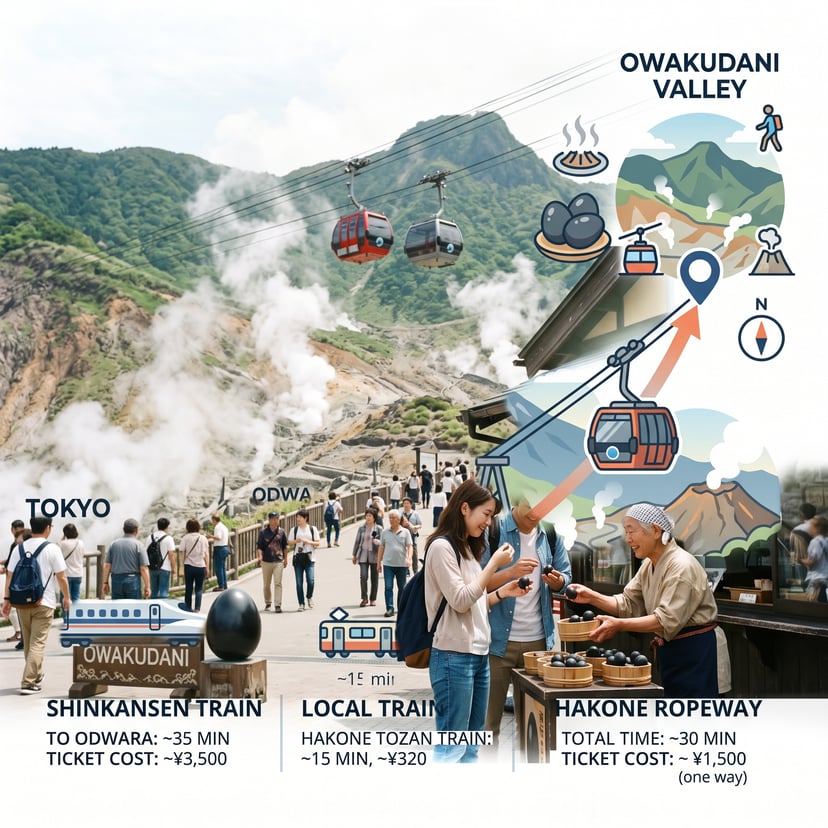
Cable car rides and famous Kurotamago stalls at Owakudani Valley.
Access from Tokyo
Travellers can reach Owakudani from Tokyo by starting at Shinjuku Station. The Romancecar provides a comfortable connection towards Hakone, while other train services are also available. The journey generally takes around 1.5 to 2 hours, depending on the route and connections.
Private Owakudani Tour from Tokyo
For travellers who prefer a more comfortable and flexible experience, a private Owakudani tour from Tokyo is an alternative to navigating several train and ropeway connections. Karvaan Tours offers private transportation with pickup and drop-off, allowing travellers to combine Owakudani with other Hakone attractions according to their preferred itinerary.
A private Hakone tour from Tokyo can be particularly convenient for families, couples, photographers, and small groups. Instead of following a fixed public-transport schedule, travellers can enjoy a more flexible journey and combine Owakudani with attractions such as Lake Ashi, Hakone Shrine, Mount Fuji viewpoints, hot springs, and Gotemba Premium Outlets.
For a private sightseeing option, explore the Hakone & Gotemba Premium Day Tour from Tokyo, which combines Hakone sightseeing, hot springs, Mount Fuji views, and shopping.
Hakone Transport Route
Within Hakone, the main access to Owakudani is via the Hakone Ropeway. Visitors can board at Sounzan Station and travel towards Owakudani Station before continuing towards Togendai. The ropeway itself is one of the highlights of the journey, offering aerial views of the volcanic valley, steaming vents, and surrounding mountains.
Hakone Free Pass Option
For independent travellers, the Hakone Free Pass can simplify transportation around the region. Depending on the current pass conditions, it covers several Hakone transport services, including trains, buses, cable cars, and the ropeway. It can be particularly useful for travellers planning to combine Owakudani with Lake Ashi, Hakone Shrine, and other attractions.
Owakudani Itinerary Hakone
Planning an itinerary around Owakudani Valley helps maximize your visit. Whether you have a few hours or a full day, Owakudani fits easily into the Hakone sightseeing route. Combining it with nearby attractions creates a well-rounded travel experience filled with nature, culture, and scenic views.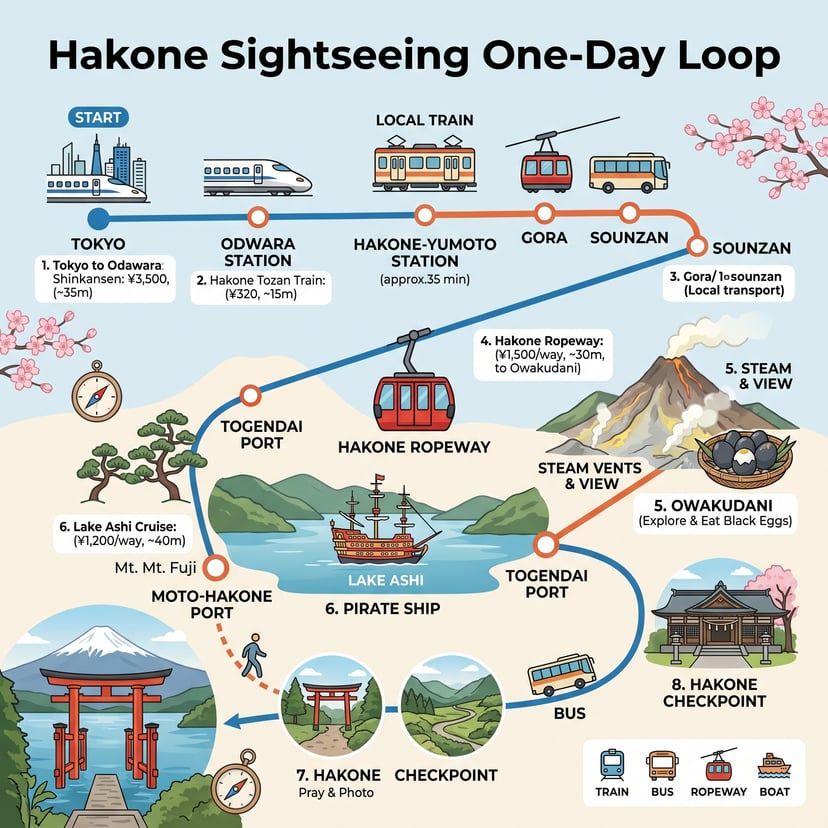
Half-Day Plan
A quick visit includes arriving via the ropeway, exploring observation points, and trying black eggs. This half-day plan is ideal for travelers with limited time who still want to experience the volcanic valley.
Full Hakone Loop Course
Owakudani is part of the famous Hakone sightseeing loop, which includes trains, cable cars, ropeways, and a lake cruise. This full-day route offers a complete Hakone experience.
Combine with Nearby Attractions
Visitors can combine Owakudani with Lake Ashi for a scenic cruise and visit Hakone Shrine for a cultural experience, creating a balanced itinerary.
Best Time to Visit Owakudani Valley
The best time to visit Owakudani Valley depends on weather, visibility, and crowd levels. Clear days offer the most dramatic views of the volcanic landscape, while seasonal changes enhance the overall experience. Planning your visit at the right time ensures better visibility of steam vents and surrounding mountains. With proper timing, visitors can enjoy both the natural beauty and unique geothermal features of Owakudani comfortably
Weather and Visibility
Weather plays a key role in your experience at Owakudani. On clear days, visibility is excellent, allowing views of the valley and even Mount Fuji in the distance. Cloudy or foggy conditions can limit views, so checking forecasts before visiting is recommended.
Seasonal Highlights
Spring and autumn are the best seasons to visit Owakudani. Spring offers pleasant weather and fresh scenery, while autumn brings colorful foliage to the surrounding mountains. These seasons provide comfortable temperatures and beautiful landscapes, enhancing the overall experience.
Crowd and Timing Tips
Owakudani can get crowded, especially during weekends and holidays. Visiting early in the morning or later in the afternoon helps avoid peak crowds. Weekdays are generally quieter, allowing for a more relaxed and enjoyable visit.
Owakudani Valley Safety and Volcanic Activity
Owakudani is part of the volcanic landscape of Hakone, Japan, where geothermal activity continues beneath the surface. The area is known for steam vents and volcanic gases, which are carefully monitored to protect visitors. The Hakone Japan volcano landscape is one of the region's defining natural features, but access can occasionally be restricted when volcanic gas levels or other conditions require additional safety measures. Visitors should always follow local signs, barriers, and official instructions when exploring Owakudani. Conditions can change, so checking the latest access information before travelling is particularly important when planning a visit to this active volcanic area.
Safety Measures
Certain areas in Owakudani may be restricted due to volcanic gases or activity levels. These zones are clearly marked, and visitors are advised to follow all signs and instructions to ensure safety.
Volcanic Activity Updates
The area is continuously monitored for volcanic activity, and updates are provided by local authorities. Temporary closures may occur if conditions change, ensuring visitor safety at all times.
Visitor Guidelines
Visitors should stay on designated paths, avoid restricted areas, and follow safety instructions. Wearing comfortable shoes and being aware of environmental conditions helps ensure a safe and enjoyable experience in this unique volcanic valley.
Owakudani Photography Tips
Capturing the dramatic scenery of Owakudani Valley requires timing, positioning, and an eye for composition. The volcanic landscape, steam vents, and rugged terrain provide unique photography opportunities. Whether you’re using a smartphone or a professional camera, planning your shots helps you capture the valley’s raw beauty. From crater views to atmospheric steam, Owakudani offers some of the most striking natural photography spots in Japan.
Best Photography Spots
The best spots in Owakudani include elevated viewpoints that overlook the crater valley and steam vents. These locations offer wide-angle perspectives of the rugged terrain and geothermal activity. Observation areas near the ropeway station provide safe and accessible vantage points for capturing the valley’s dramatic scenery.
Lighting and Timing
Lighting plays a crucial role in photography. Morning light offers clear visibility and softer shadows, while late afternoon and sunset create warmer tones and dramatic contrasts. Visiting during these times helps enhance the textures and colors of the volcanic landscape
Capturing Steam and Landscape
Using depth and leading lines helps create more dynamic compositions. Including foreground elements like rocks or pathways adds scale and visual interest.
Nearby Attractions Around Owakudani
Owakudani Valley is surrounded by some of the most popular attractions in Hakone, Japan, making it easy to create a complete sightseeing itinerary. The volcanic landscape of the Hakone mountains provides a scenic backdrop to attractions ranging from Lake Ashi and Hakone Shrine to museums, gardens, and mountain viewpoints. After exploring the volcanic area, travellers can continue towards Lake Ashi or other attractions around Mount Hakone. Combining several stops allows visitors to experience both the natural and cultural sides of the region in one day.
Hakone GeoMuseum
The Hakone GeoMuseum, located next to Owakudani Station, provides an introduction to Hakone's volcanic geology and the forces that shaped the region. It is a useful stop for travellers who want to understand the science behind Owakudani rather than simply view its steaming landscape.
Lake Ashi and Cruise
Lake Ashi is a scenic lake known for its beautiful views and relaxing boat cruises. Visitors can enjoy a peaceful ride across the water while taking in views of the surrounding mountains and, on clear days, Mount Fuji.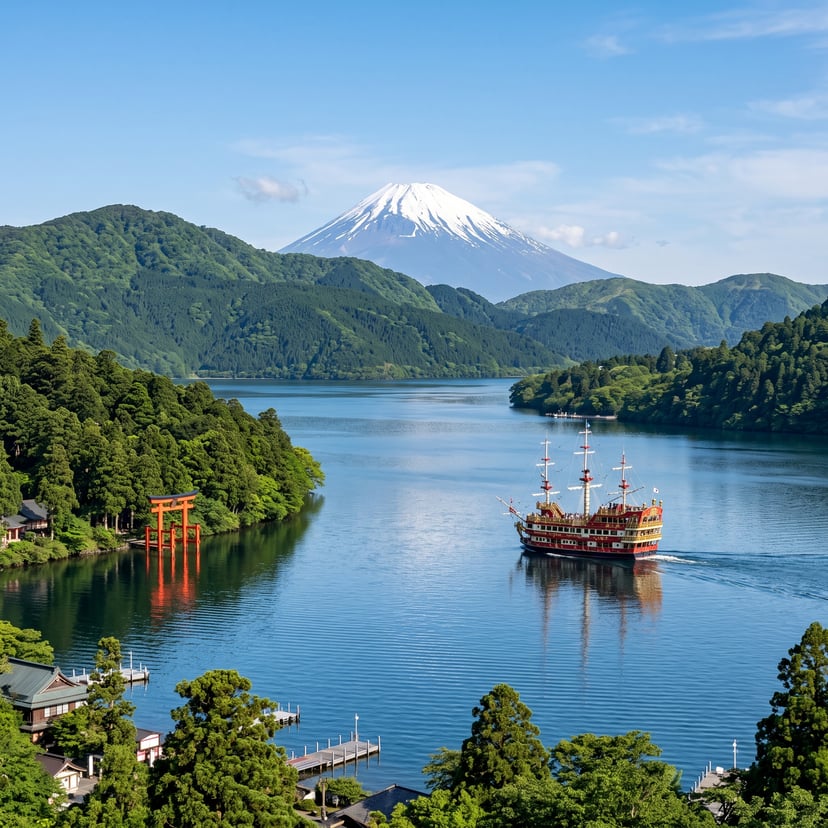
Museums and Cultural Spots
The Hakone Open-Air Museum offers a unique blend of art and nature. Its outdoor exhibits and sculptures provide a relaxing cultural experience, making it a great stop after visiting Owakudani.
Scenic and Nature Spots
Gora Park is a peaceful garden area ideal for relaxation. With landscaped paths, flowers, and quiet spaces, it provides a refreshing contrast to the rugged volcanic environment of Owakudani.
Owakudani Travel Tips
Traveling to Owakudani Valley is easy with proper planning. Understanding transport options, preparing for weather conditions, and managing your time efficiently can greatly improve your experience. These tips help ensure a smooth and enjoyable visit to this unique volcanic destination.
· Visit early to avoid crowds
· Check weather for better visibility
· Wear comfortable shoes
· Be prepared for strong sulfur smell
· Follow safety signs and restricted zones
Transport and Navigation Tips
Using the Hakone Ropeway is the most convenient way to reach Owakudani. Following the Hakone loop route simplifies navigation, and clear signage makes it easy to move between attractions.
Comfort and Safety Tips
Weather conditions can change quickly in mountainous areas, so dressing in layers is recommended. Comfortable shoes and awareness of volcanic conditions help ensure a safe and comfortable visit. Volcanic activity conditions and access restrictions may change, so checking updated information before visiting is recommended.
Planning Your Visit Efficiently
Starting early, avoiding peak hours, and combining Owakudani with nearby attractions helps optimize your time. A well-planned schedule allows you to experience more while staying relaxed.
Is Owakudani Valley Worth Visiting
Owakudani Valley is absolutely worth visiting for its rare combination of natural power and unique experiences. As an active volcanic valley, it offers something you won’t find in typical tourist spots. From steaming vents to local food traditions, Owakudani provides a memorable and immersive experience that stands out in the Hakone region.
Unique Experience Value
The volcanic landscape of Owakudani is unlike any other in Japan. With visible steam vents, rugged terrain, and dramatic views, it offers a rare opportunity to witness geothermal activity up close. This natural spectacle creates a truly unforgettable experience for visitors.
Pros and Cons
Owakudani is easily accessible via ropeway and well-developed transport routes, making it convenient for travelers. However, the strong sulfur smell from volcanic gases may be uncomfortable for some visitors. The sulfur smell can be quite strong, so visitors sensitive to odors may want to limit their stay or bring a mask.
Who Should Visit
Owakudani is ideal for nature lovers, adventure seekers, and travelers interested in unique geological landscapes. It’s also perfect for those exploring Hakone as part of a broader itinerary.
Conclusion
Owakudani Valley is one of Hakone's most unusual attractions, combining steaming volcanic landscapes, the famous Kurotamago black eggs, scenic Ropeway views and fascinating geological history in one compact destination. Whether you are visiting Hakone on a day trip from Tokyo or exploring the region for longer, Owakudani offers an experience that feels very different from Japan's traditional temples, gardens and city attractions. For the best experience, check the latest volcanic conditions, arrive early to avoid the busiest periods, and allow time for the Ropeway, observation areas and black egg experience. If you're looking for a memorable Hakone, Japan experience, Owakudani is well worth adding to your itinerary.