

Introduction
Imagine standing along the banks of the Sumida River on a warm summer evening as thousands of fireworks illuminate Tokyo's skyline. The dazzling explosions reflect across the water while crowds dressed in colourful yukata cheer beneath one of Japan's oldest and most celebrated fireworks displays. This is the Sumidagawa Fireworks Festival, known in Japanese as 隅田川花火大会 (Sumidagawa Hanabi Taikai), an event that blends centuries of history with spectacular modern pyrotechnics. More than just a fireworks show, the Sumida River Fireworks Festival is a living tradition that dates back to the Edo period. Every summer, nearly one million spectators gather in Sumida Ward to witness an unforgettable display featuring thousands of expertly choreographed fireworks launched from two separate venues along the river. Whether you are visiting Tokyo for the first time or returning to experience one of Japan's greatest summer festivals, this guide covers everything you need to know, from its fascinating history and 2026 schedule to the best viewing spots, crowd avoidance tips, and luxury experiences.
Sumidagawa Fireworks Festival at a Glance
| Information | Details |
|---|---|
| Japanese Name | 隅田川花火大会 |
| Festival Type | Fireworks Festival (Hanabi Taikai) |
| Location | Sumida River, Tokyo |
| Usually Held | Last Saturday of July |
| Fireworks | Approximately 20,000 |
| Admission | Free |
| Nearest Areas | Asakusa and Sumida Ward |
| Best For | Families, couples, photographers |
What Is the Sumidagawa Fireworks Festival?
The Sumidagawa Fireworks Festival is Tokyo's most famous fireworks celebration and one of Japan's oldest annual festivals. Held along the Sumida River between Asakusa and Ryogoku, the festival attracts visitors from around the world who come to admire thousands of fireworks launched over the city's historic waterfront. Unlike many modern fireworks displays, this festival preserves traditions that began during the Edo period while incorporating state-of-the-art pyrotechnic techniques. Professional fireworks guilds compete to create increasingly elaborate displays, combining colour, rhythm, and precision in performances that last for several hours.
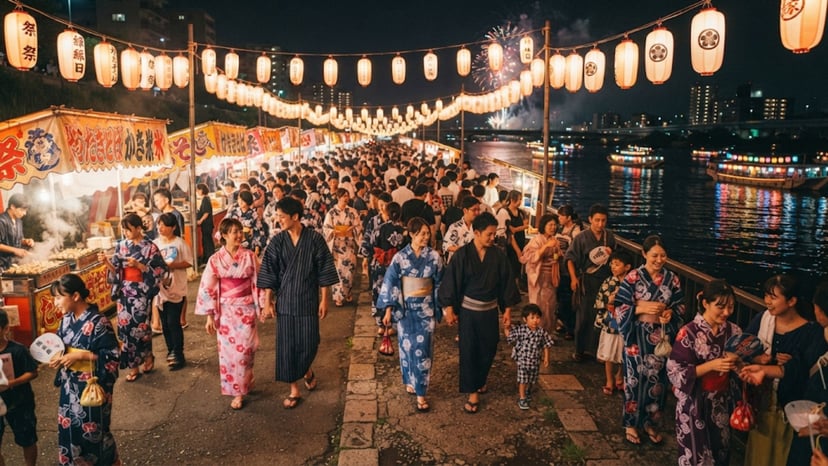
Crowds gathering along the riverbanks in traditional yukata.
The event also celebrates Japanese summer culture. Families gather for picnics along the riverbanks, couples stroll through the streets wearing traditional yukata, and local neighbourhoods come alive with food stalls, music, and festive celebrations. For many travellers, attending the Sumidagawa Hanabi Taikai is one of the highlights of a summer visit to Tokyo.
The History Behind the Sumidagawa Fireworks Festival
The origins of the festival stretch back almost three centuries, making it one of Japan's oldest surviving fireworks traditions. In 1733, following the devastating Kyoho famine of 1732 and a deadly cholera outbreak, Tokugawa Yoshimune, the eighth shogun of the Tokugawa Shogunate, authorised a riverside ceremony known as Ryogoku Kawabiraki. The event honoured those who had lost their lives while praying for peace, good harvests, and protection from future disasters.
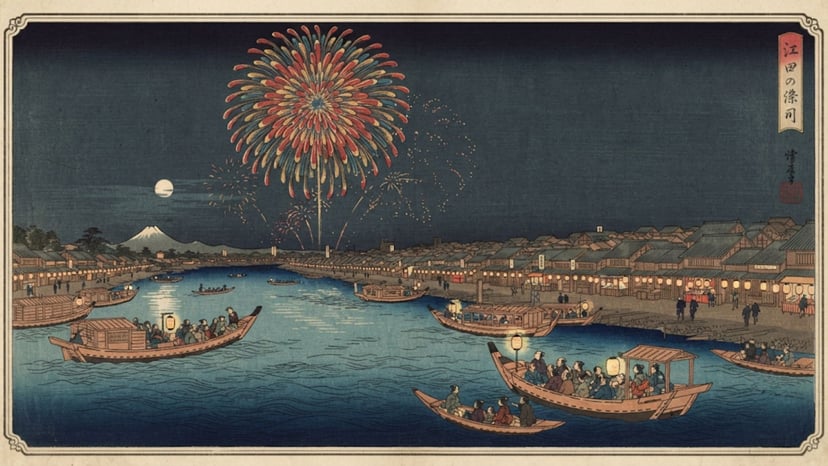
An Edo-period illustration of a river fireworks ceremony.
As part of the ceremony, fireworks were launched over the Sumida River to lift the spirits of the people and mark the beginning of a new season of hope. Over the following decades, these displays evolved into an annual tradition that gradually became one of Tokyo's defining summer events. Despite interruptions caused by war and natural disasters, the festival has continued to grow while maintaining its historical significance. Today, millions of residents and visitors gather not only to admire spectacular fireworks but also to celebrate a tradition deeply rooted in Tokyo's cultural heritage.
The Legendary Rivalry Between Tamaya and Kagiya
One of the most fascinating chapters in the festival's history is the famous rivalry between the Tamaya and Kagiya fireworks guilds. During the Edo period, these two master pyrotechnic families competed to create the most impressive fireworks displays along the Sumida River. Spectators enthusiastically shouted the names "Tamaya!" and "Kagiya!" whenever a particularly beautiful firework illuminated the sky.
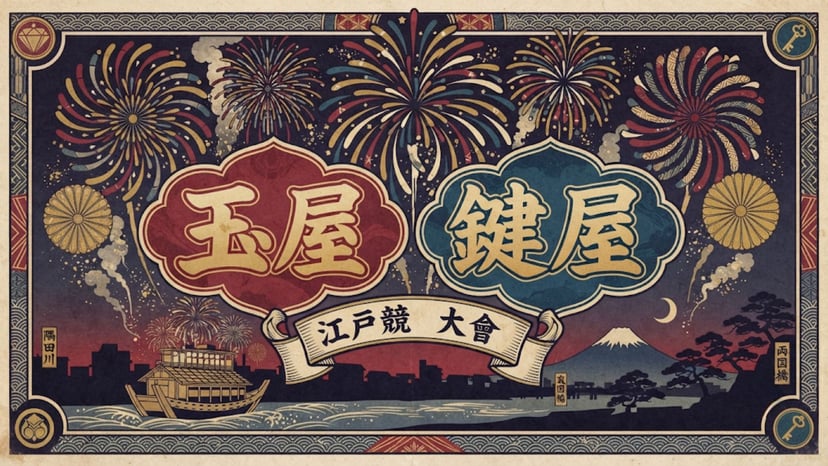
A visual tribute to the Tamaya and Kagiya fireworks guilds.
Although the Tamaya guild no longer exists, the tradition of shouting "Tamaya!" and "Kagiya!" remains an iconic part of Japanese fireworks culture. Even today, many spectators continue this custom as a way of celebrating exceptional displays and honouring the festival's rich heritage. Understanding this rivalry adds another dimension to the experience, allowing visitors to appreciate the craftsmanship and history behind every firework that lights up the Tokyo skyline.
Why Is the Festival So Special?
Japan hosts hundreds of fireworks festivals every year, yet the Sumidagawa Fireworks Festival remains one of the country's most prestigious events. Several factors make it unique:
- Nearly 300 years of history
- One of Tokyo's largest fireworks displays
- Historic location along the Sumida River
- Traditional Edo-period origins
- Professional pyrotechnic competitions
- Spectacular views with Tokyo Skytree in the background
- Vibrant summer festival atmosphere
Unlike smaller local festivals, Sumidagawa combines historical importance with world-class fireworks technology, creating an experience that appeals to history lovers, photographers, families, and first-time visitors alike.
Sumidagawa Fireworks Festival 2026 Dates, Schedule and Location
The Sumidagawa Fireworks Festival 2026 is expected to take place on the last Saturday of July, continuing a long-standing tradition that has defined Tokyo's summer calendar. Although the official schedule is announced closer to the event, visitors can generally expect fireworks to begin during the evening and continue for approximately ninety minutes.
| Information | Details |
|---|---|
| Event | Sumidagawa Fireworks Festival 2026 |
| Japanese Name | 隅田川花火大会 |
| Expected Date | Late July 2026 |
| Location | Sumida River, Tokyo |
| Main Areas | Asakusa and Sumida Ward |
| Fireworks Launch Sites | Fireworks are launched simultaneously from Venue 1 near Sakura Bridge (Sakurabashi) and Venue 2 near Komagata Bridge, creating spectacular displays across different sections of the Sumida River. |
| Admission | Free public viewing |
| Best Arrival Time | At least three hours before the display |
Because the festival attracts close to one million visitors, arriving early is essential for securing a comfortable viewing location.
Sumidagawa Fireworks Festival 2026: Expected Schedule
| Event Phase | Expected Timing | Notes |
|---|---|---|
| Festival Opening | 7:00 PM | Official start of the fireworks display. |
| Venue 1 Launch | 7:00 PM – 8:30 PM | Located near Sakurabashi (upstream). |
| Venue 2 Launch | 7:30 PM – 8:30 PM | Located near Komagata Bridge (downstream). |
| Grand Finale | 8:30 PM | The concluding synchronised sequence. |
| Event Conclusion | 8:30 PM | Official end of the fireworks display. |
How to Reach the Sumidagawa Fireworks Festival
The easiest way to reach the Sumidagawa Fireworks Festival is by public transportation, as many surrounding roads are closed during the event. The main viewing areas are within walking distance of Asakusa Station, Honjo-Azumabashi Station, Kuramae Station, and Tokyo Skytree Station. Visitors staying elsewhere in Tokyo can conveniently travel using the Tokyo Metro, Toei Subway, or JR rail network before continuing on foot to the riverside viewing areas.
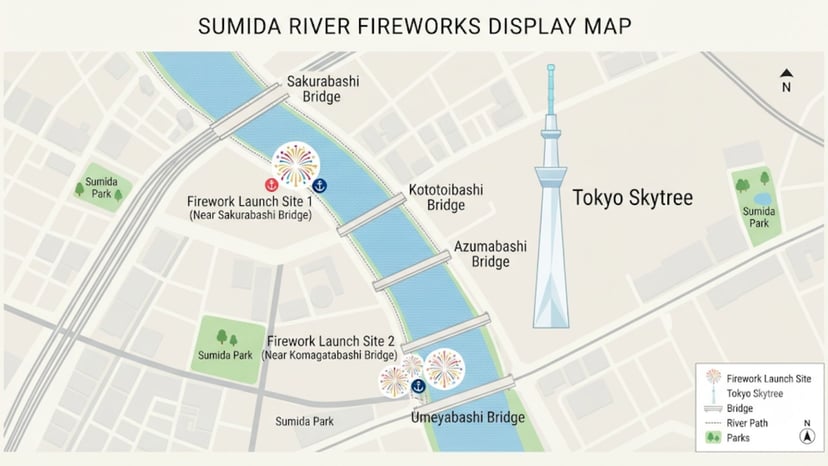
A simplified map showing the festival zones and bridges.
By Train
Public transport is the fastest and most convenient way to reach the festival. Expect heavy crowds throughout the afternoon, so arriving early is strongly recommended.
By Taxi
Taxis are available throughout Tokyo, but road closures and heavy congestion often result in long delays on festival day.
Reach the Sumidagawa Fireworks Festival Comfortably by Private Vehicle
Although Tokyo's railway network provides convenient access to the festival, travelling during one of the city's busiest events can be challenging, particularly for families, elderly travellers, or visitors carrying luggage. A private vehicle offers greater comfort and flexibility, allowing you to combine the Sumidagawa Fireworks Festival with sightseeing in Asakusa, Tokyo Skytree, Ueno, or the Imperial Palace before arriving at your preferred viewing location. Karvaan Tours provides private Tokyo sightseeing tours with experienced English-speaking drivers and customised itineraries. This option is ideal for couples, families, and small groups who want hotel pickup, flexible scheduling, and a relaxed travel experience before and after the fireworks display.
| Travel Option | Best For | Advantages |
|---|---|---|
| Train | Budget travellers | Fast and affordable |
| Guided Tour | First-time visitors | Local knowledge |
| Private Vehicle (Karvaan Tours) | Families and groups | Flexible itinerary, hotel pickup and greater comfort |
Vehicle Access Restrictions
Please be advised that from 5:00 PM onwards, the local authorities implement extensive road closures throughout the Sumida and Asakusa areas surrounding the river. During this time, the majority of streets near the riverbanks are strictly designated as pedestrian-only zones. Standard taxis and public transportation are severely limited, and traffic congestion in the wider vicinity makes traditional drop-offs nearly impossible.
Festival Area Layout
The festival stretches along the Sumida River between Asakusa, Ryogoku, and Tokyo Skytree. Two separate launch sites allow visitors to enjoy different viewing perspectives depending on where they choose to watch. Walking between viewing areas is possible before the fireworks begin, but movement becomes increasingly difficult once crowds build in the evening.
Japanese Summer Traditions During the Festival
The Sumidagawa Fireworks Festival is much more than a fireworks display; it is a celebration of Japanese summer traditions. One of the most recognisable sights is the large number of people wearing yukata, the lightweight cotton kimono traditionally worn during summer festivals. Couples, families, and groups of friends stroll through the streets in colourful attire, creating a festive atmosphere long before the fireworks begin.
Visitors are also greeted by rows of food vendors selling classic festival favourites such as yakitori, takoyaki, yakisoba, kakigori, grilled seafood, and refreshing drinks. These lively food stalls contribute to the atmosphere that makes Tokyo's summer festivals so memorable. For international travellers, renting a yukata and enjoying traditional festival foods is one of the best ways to experience Japanese culture beyond sightseeing.
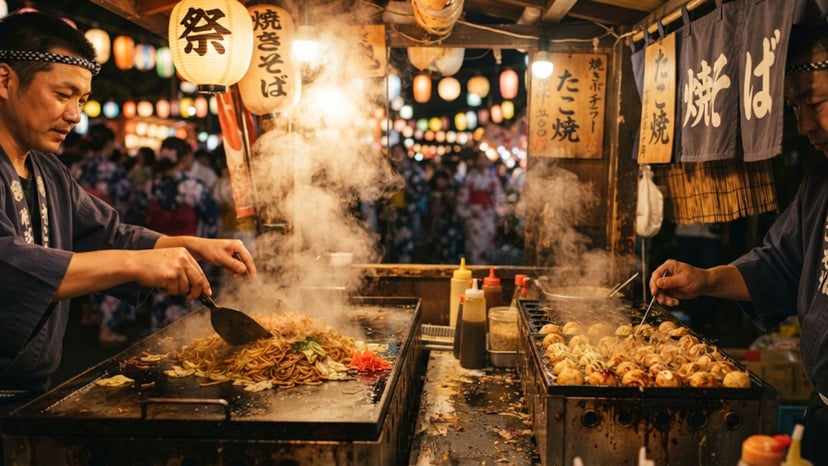
A variety of delicious Japanese festival street food.
Planning Ahead for the Festival
Because of its immense popularity, planning your visit well in advance is highly recommended. Hotels near Asakusa, Sumida Ward, and Tokyo Skytree often sell out several months before the festival. Public transportation becomes extremely busy during the afternoon, and many roads close to accommodate spectators.
Visitors hoping to enjoy a relaxed experience should finalise accommodation, transportation, and viewing plans as early as possible. Those seeking a premium experience may also wish to consider private viewing packages or chauffeur services, which will be explored later in this guide.
Can Tourists Enjoy the Sumidagawa Fireworks Festival?
Absolutely. The Sumidagawa Fireworks Festival is free to attend and welcomes visitors from around the world. International travellers can experience traditional Japanese summer culture by wearing a yukata, sampling festival food, exploring the riverside atmosphere, and watching one of Tokyo's most spectacular fireworks displays alongside local residents.
Best Viewing Spots for the Sumidagawa Fireworks Festival
Finding the right viewing location is the key to enjoying the Sumidagawa Fireworks Festival. Since nearly one million people gather along the Sumida River, arriving early and choosing your spot carefully can make a significant difference to your experience.
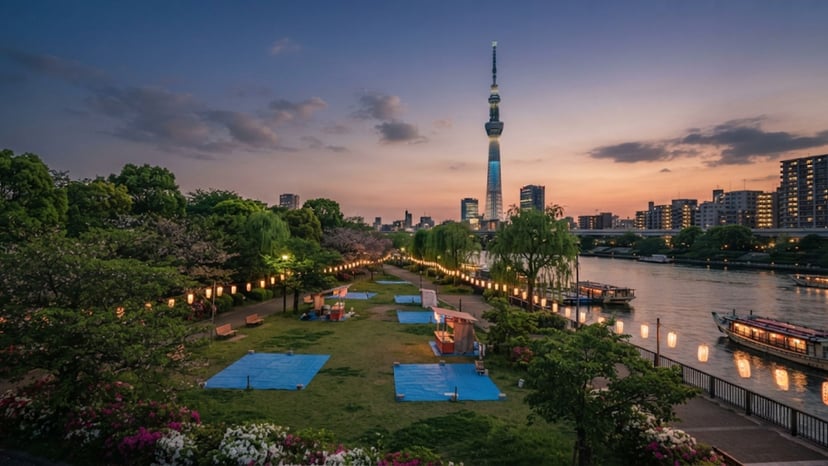
A view from Sumida Park looking toward the river.
Sumida Park
Located near Asakusa, Sumida Park is one of the festival's most popular viewing areas. It offers excellent views of the fireworks with the Tokyo Skytree rising in the background, creating one of Tokyo's most iconic summer scenes.
Asakusa Riverside
The riverside walkways around Asakusa provide a lively festival atmosphere with easy access to food stalls, traditional performances, and public transportation. These areas are ideal for visitors who want to experience the energy of the festival while remaining close to local attractions.
Ryogoku Area
Historically connected to Ryogoku Kawabiraki, this section of the river offers wider viewing areas and a slightly less crowded atmosphere than central Asakusa.
Tokyo Skytree Area
Many visitors choose locations around Tokyo Skytree to enjoy dramatic views of the fireworks framed against Tokyo's modern skyline. While the display appears farther away, the unique cityscape creates excellent photography opportunities.
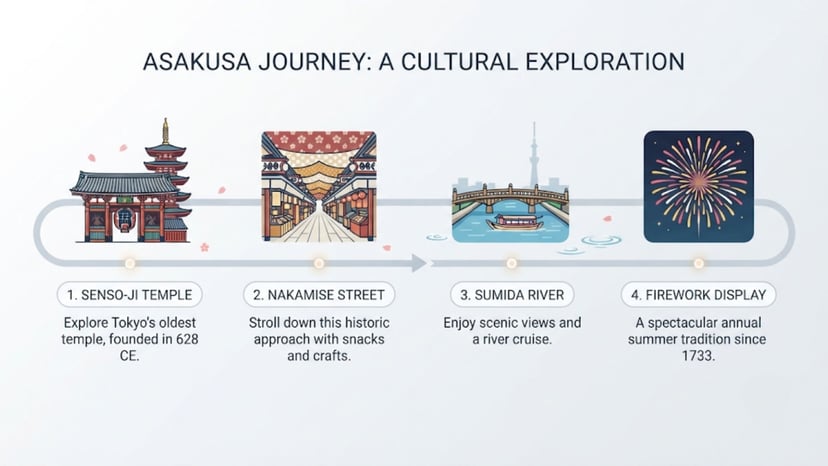
A graphic showing a day in Asakusa before the fireworks.
How Long Should You Spend at the Festival?
Most visitors spend five to seven hours enjoying the festival. This allows enough time to explore Asakusa, enjoy street food, secure a good viewing location, and watch the full fireworks display before returning to central Tokyo later in the evening.
Best Private Viewing Spots for the Sumida River Fireworks
Travellers looking for a more comfortable experience can avoid the busiest public areas by choosing premium viewing options. Some of the best alternatives include:
- Hotel restaurants overlooking the Sumida River
- Rooftop terraces in Asakusa
- Private river cruises
- Reserved viewing lounges
- Luxury dining venues with festival packages
These experiences often include food, drinks, reserved seating, and uninterrupted views of the fireworks, making them an excellent choice for couples, families, or special occasions.
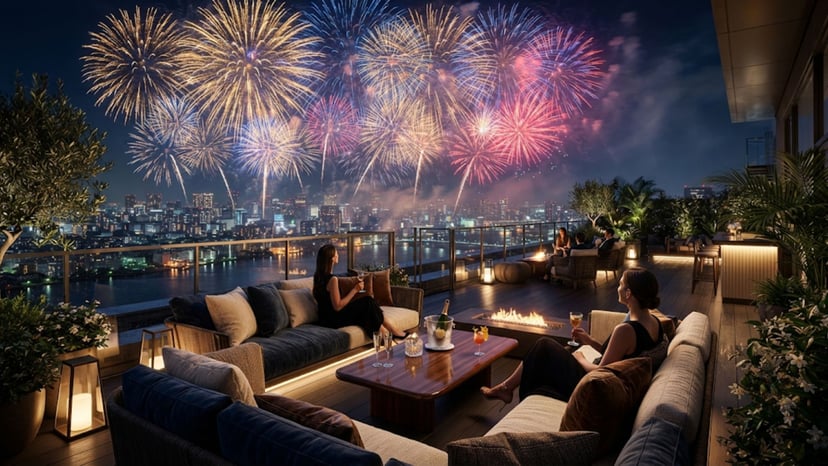
An exclusive rooftop terrace view of the fireworks.
Are Reserved Seats Available?
Unlike many Japanese fireworks festivals, most viewing areas at the Sumidagawa Fireworks Festival are free. However, a limited number of official paid reserved seating areas may be available through local organisers or supporting organisations. These tickets usually sell out quickly, so visitors interested in guaranteed seating should check official announcements several months before the event.
How to Avoid the Sumida River Fireworks Crowds
Crowds are unavoidable, but careful planning can greatly improve your visit. Here are some crowd avoidance tips:
- Arrive at least three to four hours before the fireworks begin.
- Use Tokyo Metro or JR trains instead of taxis.
- Avoid exiting through the busiest station gates immediately after the event.
- Watch from viewing areas slightly farther from the main launch sites.
- Stay for dinner after the fireworks to avoid the largest rush at train stations.
- Book accommodation nearby if possible.
These simple strategies help reduce stress and allow you to enjoy the evening more comfortably.
Photography Tips for the Sumidagawa Fireworks Festival
Capturing the fireworks over the Sumida River requires a little planning. Arrive before sunset to secure a good position and include landmarks such as Tokyo Skytree or the river reflections for more dramatic compositions. A tripod is useful for long-exposure photography where permitted, while avoiding flash helps preserve the atmosphere for everyone around you.
What Should I Wear to the Festival?
The yukata is the traditional summer kimono worn during Japanese festivals and remains one of the highlights of the Sumidagawa Fireworks Festival. Many visitors choose to rent a yukata for the day, adding to the festive atmosphere while creating memorable photographs. For international travellers, comfortable footwear is equally important, as you may spend several hours walking or standing before and after the fireworks. Other useful items include:
- Portable fan
- Water bottle
- Small picnic mat
- Power bank
- Light rain jacket
- Cash for food stalls
Preparing for Tokyo's warm and humid summer weather will make your festival experience much more enjoyable.
Weather During the Sumidagawa Fireworks Festival
Late July in Tokyo is typically hot and humid, with daytime temperatures often ranging between 30°C and 35°C. Even after sunset, warm conditions continue, so visitors should carry drinking water, wear lightweight clothing, and apply sunscreen if arriving early to secure a viewing spot. A portable fan and cooling towel can also help make waiting for the fireworks more comfortable.
Private Viewing Experiences and Chauffeur Services
For travellers seeking a premium experience, the Sumidagawa Fireworks Festival can be enjoyed without the challenges of crowded public viewing areas. Many luxury travel providers and private Japan tour companies offer the following:
- Private chauffeur transportation
- Reserved hotel viewing packages
- Rooftop dining experiences
- Luxury river cruises
- Tailor-made Tokyo festival itineraries
- Professional photography experiences
A private chauffeur is particularly valuable because many surrounding streets become extremely busy before and after the event. Having dedicated transportation allows you to arrive comfortably and avoid long queues at public transport stations.
Luxury viewing experiences also provide a quieter atmosphere, making them ideal for couples celebrating anniversaries, honeymoon travellers, or visitors seeking a more exclusive evening.
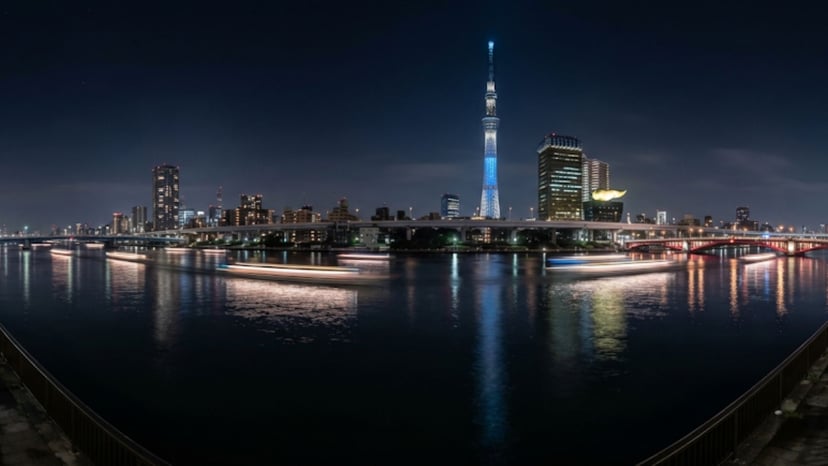
A beautiful night shot of the illuminated Tokyo skyline and river.
What Makes the Sumidagawa Fireworks Festival Different?
Japan hosts hundreds of spectacular fireworks festivals every summer, but the Sumidagawa Fireworks Festival stands apart because of its remarkable history and cultural significance.
| Festival | Best Known For | Experience |
|---|---|---|
| Sumidagawa Fireworks Festival | Edo-period heritage and Tokyo skyline | History, culture, world-class fireworks |
| Nagaoka Fireworks Festival | Large-scale pyrotechnics | Memorial event |
| Omagari Fireworks Competition | Professional fireworks competition | Technical excellence |
| Lake Biwa Fireworks Festival | Lakeside scenery | Romantic atmosphere |
Unlike many modern displays, Sumidagawa combines nearly three centuries of history with contemporary pyrotechnic artistry, making it one of Japan's most iconic summer celebrations.
Nearby Attractions to Visit Before the Festival
Many visitors spend the day exploring nearby attractions before the fireworks begin.
Sensō-ji Temple
Tokyo's oldest Buddhist temple is only a short walk from the main viewing areas and offers a perfect introduction to Asakusa's historic atmosphere.
Tokyo Skytree
One of Japan's tallest landmarks, Tokyo Skytree offers shopping, restaurants, and panoramic observation decks before the evening fireworks.
Nakamise Shopping Street
Browse traditional Japanese souvenirs and sample local snacks while walking from Kaminarimon Gate towards Sensō-ji Temple.
Sumida Park
Arrive early and enjoy a relaxing riverside walk before the crowds gather for the fireworks.
Conclusion
The Sumidagawa Fireworks Festival is much more than an evening of spectacular fireworks. It is a celebration of Tokyo's history, resilience, and cultural heritage that has brought people together for almost three centuries. From its origins following the Kyoho famine to the legendary rivalry between the Tamaya and Kagiya guilds, every firework launched above the Sumida River reflects a tradition that continues to inspire millions of visitors each year.
Whether you choose a lively riverside viewing spot, enjoy the fireworks from a luxury rooftop terrace, or experience the festival through a private chauffeur-guided itinerary, the Sumidagawa Fireworks Festival 2026 promises one of the most memorable summer evenings in Japan.
If you're planning a trip to Tokyo in July 2026, make this iconic event part of your itinerary. Arrive early, embrace the festive atmosphere in your yukata, sample traditional street food, and witness why the Sumidagawa Hanabi Taikai remains one of Japan's greatest summer celebrations.