

Mount Fuji 5th Station is one of the easiest ways for sightseers to experience Japan's iconic mountain at high altitude without committing to a full summit climb. Sitting at 2,305 meters on the Yamanashi side, it is the main starting point for the Yoshida Trail and is reached by road via the Fuji Subaru Line.It is also a destination in its own right, with souvenir shops, cafés, and—on clear days—views across the surrounding Fuji Five Lakes region. The weather can change quickly at this elevation, so visibility is never guaranteed and timing can make a significant difference to your visit.
In this 2026 guide, we'll cover how to get to Mount Fuji 5th Station from Tokyo, the best time to visit, seasonal road restrictions, what to see and do, and practical tips for first-time visitors.a
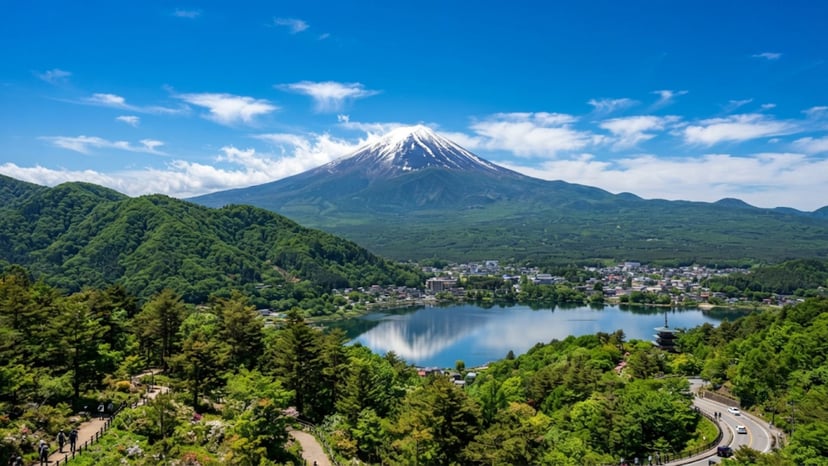
Quick Fact about mount fuji 5th station
| Quick Fact | Information |
|---|---|
| Height | 3,776 m |
| UNESCO | Since 2013 |
| Nearest City | Fujiyoshida |
| Distance from Tokyo | ~100 km |
| Best Season | Autumn |
| Best Time | Before 9:00 AM |
| Official Climbing Season | Early July–Early September |
| Famous For | UNESCO, Volcano, Photography |
What Is Mount Fuji's 5th Station?
Many first-time visitors assume there is only one "Mount Fuji 5th Station". In reality, Mount Fuji has four official climbing routes, each beginning at its own 5th Station:
| Trail | Prefecture | Popularity |
|---|---|---|
| Yoshida (Fuji Subaru Line) | Yamanashi | Most popular |
| Fujinomiya | Shizuoka | Second most popular |
| Subashiri | Shizuoka | Moderate |
| Gotemba | Shizuoka | Least crowded |
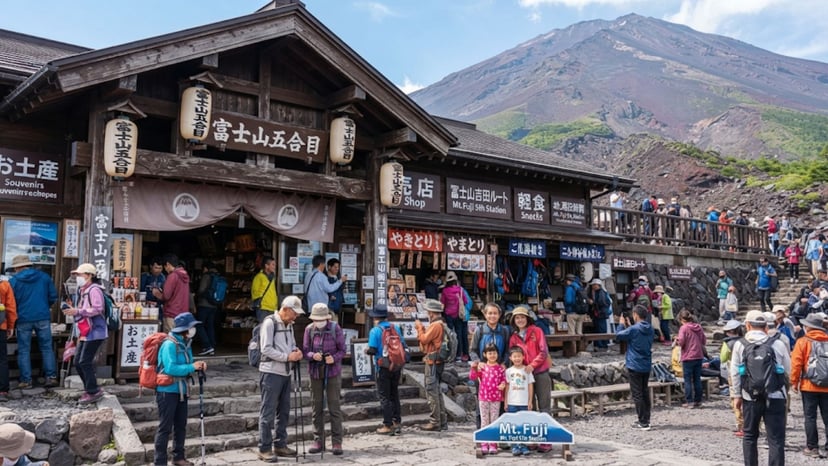
Among these, the Fuji Subaru Line 5th Station on the Yoshida Route is the most visited because it offers the easiest access from Tokyo and excellent facilities for both climbers and sightseeing visitors. Situated high above the Fuji Five Lakes region, the station functions as more than just a trailhead. It features:
- Restaurants and cafés
- Souvenir shops
- Mountain equipment stores
- Coin lockers
- Public restrooms
- Observation points
- Komitake Shrine
- Bus terminal
- Tourist information
Even if you have no intention of climbing to the summit, the 5th Station offers an immersive alpine experience and sweeping views across Yamanashi Prefecture.
Mount Fuji Information and Facts
Before planning your visit, it helps to understand why Mount Fuji is one of Japan's most treasured landmarks. Mount Fuji stands at 3,776 metres (12,389 feet), making it the tallest mountain in Japan. It is an active stratovolcano that formed over thousands of years through repeated volcanic eruptions. According to official tourism information, the mountain reached its current shape roughly 5,000 years ago. At the same time, its most recent eruption, the Hōei Eruption, occurred in 1707, sending volcanic ash as far as Edo (modern-day Tokyo).
Some fascinating facts include the following:
- Highest mountain in Japan
- UNESCO World Cultural Heritage Site since 2013
- Active volcano continuously monitored by authorities
- Sacred mountain in Shinto and Buddhist traditions
- One of Japan's Three Holy Mountains
- Climbed by hundreds of thousands of people during the official climbing season
Mount Fuji has inspired countless works of art, including the famous woodblock prints of Katsushika Hokusai, whose iconic series Thirty-six Views of Mount Fuji helped introduce the mountain's beauty to audiences around the world. Its nearly symmetrical volcanic cone continues to symbolise Japan internationally.
Did you know?
Mount Fuji can occasionally be seen from Tokyo on exceptionally clear winter mornings, despite being around 100 kilometres away. Winter's lower humidity often creates the best long-distance visibility.
Why Is Mount Fuji a UNESCO World Heritage Site?
Mount Fuji is more than Japan's highest mountain; it is one of the country's most important cultural and spiritual landmarks. In 2013, UNESCO inscribed Fujisan, Sacred Place and Source of Artistic Inspiration on the World Heritage List because of its exceptional cultural value rather than its natural features.
For centuries, Mount Fuji has inspired artists, poets, pilgrims, and religious practitioners. Its near-perfect volcanic cone appears in countless paintings, literature, and photography, including Katsushika Hokusai's famous Thirty-six Views of Mount Fuji. Pilgrims have traditionally climbed the mountain as an act of spiritual devotion, while shrines and sacred sites around its base continue to preserve these traditions today.
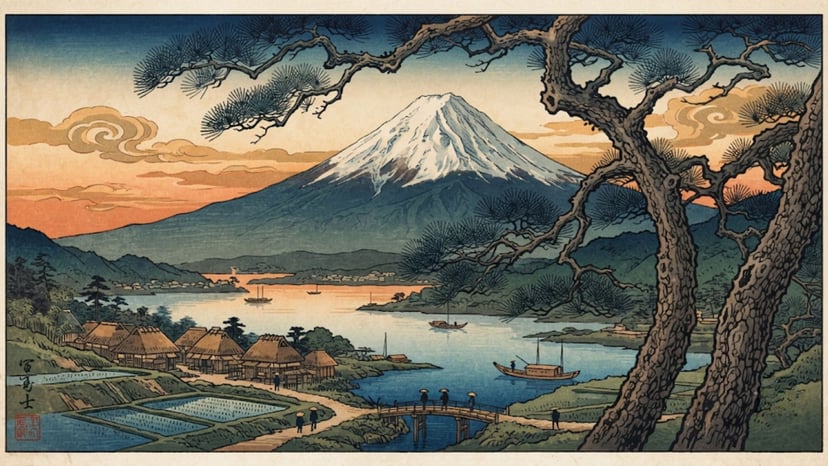
The UNESCO World Heritage property includes not only Mount Fuji itself but also surrounding shrines, pilgrimage routes, lava caves, and cultural sites that reflect its enduring importance in Japanese history. This recognition highlights Mount Fuji as a destination that combines spectacular scenery with centuries of cultural heritage, making it one of Japan's most meaningful places to visit.
Where Is Mount Fuji?
Mount Fuji is located on Japan's largest island, Honshu, straddling the border between Yamanashi Prefecture and Shizuoka Prefecture, approximately 100 kilometres southwest of central Tokyo. Because of its location, Mount Fuji is one of the easiest major natural attractions to visit as a day trip from Tokyo.
Mount Fuji's Nearest City:
Travellers often ask which city is closest to Mount Fuji. The answer depends on which side of the mountain you plan to visit. The most convenient gateway cities include:
| City | Why Visit |
|---|---|
| Fujiyoshida | Closest to Subaru Line 5th Station |
| Fujikawaguchiko | Access to Lake Kawaguchiko |
| Gotemba | Shopping and southern access |
| Mishima | Shinkansen connection |
| Fujinomiya | Southern climbing route |
For most international visitors, Fujiyoshida and Kawaguchiko serve as the primary transport hubs because buses to the Fuji Subaru Line 5th Station depart from these locations throughout the operating season.
How to Get to Mount Fuji 5th Station
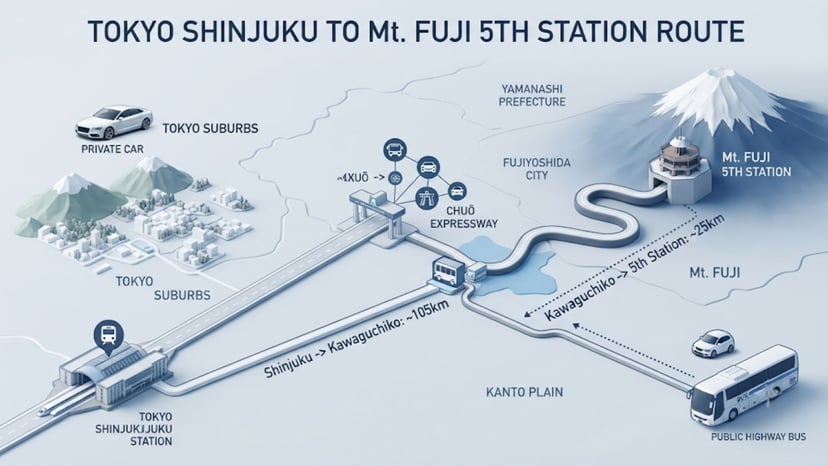
One of the reasons the Fuji Subaru Line's 5th Station is so popular is its excellent transportation network. Visitors can reach it by direct highway bus, train-and-bus combination, guided coach tour, taxi, or private car during periods when road access is permitted. Whether you're searching online for Mt Fuji Station 5, Mount Fuji Station 5, or the Fuji Subaru Line 5th Station, you're referring to the same visitor gateway located approximately 2,305 metres above sea level on the Yoshida route.
From Tokyo by Highway Bus
The simplest option is the direct highway bus from Shinjuku Motorway Bus Terminal (Busta Shinjuku) to the Fuji Subaru Line 5th Station. Journey time is approximately 2.5 hours, depending on traffic and seasonal demand. This direct connection eliminates the need to transfer between trains and buses, making it one of the easiest ways for first-time visitors to reach the mountain.
By Train
Travellers who prefer rail travel can take the following:
- JR Chuo Line from Shinjuku to Otsuki
- Transfer to the Fujikyu Railway Line
- Continue to Fujisan Station or Kawaguchiko Station
- Board a mountain bus to the Fuji Subaru Line 5th Station
This option offers scenic views of rural Yamanashi and greater flexibility if you plan to explore the Fuji Five Lakes region before visiting the mountain.
By Car
Driving provides flexibility outside the peak climbing season, but visitors should be aware that the Fuji Subaru Line is subject to seasonal traffic regulations.
During the official climbing season, private vehicles are restricted, and visitors must park at designated facilities before transferring to shuttle buses. These measures help reduce congestion and protect the mountain environment. Official restriction dates are announced annually. For the 2026 climbing season, private vehicles are restricted on the Fuji Subaru Line from 18:00 on 3 July to 18:00 on 10 September 2026, with shuttle buses operating from Fujisan Parking.
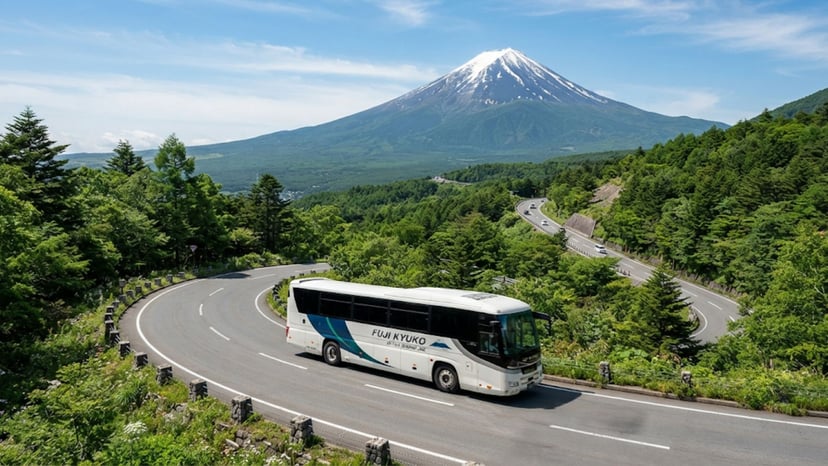
Private Mount Fuji Tour from Tokyo
Many travellers choose a private tour to Mount Fuji from Tokyo, particularly families, photographers, or groups seeking flexibility.
Private tours typically offer:
- Hotel pickup and drop-off
- Flexible itinerary
- Stops at Lake Kawaguchiko
- Chureito Pagoda
- Oshino Hakkai
- Fuji Subaru Line 5th Station
- Optional Hakone extension
Compared with standard coach tours, private tours allow more time at viewpoints and make it easier to adjust the schedule according to weather conditions an important advantage when hoping for clear views of Mount Fuji.
Best Time of Day to Visit Mount Fuji 5th Station
Although Mount Fuji is beautiful throughout the day, early morning generally offers the best experience. As the sun warms the surrounding landscape, clouds frequently begin forming around the mountain, reducing visibility by late morning or early afternoon. On a recent September morning, our guide arrived at the 5th Station just after 7 a.m. The summit was fully clear for less than twenty minutes before cloud cover rolled in. That narrow window is typical: if photography is your priority, build in flexibility rather than a fixed arrival time.
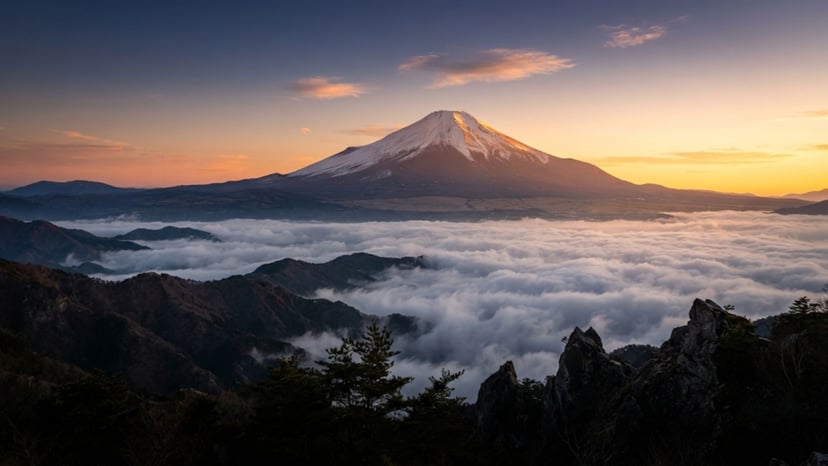
Suppose your goal is sightseeing or photography; plan to arrive before 9:00 a.m. whenever possible. Morning conditions often provide the following:
- Clearer views of the summit
- Better lighting for photography
- Smaller crowds
- Cooler temperatures
- Better parking availability during busy periods
Visitors travelling from Tokyo should consider taking the earliest available highway bus or joining an early departure tour to maximise their chances of seeing Mount Fuji without cloud cover.
Weather at Mount Fuji, Japan
One of the biggest surprises for first-time visitors is how different the weather feels at the Fuji Subaru Line 5th Station compared with Tokyo. Although the station is accessible by road, it sits at an elevation of approximately 2,305 metres, where temperatures are significantly cooler, winds are stronger, and conditions can change rapidly throughout the day. Even during midsummer, mornings may feel chilly, while fog can reduce visibility within minutes. We've had guests standing at the observation deck in short sleeves at 10 a.m., only to be reaching for jackets by 10:20 as fog rolled in off the ridge. It happens fast enough that we now tell every traveller to keep a layer within arm's reach, not packed away in the car. The Japan Meteorological Agency and local tourism authorities recommend checking the latest mountain forecast before travelling, particularly during the rainy season or typhoon periods.
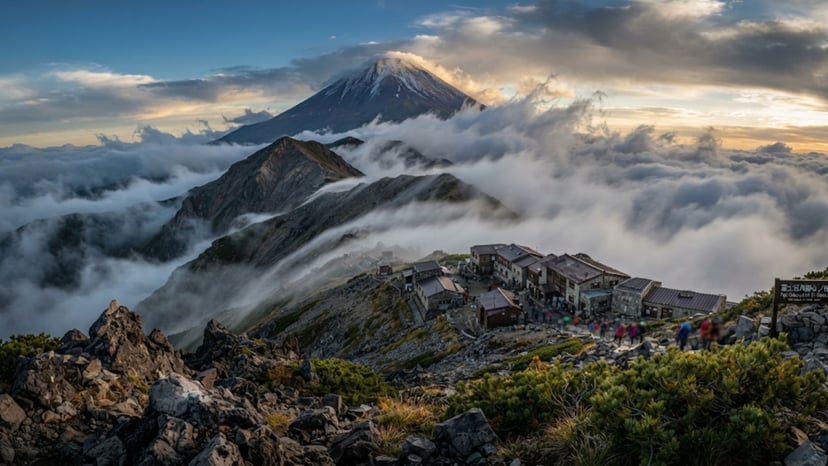
Unlike city weather, Mount Fuji creates its own microclimate. Warm air from surrounding plains rises against the mountain, often forming afternoon clouds around the summit. As a result, visitors hoping to enjoy clear panoramic views should aim to arrive early in the morning, when skies are generally more stable.
Seasonal Weather Overview
| Season | Average Conditions | Travel Advice |
|---|---|---|
| Spring (March–May) | Cool, occasional snow at higher elevations | Dress in layers and expect changing temperatures |
| Summer (June–August) | Mild temperatures, climbing season, afternoon clouds | Ideal for sightseeing and hiking; carry a waterproof jacket |
| Autumn (September–November) | Crisp air, colourful foliage, excellent visibility | One of the best seasons for photography |
| Winter (December–February) | Snow, icy roads, limited mountain access | Check road conditions and transport availability before travelling |
Even if Tokyo is experiencing temperatures above 30°C in summer, the 5th Station may feel 10–15°C cooler because of its elevation. A fleece or windproof jacket is advisable throughout the year.
Mount Fuji in September
September is widely regarded as one of the most rewarding months to visit Mount Fuji. As summer crowds begin to decline after the official climbing season, visitors can enjoy a quieter atmosphere while still benefiting from relatively comfortable weather.
Early September often retains mild temperatures, although evenings become noticeably cooler. By mid to late September, the surrounding forests begin showing the first hints of autumn colours, creating attractive contrasts against Mount Fuji's volcanic slopes.
Advantages of visiting in September include:
- Smaller crowds compared with August
- Pleasant daytime temperatures
- Improved visibility after humid summer conditions
- Better opportunities for photography
- Comfortable walking conditions
However, travellers should remember that weather remains unpredictable. Typhoon activity can occasionally affect visibility or transportation during early September, so monitoring official weather updates before departure is recommended.
Is Mount Fuji Visible Every Day?
No. Despite its impressive height, Mount Fuji is not visible every day. Weather conditions, cloud cover, humidity, and seasonal changes all affect visibility.
The clearest views usually occur during:
- Autumn
- Winter
- Early mornings
- Dry weather
Visibility is generally lower during the rainy season and humid summer afternoons when clouds often gather around the summit. If seeing Mount Fuji is your main priority, keep your itinerary flexible where possible and check the latest weather forecast before travelling.
Things to Do at Mount Fuji 5th Station
Although many people associate the 5th Station only with climbing, it offers enough attractions to keep non-climbers entertained for several hours. Whether you're travelling with family, visiting as part of a guided tour, or simply looking for spectacular scenery, there's plenty to explore.
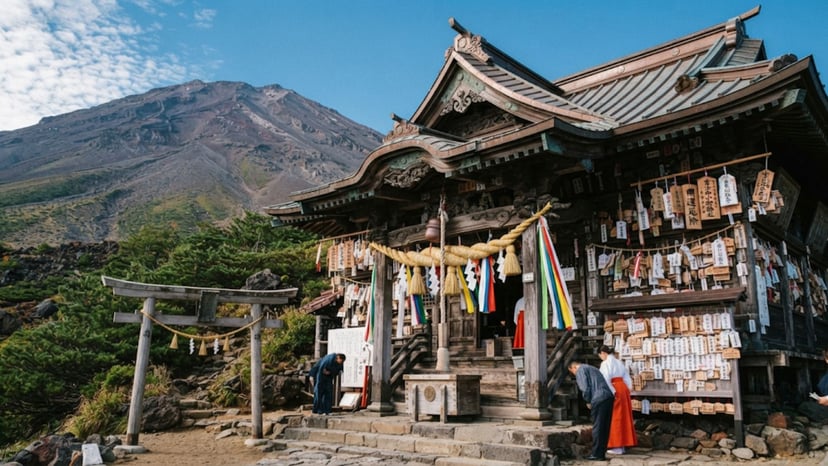
Enjoy Panoramic Observation Decks
The biggest attraction is undoubtedly the panoramic views. On clear days, visitors can look across the Fuji Five Lakes region, rolling forests, and distant mountain ranges. Depending on weather conditions, visibility may extend well beyond Yamanashi Prefecture. Many travellers describe standing above the clouds as one of the highlights of their entire Japan itinerary.
Visit Komitake Shrine
Located beside the main shopping area, Komitake Shrine has welcomed pilgrims for centuries. Before modern roads reached the mountain, climbers traditionally stopped here to pray for a safe ascent. Today, visitors often purchase lucky charms or write wishes on wooden ema plaques while enjoying the peaceful surroundings.
Explore Local Shops
The station contains numerous souvenir stores selling the following:
- Mount Fuji-themed gifts
- Local sweets
- Traditional crafts
- Hiking equipment
- Postcards
- Seasonal snacks
Many visitors also purchase the famous Mount Fuji walking stick, which can be stamped at various stations during the climb.
Local Cuisine
Several restaurants serve regional favourites, including:
- Hoto noodles
- Curry rice
- Udon
- Japanese set meals
- Soft-serve ice cream
Dining with panoramic mountain views makes the experience especially memorable.
Start a Short Hike
Even if you're not climbing to the summit, several short walking trails around the station allow visitors to experience the alpine environment. Gentle paths provide impressive viewpoints without requiring advanced hiking skills.
Common Mistakes First-Time Visitors Make
Planning ahead can make a significant difference to your experience. Avoid these common mistakes when visiting Mount Fuji 5th Station:
Arriving Too Late
Morning usually offers the clearest views, while clouds often develop later in the day.
Underestimating the Temperature
Even during summer, temperatures at the 5th Station can be much cooler than in Tokyo.
Not Checking Road Restrictions
Private vehicle access is limited during parts of the climbing season, so always check whether shuttle buses are required.
Wearing Unsuitable Footwear
Even short walks around the station involve uneven volcanic terrain. Comfortable walking shoes are recommended.
Expecting Perfect Visibility
Mount Fuji creates its own weather system, meaning visibility can change within minutes.
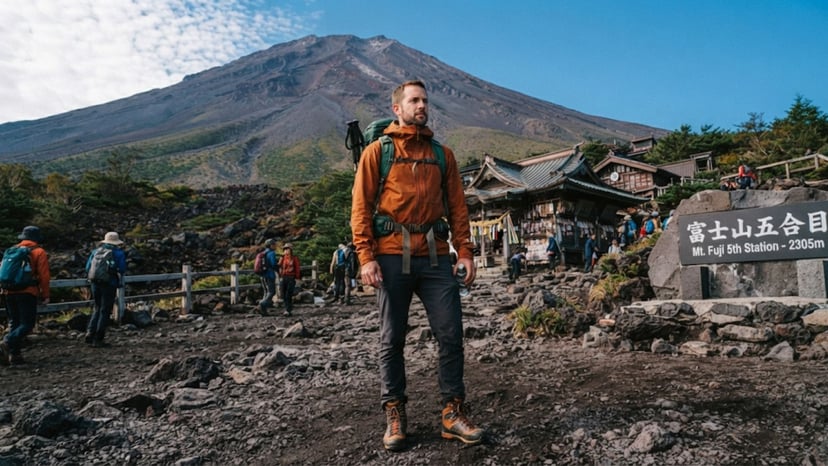
Mount Fuji Photography Guide
Few mountains in the world are photographed as often as Mount Fuji. Its symmetrical volcanic cone changes appearance dramatically with the seasons, weather, and time of day, making every visit unique. Professional photographers generally recommend arriving:
- Shortly after sunrise
- Early morning before clouds develop
- Autumn and winter for the clearest visibility
Morning light often produces softer colours and better contrast, while calmer atmospheric conditions increase the likelihood of an unobstructed view.
Photography Equipment
Recommended gear includes:
- Wide-angle lens
- Polarising filter
- Telephoto lens
- Lightweight tripod
- Spare batteries
- Lens cloth
Weather can change quickly, so keeping equipment protected from sudden rain or mist is advisable.
Photography Tips
For the best results:
- Check weather forecasts before departure.
- Arrive early to avoid crowds.
- Look for foreground elements such as shrines, trees, or volcanic rocks.
- Avoid harsh midday lighting.
- Use people in the frame to provide scale.
During autumn, colourful foliage creates striking compositions, while winter offers snow-covered scenery with exceptional clarity.
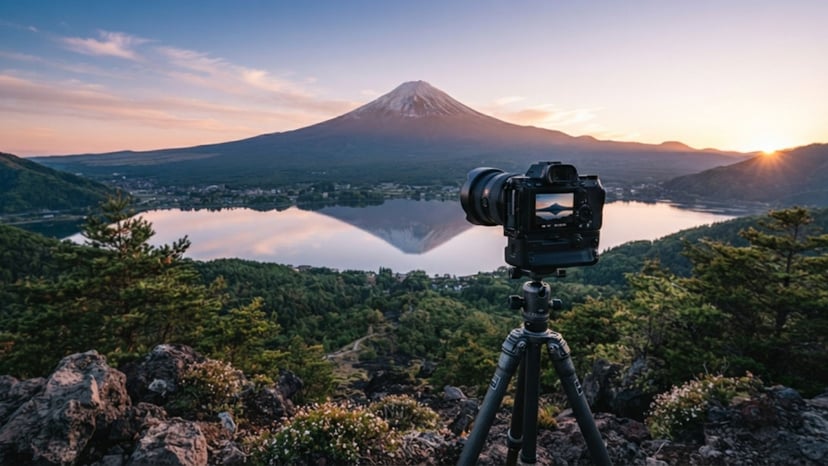
Where Is the Best Place to See Mount Fuji?
Although the Fuji Subaru Line 5th Station provides spectacular scenery, several other locations offer equally iconic perspectives.
Lake Kawaguchiko
Lake Kawaguchiko is perhaps the most famous place to photograph Mount Fuji reflected in calm water. Cherry blossoms in spring and colourful foliage in autumn create postcard-perfect scenery.
Ideal for:
- Sunrise photography
- Boat cruises
- Lakeside walks
- Family visits
Chureito Pagoda
The red five-storey pagoda overlooking Mount Fuji has become one of Japan's most recognisable viewpoints. Visitors climb several hundred steps before reaching the observation platform, where the pagoda perfectly frames the mountain. Best seasons:
- Cherry blossom
- Autumn leaves
Oshino Hakkai
This traditional village is famous for its crystal-clear spring ponds and views of Mount Fuji behind historic thatched-roof houses. Ideal for travellers seeking cultural photography.
Fuji Subaru Line
Driving or travelling by bus along the Fuji Subaru Line offers numerous viewpoints before reaching the 5th Station. Several designated parking areas provide excellent photo opportunities.
Views of Mount Fuji from Hakone
Hakone offers a completely different perspective of Mount Fuji. Rather than standing on the mountain itself, visitors enjoy distant views framed by lakes, forests, and volcanic landscapes.
Popular viewing locations include the following:
- Lake Ashi
- Hakone Ropeway
- Owakudani
- Hakone Observation Parks
On exceptionally clear days, Mount Fuji appears dramatically across the lake, making Hakone one of Japan's most popular destinations for scenic photography.
Which Mount Fuji Viewpoint Is Best?
Of the viewpoints we take guests to, Chureito Pagoda gets the most 'wow' reactions; in-person photos never quite capture the scale of the climb or how the pagoda sits below the mountain rather than beside it. Lake Kawaguchiko, by contrast, is the one people ask to go back to, usually for the calmer pace and the reflection shots at sunrise.
| Location | Best For | Travel Time from Tokyo |
|---|---|---|
| Fuji Subaru Line 5th Station | Close-up mountain views | Around 2.5 hours |
| Lake Kawaguchiko | Reflection photography | Around 2 hours |
| Chureito Pagoda | Classic postcard views | Around 2 hours |
| Oshino Hakkai | Traditional village scenery | Around 2.5 hours |
| Hakone | Scenic landscapes with Mount Fuji | Around 90–120 minutes |
Mount Fuji Panorama Glamping
Travellers looking for a unique overnight experience may enjoy Mount Fuji Panorama Glamping, which combines luxury camping with outstanding views of Japan's most famous mountain. Unlike traditional hotels, glamping accommodations allow guests to wake up facing Mount Fuji while enjoying modern comforts such as private terraces, comfortable beds, heating, and outdoor dining areas. Panorama glamping is particularly popular with the following:
- Couples
- Families
- Photographers
- Nature lovers
- Luxury travellers seeking a quieter alternative to city hotels
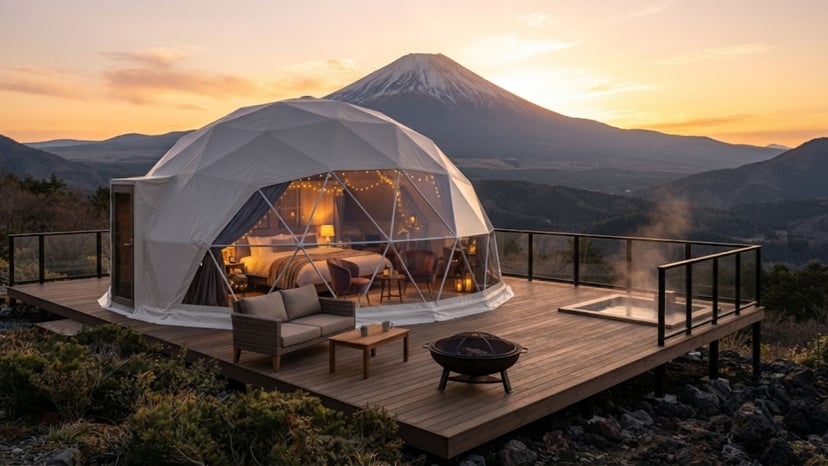
An overnight stay also increases the chances of seeing Mount Fuji under different lighting conditions, including sunrise, sunset, and star-filled skies.
Planning Your Mount Fuji Tour
Whether you're visiting Japan for a week or planning a longer itinerary, adding Mount Fuji to your trip is one of the best decisions you can make. The Fuji Subaru Line's 5th Station is accessible enough for a day trip from Tokyo while offering breathtaking scenery, cultural landmarks, and unforgettable experiences. The type of tour you choose depends on your travel style, budget, and the amount of time available.
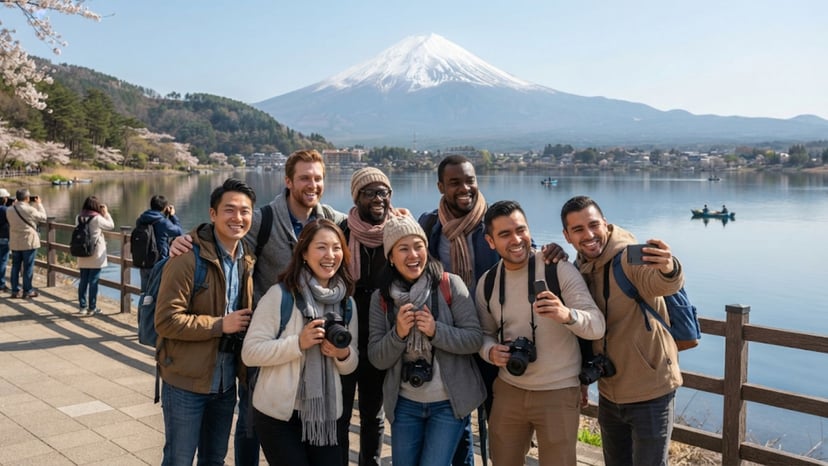
Guided Mount Fuji Tour
A guided Mount Fuji tour is ideal for first-time visitors who want a hassle-free experience. Most tours include transportation, an English-speaking guide, and visits to nearby attractions, allowing travellers to enjoy the scenery without worrying about train transfers or road restrictions. The itineraries that work best are rarely the ones planned to the minute. On days with unstable weather, our drivers will often swap the order of stops, pushing Oshino Hakkai earlier and holding the 5th Station for later in the morning based on which way the cloud cover is moving. That kind of real-time adjustment is the main thing a private tour buys you over a fixed-departure coach.
Typical inclusions are the following:
- Round-trip transport from Tokyo
- Fuji Subaru Line 5th Station
- Lake Kawaguchiko
- Oshino Hakkai
- Local shopping stops
- Optional cruise or ropeway (depending on the itinerary)
Guided tours are particularly convenient during busy travel seasons when public transport can become crowded.
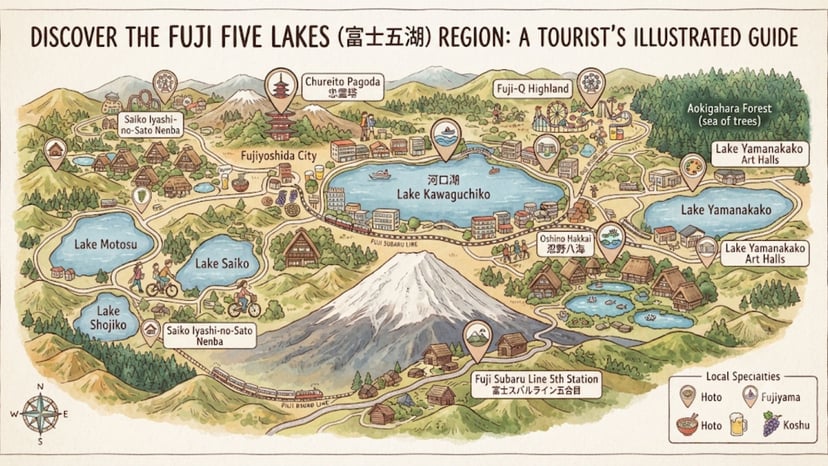
Private Tour to Mount Fuji from Tokyo
Travellers seeking flexibility often choose a private tour to Mount Fuji from Tokyo. Unlike standard group tours, private experiences allow you to customise your itinerary, spend more time at your favourite locations, and travel at your own pace. A private tour is especially suitable for:
- Families with children
- Couples
- Senior travellers
- Small groups
- Photographers
- Luxury travellers
Many private tours include hotel pickup, making the journey more comfortable, especially for visitors unfamiliar with Japan's transport system.
Suggested itinerary:
| Time | Activity |
|---|---|
| 8:00 AM | Hotel pickup in Tokyo |
| 10:30 AM | Fuji Subaru Line 5th Station |
| 12:00 PM | Lunch with mountain views |
| 1:30 PM | Lake Kawaguchiko |
| 3:00 PM | Oshino Hakkai |
| 4:30 PM | Chureito Pagoda (weather permitting) |
| Evening | Return to Tokyo |
Private tours also provide greater flexibility if weather conditions require adjusting viewpoints for the best chance of seeing Mount Fuji.
Practical Travel Tips
A little preparation can make your visit significantly more enjoyable. Mount Fuji's weather and road conditions can change quickly, so planning ahead is essential.
What to Wear
Even in summer, temperatures at the 5th Station are much cooler than in Tokyo. Wear comfortable layers, including:
- Windproof jacket
- Comfortable walking shoes
- Hat
- Sunglasses
- Sunscreen
- Light gloves during cooler months
Avoid relying on city temperatures when deciding what to pack.
What to Bring
Pack essentials such as:
- Reusable water bottle
- Camera
- Portable charger
- Cash (some smaller shops may not accept cards)
- Rain jacket
- Snacks
- Personal medication
Accessibility at Mount Fuji 5th Station
The Fuji Subaru Line 5th Station is one of the most accessible areas of Mount Fuji. Visitors can reach the station by bus, tour coach, taxi, or private vehicle (outside seasonal restrictions), making it suitable for travellers who do not wish to hike to the summit. The main visitor area includes restaurants, shops, restrooms, and observation points located within a relatively short walking distance. While some paths include uneven volcanic surfaces or gentle slopes, many facilities are easily accessible for families with young children and visitors who prefer a less physically demanding experience.
Best Time to Visit
The best time depends on your interests.
Spring (April–May)
- Pleasant temperatures
- Cherry blossoms around the Fuji Five Lakes
- Fewer crowds than summer
Summer (July–August)
- Official climbing season
- Full transport services
- Green mountain scenery
Autumn (September–November)
- Colourful foliage
- Crisp air
- Excellent photography conditions
- Better visibility
Winter (December–February)
- Snow-covered Mount Fuji
- Outstanding long-distance views
- Limited road access
For most travellers, late autumn provides the best combination of clear skies, comfortable temperatures, and fewer visitors.
Estimated Costs for Visiting Mount Fuji
Your budget will depend on your chosen mode of transport and travel style. Below is a general guide to common expenses.
| Expense | Typical Cost |
|---|---|
| Highway bus (one way) | ¥2,300–¥3,000 |
| Guided day tour | ¥10,000–¥18,000 |
| Private tour | ¥45,000–¥80,000 (vehicle dependent) |
| Lunch | ¥1,000–¥2,500 |
| Parking | Seasonal |
| Souvenirs | ¥500–¥5,000 |
Booking transport or tours in advance during peak travel months is recommended, as availability can become limited.
Conclusion
Whether you call it Mt Fuji 5th Station, Mount Fuji Fifth Station, or the Fuji Subaru Line 5th Station, this is one of the easiest and most rewarding ways to experience Japan's highest mountain. From panoramic viewpoints and cultural heritage sites to scenic walking trails and nearby attractions such as Lake Kawaguchiko, Chureito Pagoda, and Oshino Hakkai, there's something for every type of traveller. Planning, arriving early, and checking the latest weather and road conditions will greatly improve your chances of enjoying clear views of Mount Fuji. Whether you choose an independent day trip, a guided excursion, or a private tour to Mount Fuji from Tokyo, this remarkable UNESCO World Heritage Site promises an unforgettable experience in every season.
Explore Mount Fuji with Karvaan Tours
Experience Japan's most iconic landmark with Karvaan Tours. Whether you're looking for a comfortable day trip, a private tour to Mount Fuji from Tokyo, or a customised itinerary covering Lake Kawaguchiko, Hakone, Oshino Hakkai, and the Fuji Subaru Line 5th Station, our expert local guides help you experience the very best of the region. Travel comfortably, discover hidden viewpoints, and create unforgettable memories with a professionally planned Mount Fuji adventure tailored to your schedule.