

Introduction
As dusk settles over central Tokyo, thousands of glowing paper lanterns begin illuminating the tree-lined approach to Yasukuni Shrine. Their warm golden light transforms the shrine grounds into one of Japan's most breathtaking summer scenes, creating an atmosphere of reflection, remembrance, and quiet beauty. This is Mitama Matsuri, one of Tokyo's most iconic July festivals and a celebration that beautifully combines Shinto tradition, cultural performances, and the spiritual significance of honouring ancestors. Unlike energetic fireworks festivals or lively street parades, Mitama Matsuri invites visitors to slow down and appreciate a different side of Japanese summer culture. More than 30,000 miakashi paper lanterns line the shrine grounds, while traditional performances, Bon Odori dances, Awa Odori processions, taiko drumming, and ceremonial events create an unforgettable cultural experience. Whether you are visiting Tokyo for the first time or returning to explore its seasonal traditions, this guide explains everything you need to know before attending Mitama Matsuri 2026.
Mitama Matsuri at a Glance
|
Information |
Details |
|
Japanese Name |
みたままつり |
|
Festival Type |
Lantern Festival |
|
Location |
Yasukuni Shrine, Tokyo |
|
Usually Held |
13–16 July |
|
Admission |
Free |
|
Main Attraction |
30,000+ illuminated lanterns |
|
Best Time |
After sunset |
|
Best For |
Families, photographers, culture lovers |
What Is Mitama Matsuri?
Mitama Matsuri (みたままつり) is an annual summer festival held at Yasukuni Shrine in Chiyoda Ward, Tokyo. The festival is dedicated to the mitama, or spirits, enshrined at the shrine and serves as one of Tokyo's most significant midsummer religious events. Every July, visitors gather beneath thousands of illuminated lanterns that symbolise prayers, remembrance, and gratitude. The atmosphere is peaceful rather than festive in the conventional sense, offering an experience that combines spirituality with traditional Japanese performing arts. Although the festival welcomes hundreds of thousands of visitors over four days, its focus remains on reflection and respect. Walking beneath the glowing lanterns provides an opportunity to experience one of Tokyo's most distinctive cultural traditions while learning about the role of remembrance in Japanese society.
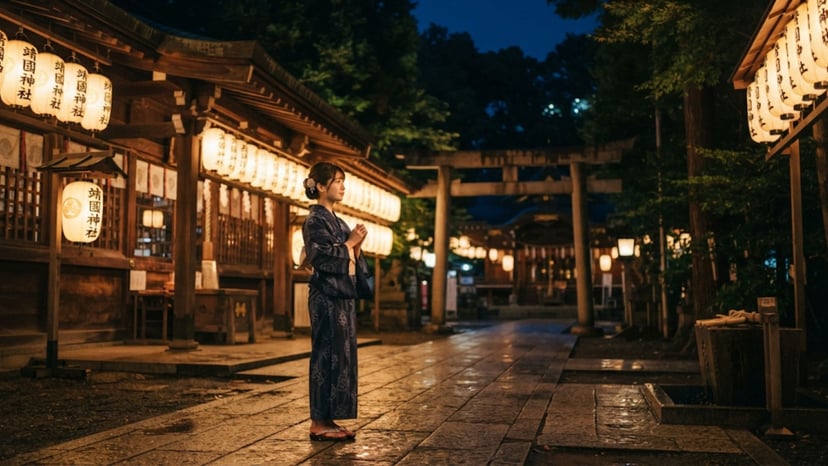
Visitors pausing in quiet reflection amidst the soft golden glow of the festival grounds.
History and Meaning of Mitama Matsuri
Mitama Matsuri began shortly after the Second World War and has grown into one of Tokyo's best-known summer festivals. Today, it is held every year from July 13 to July 16 at Yasukuni Shrine, continuing a tradition that honours the spirits commemorated there while welcoming visitors from across Japan and overseas. The word "Mitama" refers to honoured spirits, while "Matsuri" means festival. Together, the name reflects the event's purpose: paying tribute to those enshrined at the shrine through prayer, lantern illumination, and traditional cultural performances.
Unlike many Japanese summer festivals centred on entertainment, Mitama Matsuri blends solemn remembrance with community celebration. Families, local residents, and travelers gather beneath rows of lanterns to experience an atmosphere that feels both peaceful and uplifting. Understanding this cultural meaning allows visitors to appreciate the festival beyond its visual beauty and recognise why it remains one of Tokyo's most respected annual events.
Shinto Tradition and Ancestor Spirit Veneration
Mitama Matsuri is closely connected to Shinto tradition, Japan's indigenous belief system, which emphasises harmony between people, nature, and the spiritual world. Although many visitors associate ancestor remembrance with Obon, Mitama Matsuri has its own distinct identity rooted in the traditions of Yasukuni Shrine. The festival expresses respect for the spirits commemorated there while encouraging visitors to reflect on gratitude, peace, and remembrance. This connection to ancestor spirit veneration gives the festival a unique atmosphere. Rather than focusing on loud entertainment, visitors experience a sense of calm created by lantern light, ceremonial rituals, and traditional performances that unfold throughout the evening. For international travellers, this provides a valuable opportunity to understand how Japanese festivals often combine religious traditions with community gatherings in ways that are both meaningful and welcoming.
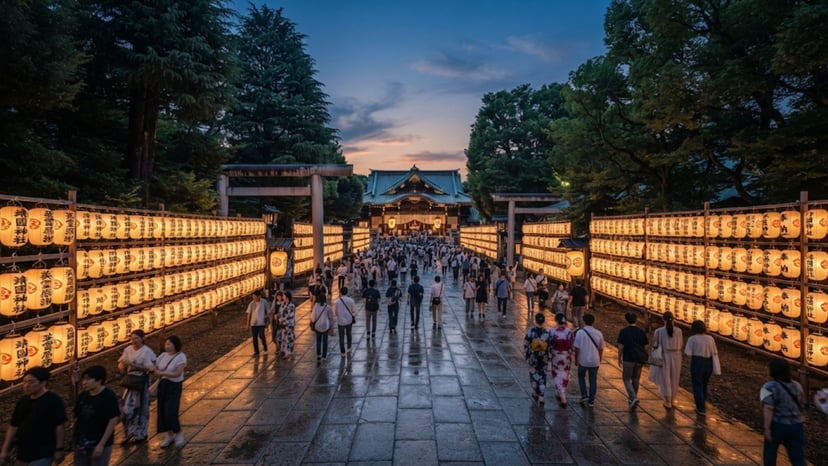
The main approach to Yasukuni Shrine glows with the light of 30,000 lanterns at dusk.
The Beauty of Miakashi Paper Lanterns
The defining image of Mitama Matsuri is undoubtedly the thousands of glowing miakashi paper lanterns that line the approach to Yasukuni Shrine. Each lantern softly illuminates the pathway, creating an extraordinary display that stretches toward the shrine's main buildings. As darkness falls, the warm light reflects against the surrounding trees and historic architecture, transforming the entire precinct into one of Tokyo's most photogenic summer locations. More than 30,000 lanterns are displayed during the festival, making it one of Japan's largest lantern displays. Visitors often spend considerable time simply walking through the illuminated approach, appreciating the peaceful atmosphere before attending the evening performances. For photographers, the lantern-lined avenue offers exceptional opportunities to capture both close-up details and dramatic wide-angle compositions, particularly during blue hour when the evening sky still retains a soft glow.
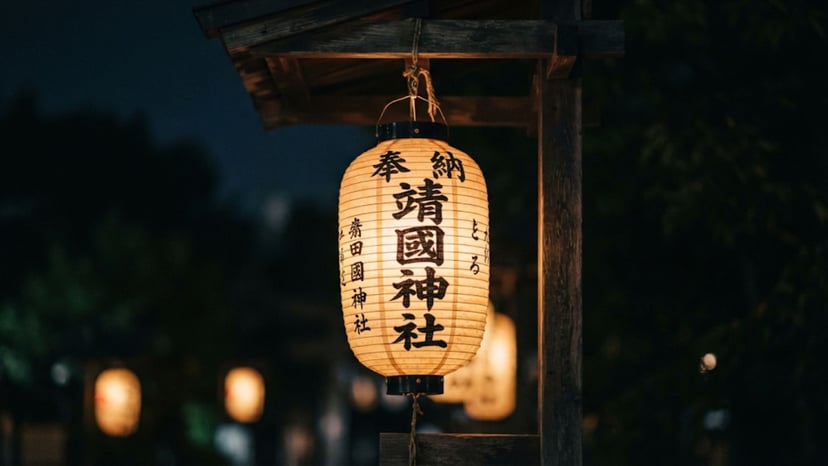
Each of the 30,000 lanterns is hand-painted and represents a prayer of remembrance.
Mitama Matsuri 2026 Dates, Schedule and Location
The Mitama Matsuri 2026 is scheduled to take place from July 13 to July 16, 2026, at Yasukuni Shrine in Tokyo's Chiyoda Ward. The shrine grounds remain open during the day, but the lantern illumination after sunset is the festival's main highlight. Traditional performances, including cultural dances and ceremonial events, take place throughout the four-day celebration.
|
Information |
Details |
|
Event |
Mitama Matsuri 2026 |
|
Japanese Name |
みたままつり |
|
Dates |
July 13–16, 2026 |
|
Venue |
Yasukuni Shrine, Chiyoda Ward, Tokyo |
|
Admission |
Free |
|
Main Highlight |
More than 30,000 illuminated paper lanterns |
|
Best Visiting Time |
From sunset onward |
|
Nearest Station |
Kudanshita Station |
Because admission is free and the festival attracts hundreds of thousands of visitors over four evenings, arriving before sunset is highly recommended. This allows enough time to explore the shrine grounds, photograph the lanterns as they begin to glow, and secure a comfortable position before the busiest evening period.
How to Reach Mitama Matsuri
Yasukuni Shrine is conveniently located in central Tokyo and is easily reached using Tokyo's extensive railway and subway network. The nearest station is Kudanshita Station, which is only a short walk from the shrine. Visitors can also reach the festival from Ichigaya Station or Iidabashi Station, making public transportation the most convenient option during the busy festival period.
By Train
Tokyo Metro Tozai Line, Hanzomon Line, Toei Shinjuku Line, and JR lines provide convenient access to the shrine.
By Taxi
Taxis are available throughout Tokyo, but traffic around Yasukuni Shrine becomes heavy during the evening, making trains the recommended option.
Reach Mitama Matsuri Comfortably by Private Vehicle
Although public transportation offers convenient access to Yasukuni Shrine, evening crowds around Kudanshita Station can become very busy during the festival. Travelers visiting Tokyo with children, elderly family members, or luggage may prefer the comfort and flexibility of a private vehicle. Karvaan Tours offers private Tokyo sightseeing tours with experienced English-speaking drivers and customised itineraries. Visitors can combine Mitama Matsuri with nearby attractions such as the Imperial Palace, Chidorigafuchi, Tokyo Station, or Ginza while enjoying hotel pickup and flexible scheduling.
|
Travel Option |
Best For |
Advantages |
|
Train |
Budget travellers |
Fast and convenient |
|
Guided Tour |
First-time visitors |
Local insights |
|
Private Vehicle (Karvaan Tours) |
Families and groups |
Hotel pickup and flexible itinerary |
Why Mitama Matsuri Is Worth Visiting
Tokyo hosts countless summer events, yet Mitama Matsuri stands apart because of its unique combination of spirituality, culture, and visual beauty. Rather than focusing solely on entertainment, the festival offers visitors an opportunity to experience an important aspect of Japanese cultural heritage through lantern displays, ceremonial traditions, and performances that celebrate regional arts from across Japan. The combination of thousands of glowing lanterns, traditional performances, and the peaceful atmosphere inside one of Tokyo's most historic shrine precincts creates an experience that feels distinctly different from the city's better-known fireworks festivals.
Can Tourists Enjoy Mitama Matsuri?
Absolutely. Mitama Matsuri welcomes both local residents and international visitors. Travelers are free to walk through the illuminated shrine grounds, watch traditional performances, admire the lantern displays, and experience the peaceful atmosphere. While the religious ceremonies remain respectful observances, visitors are encouraged to appreciate the festival and observe local customs.
Traditional Performances at Mitama Matsuri
While the lanterns are the festival's most recognisable feature, the cultural performances bring the shrine grounds to life throughout the four-day celebration. Visitors can enjoy a variety of traditional Japanese performing arts that reflect regional customs and seasonal celebrations.
Bon Odori Dance
One of the festival's highlights is the Bon Odori dance, a traditional performance associated with the summer Obon season. Local participants dance in coordinated circles to rhythmic music, creating a welcoming atmosphere where visitors can observe one of Japan's most cherished seasonal traditions.
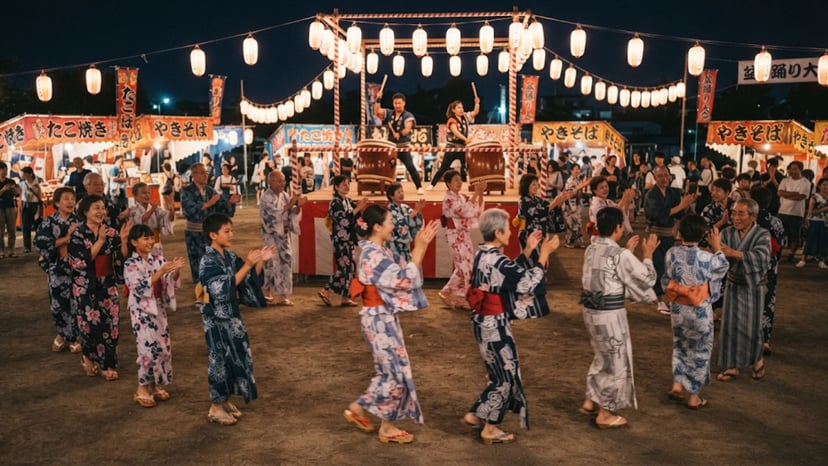
The rhythmic Bon Odori dance brings the community together in a circular formation.
Awa Odori Procession
The lively Awa Odori procession introduces the energetic dance style that originated in Tokushima Prefecture. The colourful costumes, synchronised movements, and cheerful music provide a striking contrast to the peaceful lantern displays and showcase the diversity of Japanese festival culture.
Taiko Drumming
Powerful taiko drumming performances echo throughout the shrine grounds during the evening. The deep rhythms create an unforgettable atmosphere and accompany many of the festival's cultural demonstrations.
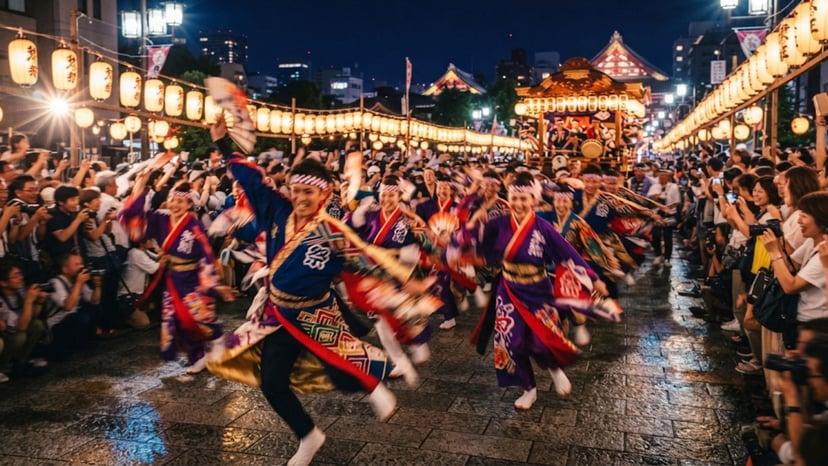
The high-energy Awa Odori procession provides a striking contrast to the quiet lantern aisles.
Mikoshi Procession
On selected days, visitors may also witness a mikoshi portable shrine procession, during which participants carry a beautifully decorated portable shrine through the festival grounds. This tradition symbolises the presence of the kami and remains an important element of many Shinto festivals.
Together, these performances transform Mitama Matsuri into much more than a lantern display, offering visitors a rich introduction to Japanese cultural traditions.
Best Time to Visit Mitama Matsuri
Choosing the right time can significantly improve your experience.
|
Time |
Experience |
|
5:00–6:00 PM |
Quiet shrine grounds and comfortable sightseeing |
|
6:30–7:30 PM |
Lanterns begin glowing and photography conditions improve |
|
7:30–9:00 PM |
Peak atmosphere with performances and illuminated lanterns |
|
After 9:00 PM |
Smaller crowds and peaceful evening walks |
If photography is your priority, arriving before sunset allows you to capture both daylight scenes and the lanterns as they illuminate the shrine. The transition from blue hour to night creates some of the festival's most beautiful images.
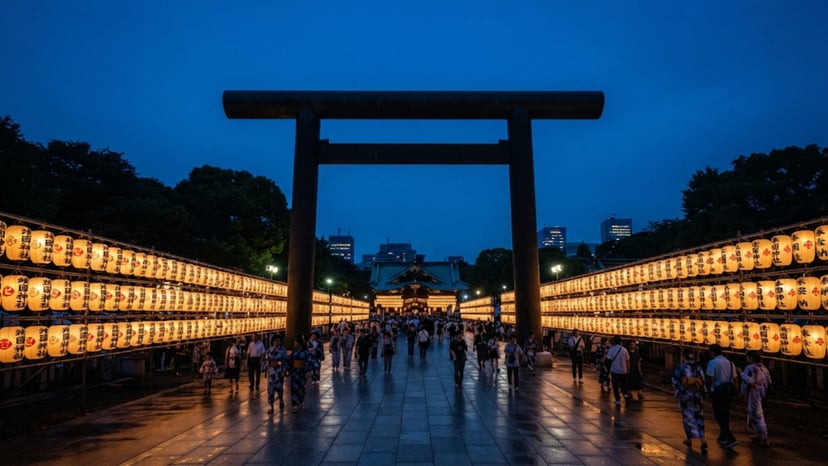
The transition from blue hour to total darkness offers the perfect conditions for photography.
Weather During Mitama Matsuri
Tokyo is typically hot and humid during mid-July, with daytime temperatures ranging from 30°C to 35°C. Even after sunset, the weather remains warm, so visitors should wear lightweight clothing, stay hydrated, and carry a small towel or portable fan. Occasional summer showers are possible, making a compact umbrella useful.
What Should You Wear to Mitama Matsuri?
Comfortable summer clothing is suitable for most visitors, although many Japanese residents attend wearing colourful yukata, adding to the traditional atmosphere. Comfortable walking shoes are recommended, as visitors spend much of the evening exploring the shrine grounds. Bringing a portable fan and drinking water can also make your visit more comfortable during Tokyo's humid summer weather.
Mitama Matsuri Crowd Tips
As one of Tokyo's best-known summer festivals, Mitama Matsuri attracts large crowds each evening. Fortunately, a few simple strategies can make your visit much more enjoyable.
Crowd Avoidance Tips
- Arrive at least one hour before sunset.
- Visit on a weekday if your travel schedule allows.
- Explore the shrine grounds before the busiest evening period.
- Use public transportation instead of driving.
- Stay after the main performances to enjoy a quieter atmosphere.
- Wear comfortable footwear, as you will spend time walking through the shrine precincts.
These tips allow you to appreciate the lantern displays without feeling rushed.
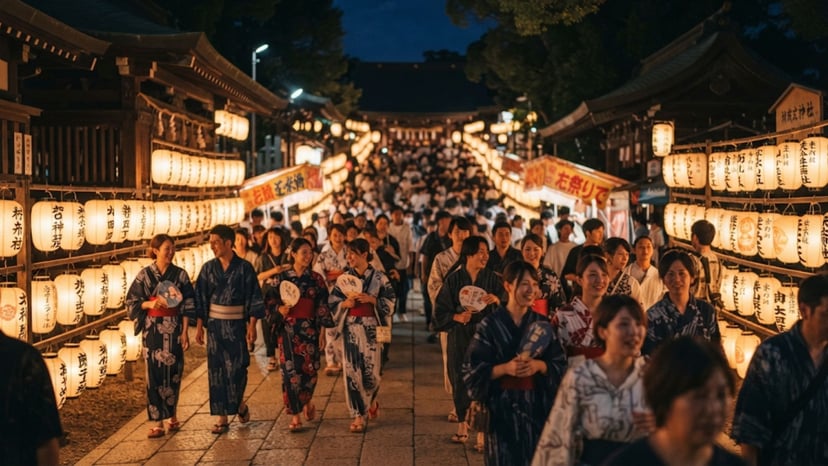
While popular, the shrine grounds remain respectful and orderly during the festival.
Best Photography Spots
Mitama Matsuri is one of Tokyo's most photogenic summer events, especially after sunset when thousands of lanterns illuminate the shrine.
Main Lantern Avenue
The approach leading to Yasukuni Shrine offers the festival's signature view, with rows of glowing lanterns creating remarkable symmetry.
Shrine Gate
Photographing the illuminated gate framed by lanterns produces one of the festival's most iconic compositions.
Lantern Display Area
Move closer to the lanterns to capture the intricate details of the paper designs and the warm glow they create.
Nearby Chidorigafuchi
After visiting the festival, walk to Chidorigafuchi for peaceful nighttime scenery around the historic moat.
Mitama Matsuri Etiquette
As Mitama Matsuri takes place within the grounds of Yasukuni Shrine, visitors should behave respectfully throughout their visit.
- Speak quietly near prayer areas.
- Avoid blocking pathways while taking photographs.
- Follow instructions from festival staff.
- Dispose of rubbish responsibly.
- Dress modestly when entering shrine buildings.
- Refrain from touching ceremonial objects unless invited.
Nearby Attractions for a Complete Evening
Mitama Matsuri is ideally located for exploring central Tokyo before or after the festival.
Chidorigafuchi
Just a short walk from Yasukuni Shrine, Chidorigafuchi offers scenic walking paths beside the former Edo Castle moat. Although best known for cherry blossoms, it is equally enjoyable on summer evenings.
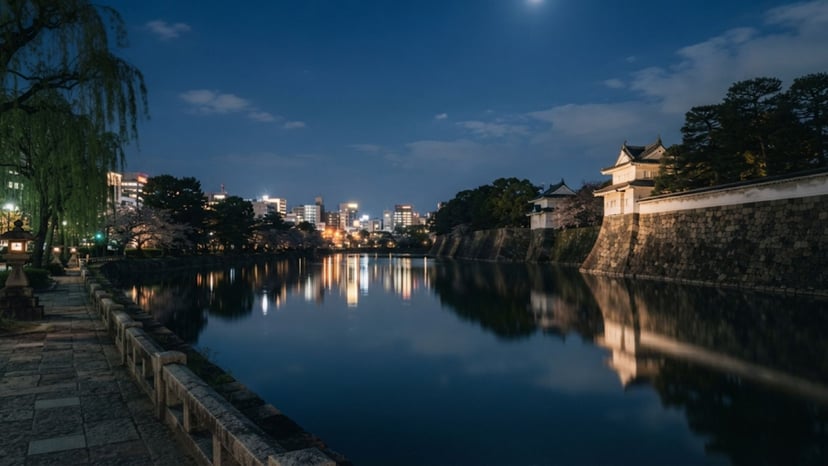
The nearby Chidorigafuchi moat offers a serene escape after the festival bustle.
Imperial Palace East Gardens
Visitors arriving earlier in the day can explore the Imperial Palace East Gardens, where beautifully landscaped grounds and historical remains provide an excellent introduction to Tokyo's heritage.
Chiyoda Ward
The surrounding streets of Chiyoda Ward feature cafés, restaurants, and quiet public spaces that are ideal for relaxing before the evening lantern illumination begins.
Private Tours and Luxury Festival Experiences
Travelers seeking a more comfortable experience can enhance their visit with premium services.
Many luxury travel providers offer the following:
- Private Japan festival tours
- Chauffeur-driven transportation
- Personalized Tokyo evening itineraries
- Professional photography experiences
- Luxury dining reservations before or after the festival
A private chauffeur Japan festival tour is particularly convenient because it allows visitors to combine Mitama Matsuri with nearby attractions such as the Imperial Palace area, Ginza, or Tokyo Station without navigating busy public transport during peak evening hours.
For couples celebrating a special occasion or travelers seeking a more exclusive experience, these services provide a relaxed and personalised way to enjoy one of Tokyo's most beautiful summer festivals.
Conclusion
Mitama Matsuri offers a different perspective on Tokyo's summer festival season. Instead of fireworks or bustling parades, it invites visitors to experience a peaceful evening filled with glowing miakashi paper lanterns, traditional performances, and the timeless values of remembrance and gratitude. Whether you come to admire the lanterns, watch Bon Odori and Awa Odori performances, listen to the powerful rhythms of taiko drumming, or simply enjoy a quiet walk through the historic grounds of Yasukuni Shrine, the festival provides one of Tokyo's most memorable cultural experiences. If you're planning a visit to Japan in July 2026, Mitama Matsuri deserves a place on your itinerary. Arrive before sunset, take time to explore nearby attractions such as Chidorigafuchi and the Imperial Palace East Gardens, and experience an evening that beautifully reflects Japan's rich cultural traditions.
Ready to discover one of Tokyo's most enchanting lantern festivals? Plan ahead, check the official event schedule before your visit, and enjoy an unforgettable summer evening illuminated by thousands of glowing lanterns.