

Introduction
Imagine the rhythmic sound of powerful drums echoing through the streets of Shinjuku as hundreds of performers dressed in vibrant Okinawan costumes dance in perfect harmony. Crowds line the sidewalks, cheering as energetic parades fill one of Tokyo's busiest districts with the traditions of the Ryukyu Islands. This is the Shinjuku Eisa Festival, one of Japan's most exciting free summer cultural events and a celebration that brings the spirit of Okinawa to the heart of Tokyo. Many travellers compare the Shinjuku Eisa Festival with the famous Okinawa Eisa Festival, officially known as the Okinawa Zento Eisa Matsuri. While both celebrate the same traditional dance, each offers a different atmosphere and visitor experience.
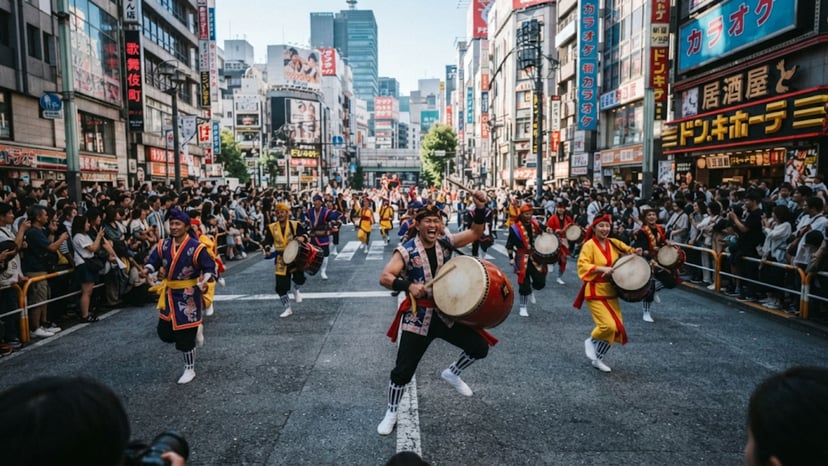
Energetic Eisa dancers performing with drums in Shinjuku.
Unlike many traditional festivals that remain closely tied to their local communities, the Shinjuku Eisa Matsuri showcases how regional culture can thrive in Japan's largest city. Every summer, dozens of Eisa dance troupes perform along Shinjuku-dori, creating an unforgettable atmosphere of music, dance, and community that attracts both locals and international visitors. Whether you are visiting Tokyo for the first time or looking for authentic cultural experiences beyond the city's famous landmarks, this guide explains everything you need to know about the Shinjuku Eisa Festival 2026, including its history, schedule, best viewing locations, cultural significance, and practical tips for making the most of your visit.
Shinjuku Eisa Festival at a Glance
|
Information |
Details |
|
Japanese Name |
新宿エイサーまつり |
|
Festival Type |
Okinawan Cultural Festival |
|
Location |
Shinjuku, Tokyo |
|
Admission |
Free |
|
Usually Held |
Late July |
|
Main Attraction |
Traditional Okinawan Eisa Dance |
|
Nearest Station |
Shinjuku Station |
|
Best For |
Families, photographers and cultural travellers |
What Is the Shinjuku Eisa Festival?
The Shinjuku Eisa Festival is an annual cultural celebration that brings the traditional Okinawan Eisa Festival dance traditions to central Tokyo, allowing visitors to experience authentic Okinawan culture in Japan's capital. Held around Shinjuku Station East Exit, Shinjuku Station West Exit, and the lively Shinjuku-dori shopping district, the event transforms one of Japan's busiest commercial areas into an open-air stage filled with energetic performances. Unlike ticketed cultural shows, the festival is completely free to attend, making it one of the most accessible summer festivals in Tokyo. Visitors can watch professional and community Eisa dance troupes perform synchronised routines accompanied by drums, traditional Okinawan music, and enthusiastic chanting. The festival also serves as a cultural bridge between Okinawa and mainland Japan, introducing millions of visitors to traditions that have been preserved for generations.
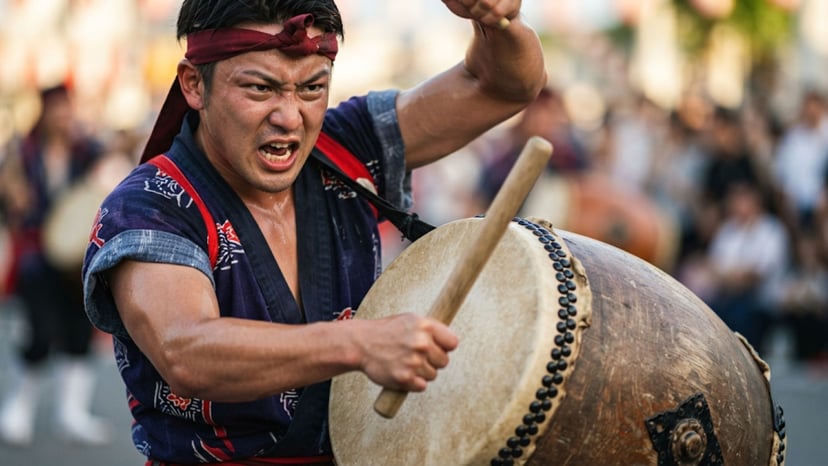
A close-up of a performer striking the O-daiko drum.
The History of the Shinjuku Eisa Festival
Although Eisa has been performed in Okinawa for centuries, the Shinjuku Eisa Festival is a relatively modern event. The festival was first held in 2002 to revitalise central Shinjuku during the summer while promoting Okinawan culture in Tokyo. What began as a local initiative has grown into one of the city's most anticipated cultural festivals, attracting thousands of spectators every year. Its continued success reflects Tokyo's appreciation for regional traditions and its role as a city where cultures from across Japan come together. Today, dozens of dance groups from Tokyo, Okinawa, and neighbouring prefectures participate in the festival, each bringing its own interpretation of the traditional Eisa performance. For many visitors, the event offers a rare opportunity to experience Okinawan heritage without travelling hundreds of kilometres south to Japan's subtropical islands.
What Is Eisa Dance?
To fully appreciate the festival, it helps to understand the meaning behind the Eisa dance. Eisa originated in Okinawa during the Bon season, known throughout Japan as Obon, when families honour the spirits of their ancestors. Traditionally, young community members performed energetic dances through local villages while playing drums and singing to guide ancestral spirits and celebrate their annual return. Over time, these ceremonial performances evolved into dynamic public celebrations featuring carefully choreographed routines, colourful costumes, and powerful percussion. Although modern performances often take place at festivals and competitions, the dance continues to symbolise gratitude, remembrance, and respect for family heritage. Watching an Eisa performance is therefore more than simply enjoying entertainment; it is witnessing a living tradition that continues to connect modern communities with their cultural roots.
From the Ryukyu Kingdom to Modern Tokyo
The origins of Eisa can be traced back to the former Ryukyu Kingdom, the independent island nation that existed before Okinawa became part of modern Japan. The Ryukyu Kingdom developed a distinctive culture influenced by trade with China, Southeast Asia, and mainland Japan. Music, dance, and ceremonial traditions flourished, eventually giving rise to the unique Eisa style celebrated today.
When Okinawan communities settled in Tokyo after the Second World War, they brought these traditions with them. Festivals such as the Shinjuku Eisa Festival now help preserve this cultural heritage while introducing new generations to Okinawan history. This connection between past and present is one of the reasons the festival has become so meaningful for both performers and spectators.
Eisa Festival Okinawa and the Tokyo Connection
The Eisa Festival Okinawa is regarded as the birthplace of this energetic dance tradition and remains one of Japan's most important cultural celebrations. While the largest Eisa festivals take place in Okinawa each summer, the Shinjuku Eisa Festival gives visitors the opportunity to experience the same vibrant drumming, colourful costumes, and traditional performances in the heart of Tokyo without travelling to the Ryukyu Islands.
Why Is the Shinjuku Eisa Festival Famous?
The Shinjuku Eisa Festival is famous for bringing the traditional Eisa dance of Okinawa into the heart of Tokyo. Every summer, dozens of dance troupes perform energetic routines accompanied by powerful drumming, colourful costumes, and traditional music along Shinjuku-dori. As one of Tokyo's largest free cultural festivals, it offers visitors the opportunity to experience authentic Okinawan traditions without travelling to Okinawa itself.
Traditional Instruments Used in Eisa Performances
The powerful sound of Eisa comes from a combination of traditional Okinawan instruments, each contributing its own rhythm and character.
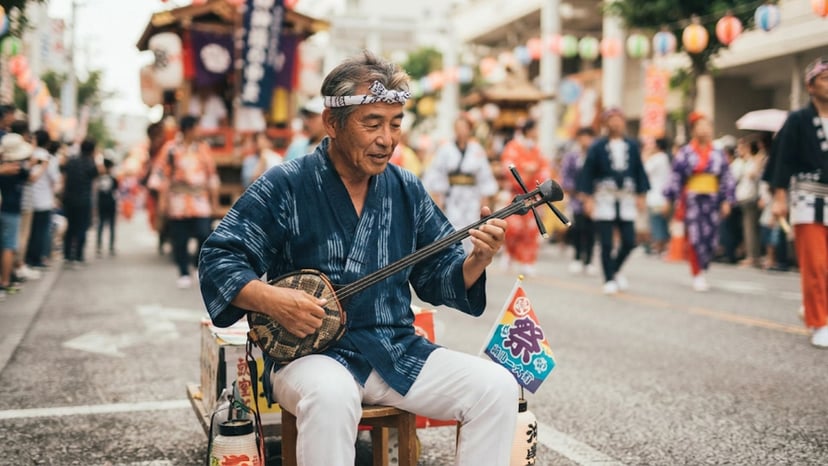
The traditional Sanshin string instrument being played.
Eisa Dance Troupes
Every year, dozens of Eisa dance groups from Tokyo, Okinawa, and the surrounding Kanto region participate in the festival. Each troupe performs its own choreography, costumes, and musical arrangements while preserving the traditional spirit of Okinawan Eisa. Watching different groups throughout the day allows visitors to appreciate the diversity of this unique performing art.
O-daiko
The o-daiko is the large drum carried by lead performers. Its deep, resonant sound forms the heartbeat of every Eisa performance and creates the dramatic energy that audiences immediately recognise.
Paranku
The paranku is a smaller handheld drum that allows dancers to perform fast, synchronised movements while maintaining complex rhythms throughout the parade.
Shime-daiko
The shime-daiko produces a sharper, higher-pitched sound that complements the larger drums and adds texture to the musical performance.
Sanshin
The sanshin, Okinawa's traditional three-stringed instrument, provides melodic accompaniment and reflects the island's unique musical heritage. Its distinctive sound is closely associated with Okinawan folk songs and cultural celebrations. Together, these instruments create the unmistakable rhythm that makes every Eisa performance both visually exciting and emotionally powerful.
Shinjuku Eisa Festival 2026 Date, Schedule and Location
The 23rd Shinjuku Eisa Festival is expected to take place in late July 2026, continuing its tradition as one of Tokyo's signature summer cultural events. Although organisers typically confirm the final timetable closer to the event, performances usually take place during the afternoon and continue into the early evening, allowing visitors to enjoy multiple dance troupes across several performance zones.
|
Information |
Details |
|
Event |
23rd Shinjuku Eisa Festival |
|
Expected Date |
Late July 2026 |
|
Admission |
Free |
|
Main Location |
Shinjuku-dori, Tokyo |
|
Nearest Stations |
Shinjuku Station East Exit and West Exit |
|
Performance Style |
Okinawan Eisa dance parades |
|
Best Time to Arrive |
Around one hour before performances begin |
Because the event takes place in one of Tokyo's busiest districts, public transportation is by far the easiest way to reach the festival. Both the East Exit and West Exit of Shinjuku Station provide convenient access to the main performance areas, allowing visitors to move between viewing locations as different dance groups perform throughout the day.
How to Reach the Shinjuku Eisa Festival
Reaching the Shinjuku Eisa Festival is straightforward thanks to Tokyo's excellent public transportation network. The festival takes place around Shinjuku Station, one of the busiest railway stations in the world, making it easily accessible from almost anywhere in Tokyo.
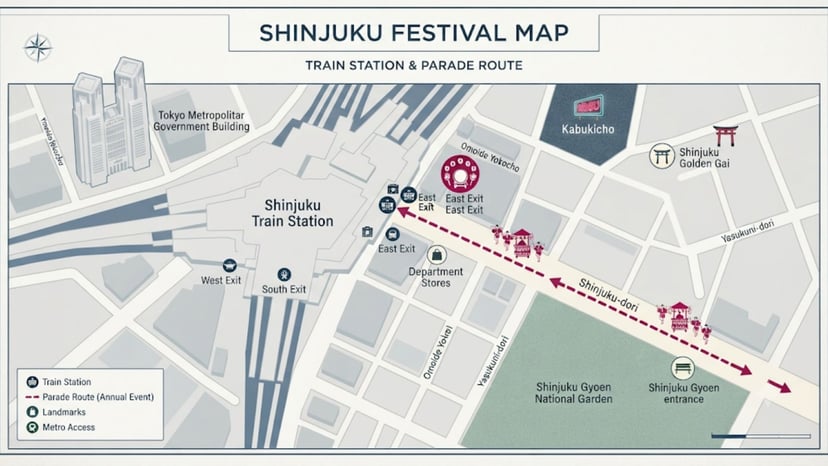
A simplified icon-style map of Shinjuku Station exits.
By Train
The easiest way to reach the festival is by train. JR East, Tokyo Metro, Toei Subway, Odakyu, and Keio Railway all serve Shinjuku Station. From either the east exit or west exit, most festival performance areas are only a short walk away.
By Tokyo Metro
Visitors staying in districts such as Ginza, Ueno, Asakusa, or Shibuya can conveniently reach Shinjuku using the Tokyo Metro or Toei Subway networks before walking to the main festival route.
By Taxi
Taxis are available throughout Tokyo, but traffic around Shinjuku can become extremely congested during the festival. Public transportation is generally the faster and more convenient option during peak hours.
Reach the Shinjuku Eisa Festival Comfortably by Private Vehicle
Although Shinjuku Station provides excellent rail connections, festival day crowds can make travelling with luggage, young children, or elderly family members less convenient. Visitors planning a full-day Tokyo sightseeing itinerary may prefer the flexibility of a private vehicle, allowing them to combine the Shinjuku Eisa Festival with attractions such as Shinjuku Gyoen National Garden, the Tokyo Metropolitan Government Building, Meiji Jingu, or Harajuku without worrying about train schedules or crowded stations.
For travellers seeking a more comfortable experience, Karvaan Tours offers private sightseeing tours with experienced English-speaking drivers and customised itineraries throughout Tokyo. A private vehicle is particularly suitable for families, couples, and small groups who want hotel pickup, flexible stops, and a relaxed way to explore the city before and after the festival.
|
Travel Option |
Best For |
Advantages |
|
Train |
Budget travellers |
Fast, affordable and frequent service |
|
Guided Tour |
First-time visitors |
Local insights and organised itinerary |
|
Private Vehicle (Karvaan Tours) |
Families, couples and groups |
Flexible schedule, hotel pickup and comfortable travel |
Best Viewing Spots for the Shinjuku Eisa Festival
Choosing the right viewing location can make a significant difference to your festival experience. Since performances move along different sections of Shinjuku-dori, arriving early allows you to secure an excellent spot before the busiest crowds arrive.
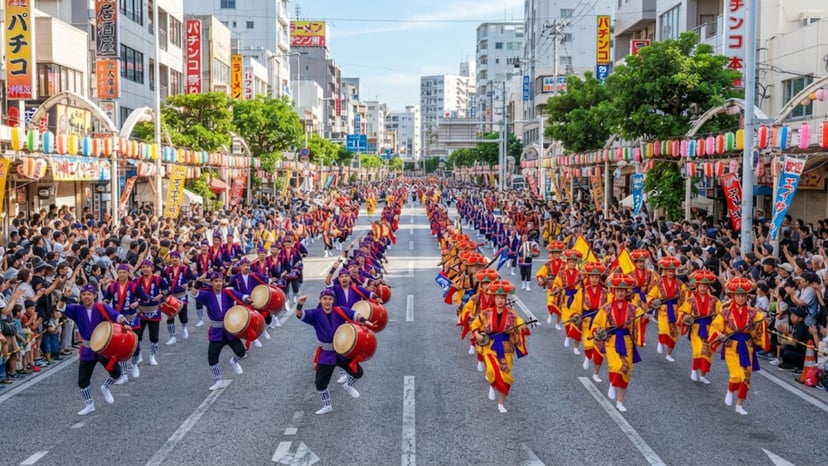
Crowds gathered along the Shinjuku-dori parade route.
Festival Performance Route
The Shinjuku Eisa Festival takes place across several performance areas around Shinjuku Station's east exit, west exit, and along Shinjuku-dori. Rather than following one continuous parade route, different Eisa dance troupes perform at designated locations throughout the afternoon and evening. Visitors can easily walk between performance areas to enjoy a variety of performances and experience different styles of Okinawan dance.
Shinjuku Station East Exit
The area around Shinjuku Station's East Exit is one of the festival's most popular viewing locations. Many parade performances begin or pass through this section, making it ideal for visitors who want to see multiple Eisa dance troupes without walking long distances.
Shinjuku Station West Exit
The Shinjuku Station West Exit offers a slightly more relaxed atmosphere while still providing excellent views of the performances. This area is often preferred by photographers because it offers wider sidewalks and better opportunities to capture the dancers in motion.
Shinjuku-dori
The heart of the festival takes place along Shinjuku-dori, where energetic performances, synchronised drumming, and cheering spectators create an unforgettable atmosphere. Standing along the central sections of the route allows visitors to experience the excitement as each troupe performs choreographed routines directly in front of the audience.
Around Yodobashi Camera and Odakyu Halc
If the main viewing areas become crowded, the sections near Yodobashi Camera and Odakyu Halc often provide excellent alternative viewpoints while remaining close to the parade route.
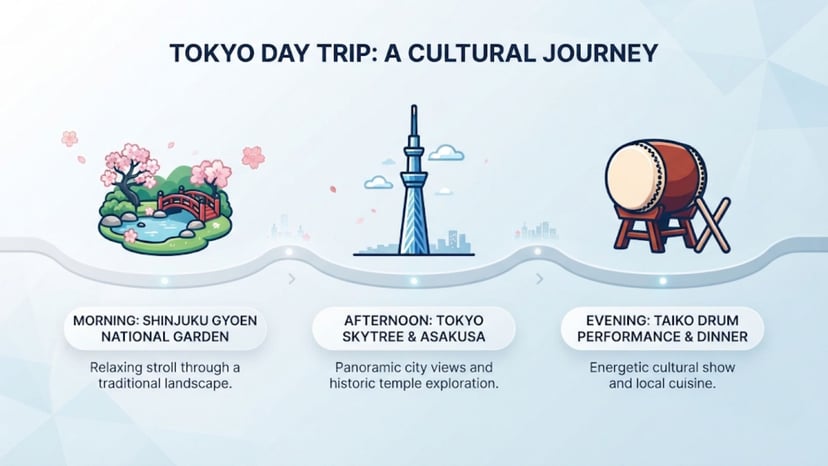
A graphic showing the flow of a full day in Shinjuku.
Best Time to Watch the Shinjuku Eisa Festival
Many visitors arrive shortly before the performances begin, but arriving earlier offers a much better overall experience.
|
Time |
Experience |
|
2:00–3:00 PM |
Comfortable arrival and easier access to viewing spots |
|
3:00–5:00 PM |
Main performances begin and crowds increase |
|
5:00–6:30 PM |
Peak festival atmosphere and busiest viewing period |
|
Evening |
Final performances and lively street atmosphere |
For photographers, arriving at least one hour before the performances provides the best opportunity to choose an unobstructed viewpoint and capture the dancers in natural daylight before the evening crowds become denser.
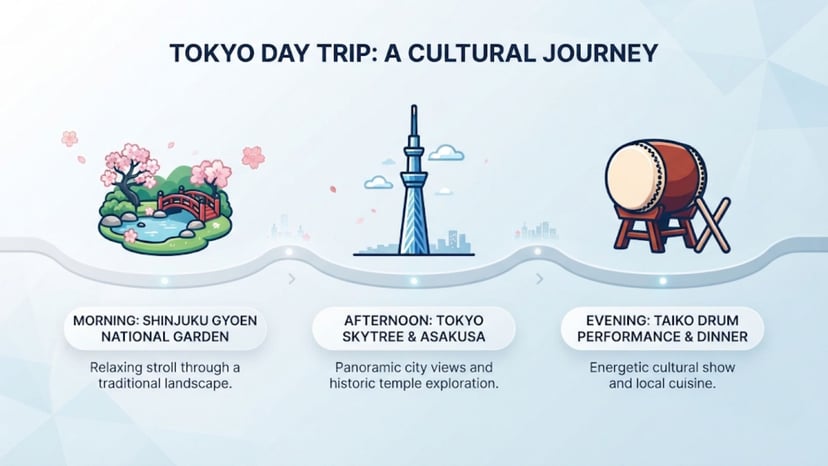
A graphic showing the flow of a full day in Shinjuku.
How Long Should You Spend at the Shinjuku Eisa Festival?
Most visitors spend three to five hours enjoying the festival, allowing enough time to watch several Eisa performances, sample Okinawan cuisine, and explore nearby attractions around Shinjuku. Travellers combining the festival with sightseeing at Shinjuku Gyoen National Garden or the Tokyo Metropolitan Government Building may wish to set aside an entire afternoon and evening.
Shinjuku Eisa Festival Crowd Tips
As one of Tokyo's most popular free summer festivals, the Shinjuku Eisa Festival attracts thousands of spectators every year.
To enjoy a smoother visit:
- Arrive early to secure a good viewing location.
- Use public transportation rather than driving.
- Stay hydrated during Tokyo's humid summer weather.
- Wear comfortable shoes, as you'll spend much of the day standing or walking.
- Move between performance areas during breaks rather than during active performances.
- If travelling with children, choose wider sections of Shinjuku-dori for easier movement.
These simple strategies will help you enjoy the performances without feeling overwhelmed by the crowds.
Can Tourists Join the Shinjuku Eisa Festival?
Yes. The Shinjuku Eisa Festival is free and open to everyone, making it one of Tokyo's most visitor-friendly cultural events. While the dance performances are presented by organised Eisa troupes, spectators are encouraged to watch from designated viewing areas, enjoy Okinawan food stalls, explore nearby attractions, and immerse themselves in the festive atmosphere. It is an excellent cultural experience for first-time visitors to Japan.
Shinjuku Eisa Festival Food Stalls
No Japanese summer festival is complete without delicious local food, and the Shinjuku Eisa Festival often features stalls celebrating Okinawan cuisine alongside classic Japanese festival favourites.
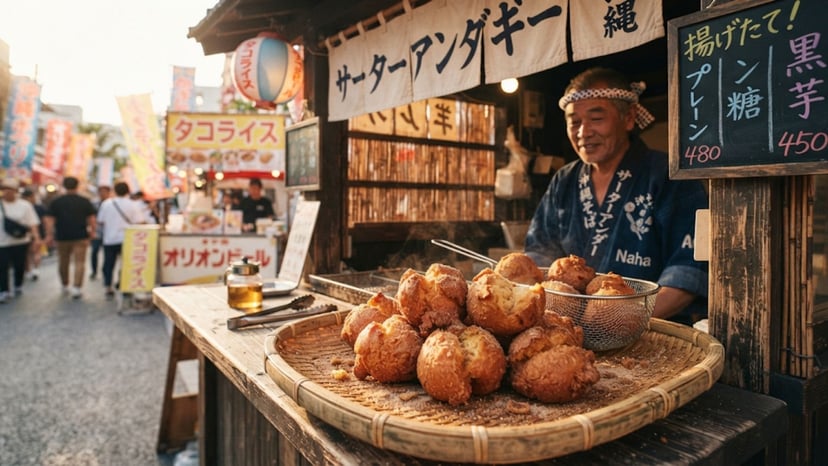
A tray of delicious Okinawan Sata Andagi doughnuts.
Popular Okinawan dishes may include:
- Goya Champuru, Okinawa's famous stir-fried bitter melon dish
- Okinawan soba
- Taco rice
- Sata Andagi (Okinawan doughnuts)
- Blue Seal ice cream
You'll also find familiar festival foods such as yakitori, takoyaki, yakisoba, kakigori, and grilled corn, making it easy to enjoy a meal while exploring the festival. Sampling Okinawan specialities adds another layer to the cultural experience and helps visitors appreciate the islands' unique culinary traditions.
Shinjuku Eisa Festival vs Okinawa Zento Eisa Matsuri
Many travelers wonder whether Tokyo's festival is the same as the famous Okinawan celebration.
|
Feature |
Shinjuku Eisa Festival |
Okinawa Zento Eisa Matsuri |
|
Location |
Tokyo |
Okinawa |
|
Atmosphere |
Urban street festival |
Traditional cultural celebration |
|
Admission |
Free |
Mostly free |
|
Scale |
Dozens of troupes |
Hundreds of performers |
|
Best For |
Tokyo visitors |
Travelers exploring Okinawa |
While the Okinawa Zento Eisa Matsuri is considered the largest Eisa event in Japan, the Shinjuku festival offers an outstanding opportunity to experience the same cultural traditions without leaving Tokyo.
What Happens If It Rains?
Because performances take place outdoors, weather conditions can affect the festival schedule. Light rain may allow performances to continue with adjustments, while severe weather could lead to delays, route changes, or cancellation. Visitors should check the official event website or social media channels before travelling for the latest announcements. Carrying a compact umbrella or lightweight rain jacket is recommended during Tokyo's summer festival season.
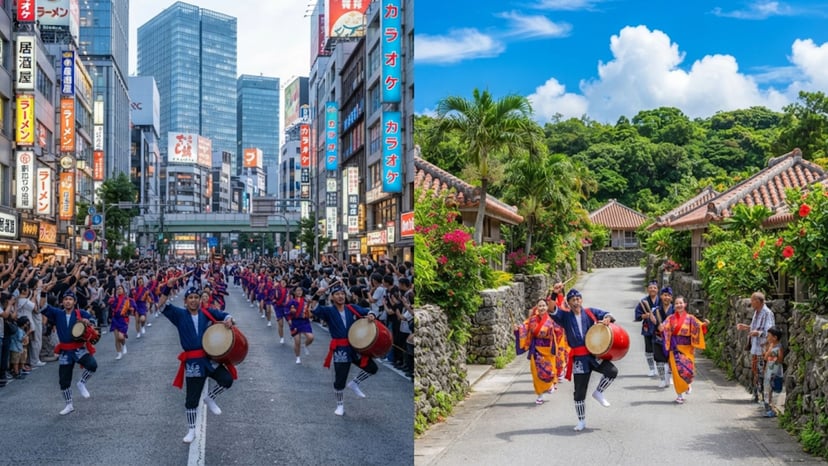
A split-screen showing a Tokyo street vs. an Okinawan beach village.
Summer Weather Tips
Late July in Tokyo is typically hot and humid, with daytime temperatures often exceeding 30°C. Visitors should carry drinking water, wear lightweight clothing, apply sunscreen, and take regular breaks in shaded areas. A portable fan and small towel can also make walking between performance areas much more comfortable during the festival.
Nearby Attractions for a Full Day in Shinjuku
The festival is easy to combine with some of Tokyo's most popular attractions.
· Shinjuku Mitsui Building
· Enjoy panoramic city views, restaurants, and cafés before heading to the festival.
· Tokyo Metropolitan Government Building
· Visit the free observation deck for spectacular skyline views before making your way to Shinjuku-dori.
· Kabukicho
After the performances, explore Tokyo's famous entertainment district, where restaurants, bars, and illuminated streets create a vibrant evening atmosphere.
Shinjuku Gyoen National Garden
If you're arriving earlier in the day, this peaceful garden provides the perfect contrast to the lively festival atmosphere. Combining these attractions creates a memorable full-day itinerary that showcases both traditional and modern Tokyo.
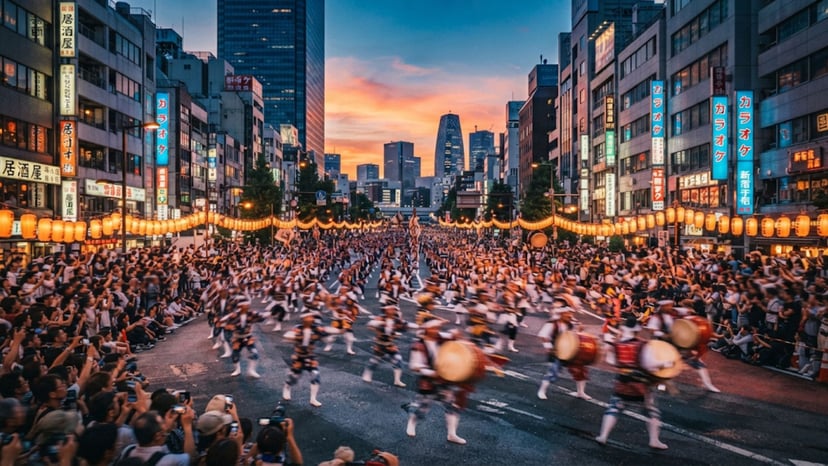
A wide shot capturing the festival at sunset with lanterns.
Conclusion
The Shinjuku Eisa Festival is far more than a lively street parade. It is a celebration of Okinawan heritage, community spirit, and the enduring traditions of the Ryukyu Kingdom brought to the heart of modern Tokyo. From the thunderous rhythms of the o-daiko and paranku drums to the graceful movements of talented dance troupes, every performance reflects centuries of history while creating an exciting atmosphere that welcomes visitors from around the world. If you cannot travel to Okinawa during the summer festival season, the Shinjuku Eisa Festival is one of the best alternatives for experiencing the spirit of the Okinawa Eisa Festival. The performances preserve the same traditions while making Okinawan culture accessible to visitors exploring Tokyo. Whether you are interested in Japanese culture, traditional performing arts, photography, or simply looking for one of Tokyo's best free summer events, the Shinjuku Eisa Festival 2026 deserves a place on your travel itinerary. Arrive early, explore the surrounding neighbourhoods, sample authentic Okinawan cuisine, and experience one of the capital's most energetic and meaningful cultural celebrations.