
Contents:
- Introduction
- What Is the Yamanakako Ice Candle Festival
- Yamanakako Ice Candle Festival 2026
- Lake Yamanakako Ice Candle Festival Setting
- Yamanakako Ice Candle Festival Japan Experience
- Yamanakako Ice Candle Festival Dates
- Yamanakako Ice Candle Festival Time
- Yamanakako Ice Candle Festival Location
- Yamanakako Ice Candle Festival Tickets
- Yamanakako Ice Candle Festival Mount Fuji View
- Safety Comfort and Local Driving Expertise
- Yamanakako Sky Lantern Festival Yamanakako
- Lake Yamanakako Winter Illumination Experience
- Japan Winter Light Festival Comparison
- Yamanakako Sky Lantern Festival Yamanakako
- Ice Candle Illumination Japan Cultural Meaning
- Yamanashi Winter Events and Regional Culture
- How to Reach Yamanakako Ice Candle Festival
- Accommodation Near Lake Yamanakako
- Photography Tips for the Festival
- What to Wear and Prepare
- Is the Festival Suitable for Families
- Couples vs Families Experience
- Cultural Respect and Behavior
- February Winter Festival Japan Timing
- Final Thoughts on Yamanakako Ice Candle Festival
- FAQs
Introduction
The Yamanakako Ice Candle Festival 2026 is a winter illumination event held at Lake Yamanakako near Mount Fuji, offering one of Japan’s most atmospheric February winter festival experiences. Held every year in February at Lake Yamanakako, this festival combines winter scenery, candlelight illumination, and cultural charm in a way that feels both romantic and deeply local.
Unlike large urban light festivals, Yamanakako remains quiet, intimate, and community focused. The event transforms the lakeside into a glowing landscape where handcrafted ice candles reflect softly on snow covered ground and frozen water surfaces. With Mount Fuji visible in the background, the entire setting feels almost surreal.
For travelers planning a February trip near Mount Fuji, this guide covers dates, location, tickets, travel planning, and what makes Yamanakako one of the most distinctive winter festivals in the Fuji Five Lakes region.

What Is the Yamanakako Ice Candle Festival
The Yamanakako Ice Candle Festival is a seasonal winter illumination event organized by the local community around Lake Yamanakako in Yamanashi Prefecture. It celebrates winter through handcrafted ice candles made from frozen water blocks, each containing a small flame inside.
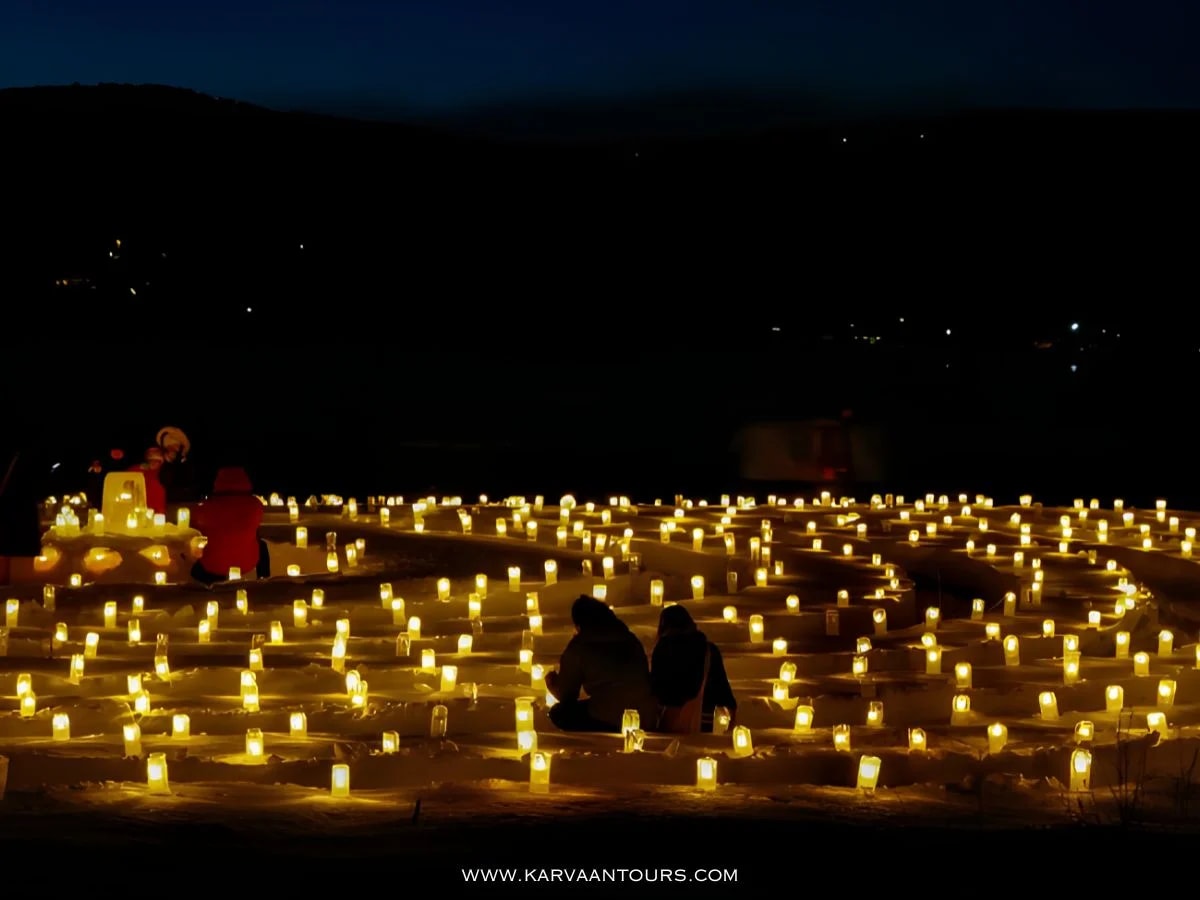
These ice candles are arranged across the lakeshore in artistic patterns, creating a glowing landscape that feels calm, warm, and peaceful despite the cold temperature. The soft candlelight contrasts beautifully with the dark winter sky and the snow-covered surroundings.
Unlike commercial winter illumination festivals in large cities, this festival focuses on natural beauty and cultural simplicity. Visitors experience the authentic atmosphere of a small Japanese village rather than a tourist centered attraction.
Yamanakako Ice Candle Festival 2026
For planning purposes, travelers should expect the Yamanakako Ice Candle Festival 2026 to be held on a February weekend evening, with final dates confirmed by local tourism authorities closer to the event. Historically, the festival has been held on a Saturday evening in early February.
This timing aligns with peak winter conditions in the region, when snow coverage is high and the air remains cold enough to maintain ice candle structures throughout the evening. February also provides clearer skies, increasing the chance of seeing Mount Fuji illuminated by candlelight.
Travelers planning for 2026 should monitor announcements from the Yamanakako Tourism Association and Yamanashi Tourism Organization for confirmed dates.

Lake Yamanakako Ice Candle Festival Setting
The Festival takes place along the shoreline of Lake Yamanakako, one of the most scenic locations in the Fuji Five Lakes area.
Lake Yamanakako is the largest of the five lakes surrounding Mount Fuji and sits at a higher elevation than most tourist destinations in Japan. This creates colder winter temperatures and consistent snowfall, making it ideal for winter illumination events.
The natural setting is a major part of the experience. Instead of artificial decorations, the festival uses the lake, snow, and mountain landscape as its main visual elements.
Yamanakako Ice Candle Festival Japan Experience
The Yamanakako Ice Candle Festival Japan experience feels very different from city festivals. The atmosphere is quiet, slow, and deeply reflective. Visitors often notice how sound carries across the frozen lakeshore, with candle flames flickering in near silence except for footsteps on snow. Visitors walk along candle paths, hear only footsteps on snow, and see warm light glowing against dark winter skies.
Local volunteers build the ice candles by hand, often starting preparations days before the event. This community involvement gives the festival a strong sense of authenticity and cultural warmth.
Rather than crowds and noise, the focus is on calm observation, photography, and enjoying winter in its purest form.

Yamanakako Ice Candle Festival: Winter Lanterns & Fireworks at Mount Fuji
Yamanakako Ice Candle Festival Winter Event Atmosphere
The Yamanakako Ice Candle Festival winter event atmosphere feels deeply romantic and peaceful. It is considered one of the most romantic winter festivals Japan experiences, especially for couples and photographers.
Unlike crowded snow festivals, the mood remains calm and respectful. Visitors walk slowly, take photos quietly, and enjoy the scenery without loud music or stage performances.
This makes it ideal for travelers seeking emotional and visual experiences rather than entertainment.

Romantic Winter Festival Japan Experience
Yamanakako is often ranked among the most romantic winter festival Japan destinations. The quiet lake, glowing candles, snow, and mountain backdrop create an atmosphere that feels cinematic. Many couples visit for anniversary trips or winter proposals.

Yamanakako Ice Candle Festival Dates
Festival Dates History
| Year | Expected Dates | Day | Notes |
|---|---|---|---|
| 2026 | Mid-February 2026 (TBA) | Weekend (Usually Sat) | Dates depend on freezing conditions |
| 2025 | Mid-February 2025 | Weekend | Held successfully during peak winter |
| 2024 | Mid-February 2024 | Weekend | Stable winter temperatures |
The festival is typically held in early to mid-February, depending on weather conditions. Below is a date overview table you can include in your article for clarity:Because ice candle formations rely on sustained cold weather, exact dates may shift slightly. Visitors are strongly advised to confirm official dates 1–2 months before travel, especially when planning February winter festivals in Japan.
Yamanakako Ice Candle Festival Time
The Yamanakako Ice Candle Festival time typically runs during the evening hours, starting around sunset and continuing for several hours into the night.
Most visitors arrive between 5 PM and 7 PM, when the candles are freshly lit and Mount Fuji remains partially visible before complete darkness.
Late evening visits offer quieter experiences and better photography conditions due to fewer visitors.
Yamanakako Ice Candle Festival Location
The Yamanakako Ice Candle Festival location is within Yamanakako Village, located in Yamanashi Prefecture.
Yamanakako Village is part of the Fuji-Hakone-Izu National Park, which protects the surrounding natural environment.
The event area is typically near public lakeside parks, making it easy to access on foot from nearby accommodations and parking areas.
Yamanakako Ice Candle Festival Tickets
One of the best aspects of the Yamanakako Ice Candle Festival tickets policy is that the event is usually free or very low cost.
Unlike major theme parks or commercial festivals, this event is supported by the local community. Visitors may encounter small donation boxes or optional ticket booths that help fund future events.
There is no formal reservation system, and travelers can arrive freely during operating hours.
Yamanakako Ice Candle Festival: Winter Lanterns & Fireworks at Mount Fuji
Yamanakako Ice Candle Festival Mount Fuji View
One of the most iconic features of the festival is the Yamanakako Ice Candle Festival Mount Fuji backdrop.
Mount Fuji stands directly behind Lake Yamanakako, offering unobstructed views of Japan's most famous mountain. When weather conditions allow, visitors see Mount Fuji rising behind thousands of glowing ice candles.
This combination of candlelight and mountain silhouette creates one of the most iconic winter photography scenes in Japan.
Mount Fuji Winter Festival
The festival fits into the broader Mount Fuji winter festival culture. The Fuji Five Lakes region hosts several seasonal events celebrating winter, snow, and local traditions.
Compared to snow resorts or ski festivals, Yamanakako remains peaceful and non commercial. It attracts photographers, couples, solo travelers, and cultural explorers. It is ideal for travelers seeking quiet moments rather than adrenaline activities.
Fuji Five Lakes Winter Festival Network
The Fuji Five Lakes winter festival network includes events at Kawaguchiko, Saiko, and Oshino. However, Yamanakako stands out because of its scale, candle craftsmanship, and Mount Fuji visibility. It is the most emotionally resonant winter event among the five lakes.

Yamanakako Sky Lantern Festival Yamanakako
Some years also feature the Yamanakako Sky Lantern Festival Yamanakako, which complements the ice candle event.
During this activity, paper lanterns are released into the night sky, adding floating lights above the lake. The sky lanterns represent wishes, peace, and seasonal celebration. While not guaranteed every year, when combined with ice candles, the experience becomes even more visually spectacular.

Lake Yamanakako Winter Illumination Experience
The Lake Yamanakako winter illumination is not about technology or LED lights. Instead, it uses natural elements such as ice, fire, snow, and moonlight.
This traditional style aligns with Japanese cultural values of simplicity and seasonal appreciation. Visitors experience winter as a living environment rather than a decorative theme.
It reflects how local Japanese winter festivals focus on harmony with nature instead of artificial spectacle.
Japan Winter Light Festival Comparison
Compared to urban Japan winter light festival events in Tokyo or Osaka, Yamanakako feels deeply personal. City festivals use advanced lighting systems, music, and large installations. Yamanakako uses handmade ice candles and natural darkness. The difference lies in the atmosphere. Urban festivals feel energetic. Yamanakako feels emotional and meditative.
Candle Light Festival Japan Travel Value
A candle light festival Japan experience like Yamanakako offers high emotional value with minimal cost. Travelers spend little money but gain unforgettable memories. The festival aligns with slow travel and cultural immersion principles. It is especially attractive for photographers, writers, and couples.
Ice Candle Illumination Japan Cultural Meaning
The Ice Candle Festival focuses on ground-level illumination and quiet atmosphere, while the Sky Lantern Festival emphasizes visual spectacle and symbolic lantern releases. The ice candle event is calmer and more romantic, while the lantern event feels more celebratory.
Yamanashi Winter Events and Regional Culture
The festival is part of broader Yamanashi winter events celebrating local agriculture, crafts, and tourism. Yamanashi Prefecture focuses heavily on eco tourism, seasonal food culture, and nature-based travel. Winter attracts travelers interested in hot springs, snow landscapes, and traditional countryside experiences.
How to Reach Yamanakako Ice Candle Festival
Reaching the Yamanakako Candle Event requires advance planning, especially during winter. Travelers can arrive from Tokyo via a combination of train and local bus, passing through Otsuki and Kawaguchiko before reaching Yamanakako Village. Direct bus services also operate from Kawaguchiko during the winter season.
Getting from Tokyo to Yamanakako is very similar to getting to Kawaguchiko and takes around 2 hours and 15 minutes from Shinjuku Station. You can then take the Fujikyu Bus to Yamanakako Communication Plaza Kirara and walk for 3 minutes to get to the event. Japan cheapo
Visitors who prefer comfort and flexibility often choose private cars or guided tours, as winter conditions can affect public transport schedules. Driving allows easier access after sunset and avoids long waits in cold temperatures. Travel time from Tokyo typically ranges between two and a half to three hours, depending on weather and route conditions
The table below compares common transport options based on comfort, winter suitability, and crowd levels to help travelers choose the best way to reach the festival.
| Transport Option | Comfort Level | Time Efficiency | Winter Suitability | Crowd Stress | Best For |
|---|---|---|---|---|---|
| Private Tour / Car | Very High | High | Excellent | Very Low | Families, couples, photographers, relaxed travel |
| Trains + Local Buses | Medium | Low | Poor in winter | High | Budget travelers only |
| Taxi (One-way) | High | Medium | Good | Low | Short distance travel |
| Walking | Low | Very Low | Not suitable | High | Nearby areas only |
While public transport options exist, winter conditions, limited evening buses, and cold temperatures make private car or guided tours the most comfortable and time-efficient option for this festival.
Accommodation Near Lake Yamanakako
Accommodation includes traditional ryokan, guesthouses, and small hotels. Staying overnight allows visitors to experience early morning Mount Fuji views and avoid late night travel. Many accommodations offer hot springs, perfect for warming up after the festival.
Photography Tips for the Festival
For Mount Fuji photography, arrive before full darkness to capture the mountain silhouette behind the ice candles, as visibility decreases after nightfall.

What to Wear and Prepare
-In February, Lake Yamanakako temperatures often range from minus five to zero degrees Celsius in the evening, with wind making conditions feel colder. Thermal layers, insulated footwear, and windproof outerwear are essential.

Yamanakako Ice Candle Festival: Winter Lanterns & Fireworks at Mount Fuji
Is the Festival Suitable for Families
The Yamanakako Candle Event is suitable for families, but it is best enjoyed with older children rather than very young kids. The event takes place outdoors in winter conditions, with evening temperatures often below freezing and extended walking along snowy lakeside paths.
Families with teenagers usually find the experience enjoyable due to the calm atmosphere, visual beauty, and photography opportunities. However, parents traveling with toddlers or infants should consider the cold, limited seating, and lack of indoor shelter during the festival hours.
Strollers can be difficult to use on icy or snow-covered paths, and the quiet nature of the event means there are no child-focused activities or entertainment. For families seeking comfort and flexibility, arriving early, dressing children in proper winter layers, or using private transportation can significantly improve the experience.
Couples vs Families Experience
The festival is especially popular with couples due to its quiet, romantic atmosphere and evening setting. Families with older children can enjoy the event, but younger children may struggle with cold temperatures and extended outdoor walking.
Cultural Respect and Behavior
The Yamanakako Ice Candle Festival is a calm, reflective cultural event. Visitors are expected to maintain a respectful presence throughout the experience.
Yamanakako Ice Candle Festival: Winter Lanterns & Fireworks at Mount Fuji
February Winter Festival Japan Timing
As a February winter festival Japan highlight, Yamanakako fits seamlessly into winter travel plans. This month offers a quieter, more immersive experience.
Final Thoughts on Yamanakako Ice Candle Festival
This winter event represents everything that makes Japanese seasonal travel special. It is simple, emotional, community driven, and deeply connected to nature. Rather than offering entertainment, it offers atmosphere. For travelers seeking authentic winter beauty, cultural depth, and unforgettable scenery, Yamanakako stands as one of the most meaningful winter festivals in Japan.
FAQs
Q: Can you do a Mount Fuji day trip from Tokyo?
Yes, a Mount Fuji day trip from Tokyo is possible and commonly chosen by travelers with limited time. Early departures allow visits to key viewing areas and cultural stops before afternoon cloud cover increases. Well planned routes help manage travel time efficiently, making a same day return practical.
Q: Which Mount Fuji tour is best?
The best Mount Fuji tour depends on travel style and priorities. Private tours suit travelers who want flexible timing and quieter sightseeing, while guided options work well for first time visitors who prefer structured routes and local insight. Weather conditions and season also influence tour suitability.
Q: How much does it cost to go from Tokyo to Mount Fuji?
The cost to travel from Tokyo to Mount Fuji varies based on transport type, group size, and season. Private travel generally costs more due to dedicated vehicles and flexible scheduling. Prices may increase during peak viewing seasons such as spring and autumn.
Q: Can I do an Mt. Fuji tour in one day?
Yes, Mount Fuji tours are commonly designed as one day trips. Routes focus on selected viewing points and cultural locations to avoid rushing. Starting early improves visibility and allows enough time at each stop before returning to Tokyo in the evening.
Q: Is Mount Fuji tour private or shared?
Mount Fuji tours are available in both private and shared formats. Private tours offer more flexibility and personal space, while shared tours follow fixed schedules with larger groups. Travelers can choose based on comfort preference and budget considerations.
Q: Does the Mount Fuji tour include hotel pickup and drop-off?
Many Mount Fuji tours include hotel pickup and drop off within central Tokyo areas. This helps reduce early morning travel stress and avoids complex train transfers. Pickup details are usually confirmed in advance to ensure smooth departures.
Q: Is this Mount Fuji tour suitable for families or seniors?
Yes, Mount Fuji tours are suitable for families and senior travelers. Routes are planned with manageable walking distances and rest opportunities. Private travel options allow pacing adjustments, making the experience more comfortable for travelers with varying mobility levels.