

Introduction
Climbing Mount Fuji is one of the most iconic experiences in Japan, attracting thousands of hikers every year. One of the most common questions travelers ask is, 'How long does it take to climb Mount Fuji?' The answer depends on several factors, including the route you choose, your fitness level, weather conditions, and whether you plan a same-day ascent or an overnight climb. On average, the Mount Fuji climbing time ranges between 5 and 10 hours for ascent and 3 to 5 hours for descent. However, this is only a general estimate. The actual duration of the Mount Fuji hike can vary significantly depending on your itinerary and pacing strategy. In this detailed guide, you will learn about the average time to climb Mount Fuji, route comparisons, day vs overnight climbs, practical planning tips, and how to choose the best strategy for your journey.
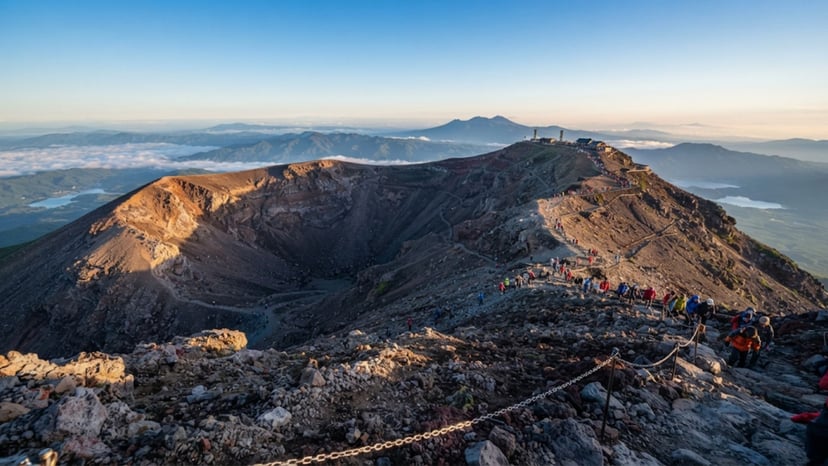
The iconic sunrise view from the summit of Mount Fuji.
Average Time to Climb Mount Fuji
Understanding the average time to climb Mount Fuji is essential for planning your trip. Most climbers begin their journey at one of the 5th station starting points on Mount Fuji, which are already at a high altitude. From the 5th station to the Mount Fuji Summit, the ascent typically takes between 5 and 8 hours. The descent usually takes another 3 to 5 hours, depending on the trail conditions and your pace. This means a full climb can take anywhere between 8 and 12 hours in total. However, many climbers choose to split the journey into two days to reduce fatigue and enjoy the experience more comfortably.
How Long Does It Take to Hike Mount Fuji?
Many travellers also search "how long does it take to hike Mount Fuji?" or "how long to hike Mt Fuji?" In most cases, the answer depends on your chosen trail and whether you complete the journey in one day or split it over two days. For most visitors using the Yoshida Trail, the Mount Fuji hike length is approximately 5 to 7 hours uphill and 3 to 5 hours downhill, resulting in a total hiking time of 8 to 12 hours. Climbers choosing the steeper Fujinomiya Trail may reach the Fuji Peak more quickly, while the longer Gotemba Trail requires significantly more time and endurance.
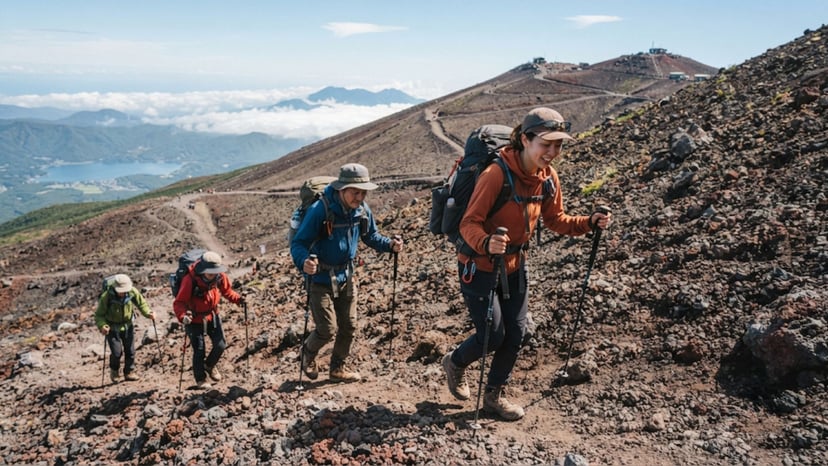
Steady pace hiking on the volcanic gravel path of Mount Fuji.
How High Is Mount Fuji?
Mount Fuji stands at 3,776 metres (12,389 feet), making it the highest mountain in Japan. Although it is considered a non-technical climb during the official season, the high altitude means that oxygen levels decrease significantly as you approach the summit. This is one of the main reasons why hiking times vary between climbers. Visitors should pace themselves, stay hydrated, and allow time to acclimatise before beginning the ascent from the Mount Fuji 5th Station.
Popular Routes to Climb Mount Fuji
There are four main Mount Fuji climbing routes, and each one affects your total climbing time differently.
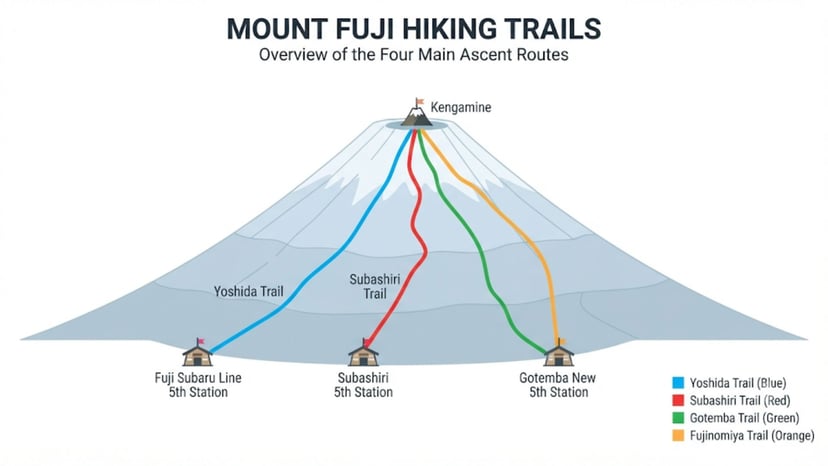
Simplified map illustrating the four primary climbing trails on Mount Fuji.
Yoshida Trail
The Yoshida Trail is the most popular route and is often recommended for beginners. It offers top-notch infrastructure, including multiple mountain huts for rest and lodging. The ascent on this trail typically takes 5 to 7 hours, while the descent takes around 3 to 5 hours. Because of its popularity, it can become crowded during peak season.
Fujinomiya Trail
The Fujinomiya Trail is the shortest route to the summit. Climbers can reach the top in approximately 4 to 6 hours. However, this trail is steeper and more physically demanding, which can slow down inexperienced hikers.
Subashiri Trail
The Subashiri Trail offers a quieter and more scenic experience. The ascent takes about 6 to 8 hours, and the descent is slightly faster due to sandy slopes.
Gotemba Trail
The Gotemba Trail is the longest and least crowded route. The climb can take 7 to 10 hours, making it suitable only for experienced hikers.
Mount Fuji Route Comparison
|
Route |
Ascent Time |
Descent Time |
Difficulty |
Best For |
|
Yoshida Trail |
5–7 hours |
3–5 hours |
Moderate |
First-time climbers |
|
Fujinomiya Trail |
4–6 hours |
2–4 hours |
Moderate to Difficult |
Experienced hikers |
|
Subashiri Trail |
6–8 hours |
3–5 hours |
Moderate |
Scenic hiking |
|
Gotemba Trail |
7–10 hours |
3–6 hours |
Difficult |
Experienced climbers |
Day Climb vs Overnight Climb
One of the biggest decisions affecting your Mount Fuji climb duration is whether you choose a same-day climb or an overnight itinerary.
Day vs Overnight Table
|
Type |
Duration |
Pros |
Cons |
|
Day Climb |
8–12 hours |
Faster; no stay needed |
Very tiring |
|
Overnight Climb |
1–2 days |
Rest + sunrise view |
Requires booking |
Same-Day (Daytime) Climb
A same-day climb involves starting early in the morning and reaching the summit by afternoon. This option is suitable for physically fit hikers who want to complete the climb quickly.
However, it can be exhausting, especially when descending on loose volcanic gravel slopes.
Overnight Climb
An overnight climb is the most popular option among travelers. Climbers start in the afternoon, stay in mountain huts, and continue to the summit early in the morning. This approach allows you to witness the famous sunrise from the Mount Fuji summit (Goraiko), one of the most memorable experiences in Japan. It also helps reduce fatigue and lowers the risk of altitude-related issues.
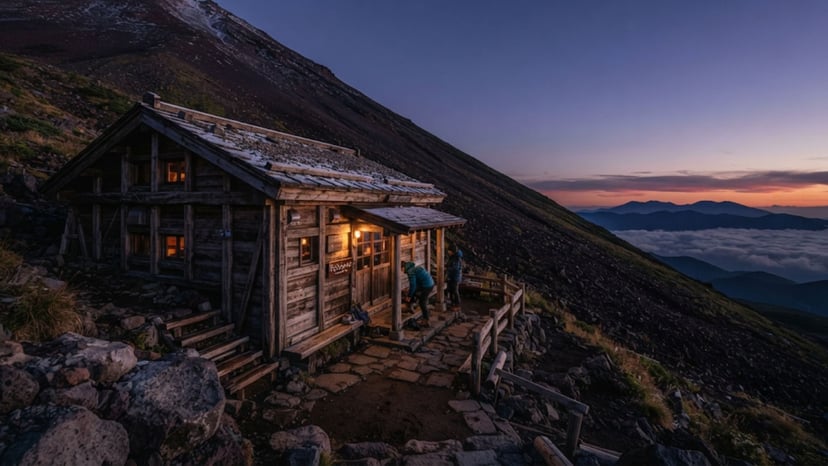
Basic mountain hut accommodation offering shelter for overnight hikers.
How Route Choice Affects Climbing Time
Your chosen route plays a major role in determining your total hiking time. Shorter routes like Fujinomiya reduce ascent time but increase physical intensity. Longer routes like Gotemba require more endurance but offer fewer crowds. Additionally, trail conditions such as volcanic gravel slopes, steep rocky sections, and loose rock descent paths can significantly affect your pace.
Factors That Can Slow Down Your Mount Fuji Climb
Several factors influence your Mount Fuji summit time and overall experience. Altitude is one of the biggest challenges. As you climb higher, oxygen levels decrease, which can lead to altitude sickness. Symptoms such as dizziness and fatigue can slow your progress. Weather conditions also play a critical role. Strong winds, cold temperatures, and rain can make climbing more difficult. Proper gear, including rain gear, walking boots, and a flashlight, is essential. Crowds during peak season can also impact your pace, especially on popular routes like Yoshida.
Can Beginners Climb Mount Fuji?
Yes. Beginners can climb Mount Fuji during the official climbing season, particularly by choosing the Yoshida Trail, which offers the best facilities, mountain huts, and emergency support. While no technical climbing skills are required, the hike is physically demanding due to its altitude and length. Regular walking or hiking before your trip will make the climb much more enjoyable.
Practical Planning Tips for Mount Fuji Climbers
Planning ahead is crucial for a successful climb. Understanding ways to go up, pacing your ascent, and preparing for weather conditions can make a significant difference. Start by choosing the right season. The official Mount Fuji climbing season typically runs from early July to early September. During this time, trails are open, and facilities are available. Arriving early at the 5th station allows your body to adjust to the altitude. Taking regular stops to rest helps conserve energy and reduces the risk of exhaustion.
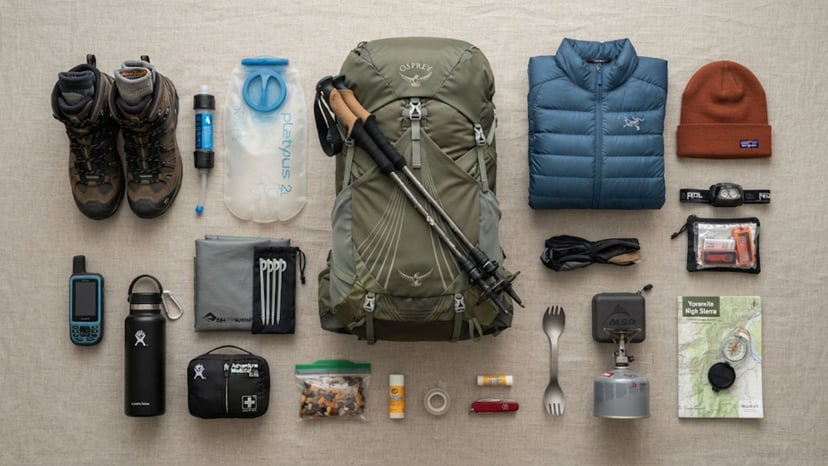
Essential hiking equipment, including sturdy boots, rain gear, and a headlamp.
Mount Fuji Tour Comparison
|
Feature |
Public Group Tour |
Private Tour |
|
Flexibility |
Low: Fixed, rigid schedule |
High: Customizable, adapt on the fly |
|
Logistics |
Meeting points required |
Hotel pickup/drop-off included |
|
Pacing |
Fast: Limited time at each stop |
Relaxed: Tailored to your needs |
|
Visibility |
Fixed: Cannot adjust for weather |
Adjustable: Prioritizes clear views |
|
Comfort |
Standard: Large shared bus |
Excellent: Private vehicle/sedan |
Why a Private Tour is Recommended
For many travellers, a private Mount Fuji tour offers a superior experience by removing the logistical stress often associated with public travel.
-
Maximum Time Efficiency: You avoid navigating busy train stations or waiting for public bus connections, allowing you to spend more time at scenic viewpoints.
-
Weather Adaptability: Because Mount Fuji is frequently obscured by clouds, a private driver can strategically adjust your itinerary to maximise your chances of seeing the mountain during clear windows.
-
Tailored Comfort: This option is ideal for families with children, couples, or groups who prefer door-to-door service and the ability to linger at specific spots like the Chureito Pagoda or Lake Kawaguchiko without being tied to a group's departure time.
-
Cost-Effectiveness for Groups: While the headline price appears higher, private tours are priced per vehicle; for groups of three or more, the cost per person often becomes highly competitive with group tours while offering significantly more value and freedom.
Mount Fuji 5th Station Starting Points
Each trail begins at a different 5th station, and your starting point can affect your schedule.
Popular starting points include the following:
-
Fuji Subaru Line 5th Station
-
Subashiri 5th Station
-
Gotemba 5th Station
-
Fujinomiya 5th Station
Most travelers reach these stations from transport hubs like Shinjuku Station or Kawaguchiko Station.
Mount Fuji Difficulty Level
The Mount Fuji difficulty level is moderate but should not be underestimated. While no technical climbing skills are required, the altitude, long duration, and weather conditions can make it challenging. Proper preparation, including physical training and appropriate gear, is essential.
Mount Fuji Visitor Statistics (2024–2026)
Recent data from the Ministry of the Environment and local councils highlights the challenges of balancing record-breaking popularity with conservation.
|
Metric |
2024 Data |
Context |
|
Annual Climbers |
~204,000 |
Declined 8% from 2023 due to new caps |
|
Daily Average |
~2,200 |
Significant drop from pre-pandemic 2,500 |
|
National Park Visitors |
8.4 million (International) |
Highest on record for Fuji-Hakone-Izu |
|
Peak Monthly Volume |
~93,890 (August 2024) |
Remains the busiest month of the season |
Official Research & Reporting: For detailed policy packages and safety guidelines provided by the local government, you can refer to the Council for Promoting Appropriate Use of Mt. Fuji. Additionally, broader data regarding the national park tourism boom can be found via Nippon.com's report on 2024 tourism data.
Key Statistical Insights
-
Managed Access: In 2024 and 2025, authorities implemented stricter controls, including daily limits of 4,000 hikers on the Yoshida Trail to mitigate overcrowding.
-
Overtourism Impacts: Beyond the climbing trails, base towns like Fujiyoshida have faced surges of up to 10,000 visitors per day, leading to significant strain on local infrastructure and residential life in 2026.
-
Safety Records: Following an increase in incidents, local authorities reported dozens of search-and-rescue operations in 2024, highlighting the dangers of off-season and unprepared climbing.
-
Economic Influence: International visitors to Japanese national parks reached 8.4 million in 2024, representing a 47.5% year-on-year increase, with Mount Fuji being the most visited destination in the country.

Comparison chart highlighting benefits of private versus public tour options.
How Hard Is It to Climb Mt Fuji?
A common question among first-time visitors is "How hard is it to climb Mt Fuji?" Although Mount Fuji does not require technical climbing skills, it should not be underestimated. The combination of high altitude, long hiking hours, steep volcanic terrain, and changing weather conditions makes the climb physically demanding. Most people with a reasonable level of fitness can successfully reach the summit by walking at a steady pace, taking regular breaks, and allowing time to acclimatise. Choosing the Yoshida Trail and staying overnight in a mountain hut can make the experience considerably easier for beginners.
Mount Fuji Altitude Sickness Tips
Altitude sickness is one of the most common challenges faced by climbers on Mount Fuji. Symptoms may include headaches, dizziness, nausea, and shortness of breath as oxygen levels decrease near the summit. To reduce the risk, spend some time resting at the 5th Station before starting your hike, climb at a steady pace, drink plenty of water, avoid alcohol, and take regular breaks. If symptoms become severe, descending immediately is the safest option.
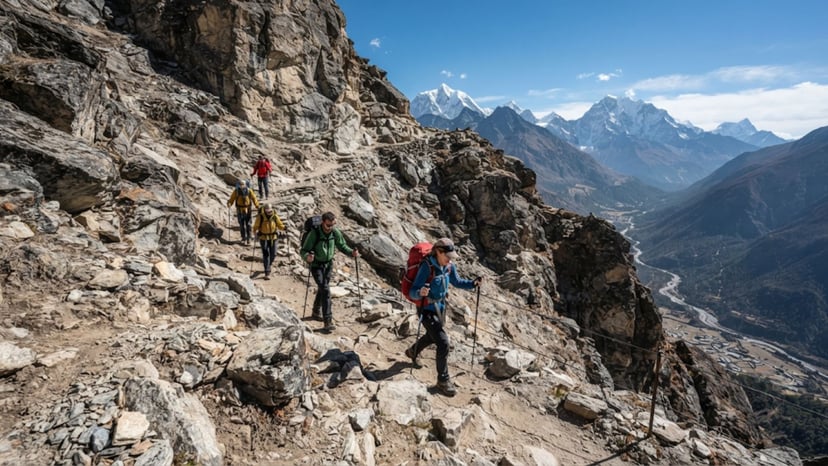
A challenging, steep rocky section along the upper ascent of Mount Fuji.
Accommodation on Mount Fuji
For those choosing an overnight climb, staying in mountain huts is a practical option. These huts provide basic accommodation, meals, and rest areas. Booking in advance is recommended, especially during peak season.
How Much Does It Cost to Climb Mount Fuji?
The overall cost of climbing Mount Fuji depends on your travel style. Transportation from Tokyo, climbing fees, mountain hut accommodation, meals, and equipment rental all contribute to the total budget.
|
Expense |
Approximate Cost |
|
Transport from Tokyo |
¥3,000–¥8,000 |
|
Mountain Hut |
¥8,000–¥15,000 |
|
Official Climbing Fee |
Check current seasonal fee |
|
Food & Drinks |
¥2,000–¥4,000 |
|
Equipment Rental |
¥5,000–¥10,000 |
Planning these expenses in advance helps avoid unexpected costs during your climb.
Best Time to Climb Mount Fuji
The best months for trekking Mount Fuji are July and August when the weather is relatively stable and trails are open. Climbing outside this season is not recommended due to harsh weather conditions and limited access to facilities.
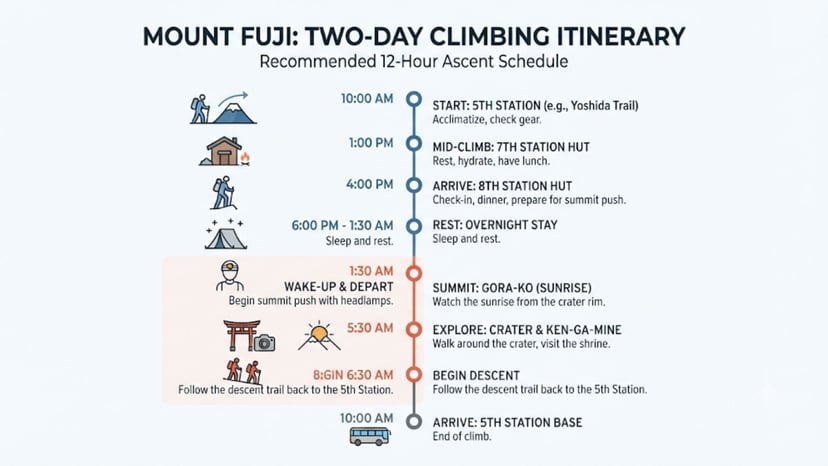
A simple timeline showing the recommended schedule for a two-day climb.
Mount Fuji Climbing Season
The official Mount Fuji climbing season usually runs from early July to early September, when all four trails, mountain huts, and visitor facilities are open. Outside this period, heavy snow, strong winds, and icy conditions make climbing significantly more dangerous. Unless you are an experienced mountaineer with specialised equipment, climbing outside the official season is not recommended.
When Can You Hike Mt Fuji?
The safest time to hike Mt Fuji is during the official climbing season, which generally runs from early July until early September. During this period, all major trails are open, mountain huts operate normally, and emergency services are available. Outside the official season, snow, ice, and severe weather make climbing considerably more dangerous. Unless you have advanced mountaineering experience and specialised equipment, it is strongly recommended to plan your Mount Fuji hike during the official summer season.
Mount Fuji Itinerary (Recommended)
A typical recommended itinerary for Mount Fuji involves starting from the 5th station in the afternoon, reaching a mountain hut by evening, and continuing to the summit before sunrise. After enjoying the sunrise, climbers descend back to the 5th station by late morning or early afternoon.
Recommended Mount Fuji Climbing Schedule
|
Time |
Activity |
|
12:00 PM |
Arrive at 5th Station |
|
1:00 PM |
Begin climbing |
|
6:00 PM |
Reach mountain hut |
|
2:00 AM |
Resume climbing |
|
4:30–5:00 AM |
Reach summit before sunrise |
|
7:00 AM |
Begin descent |
|
11:00 AM |
Return to 5th Station |
How Long Would It Take to Climb Mount Fuji?
If you're wondering "How long would it take to climb Mount Fuji?", the answer varies depending on your hiking style.
|
Climbing Style |
Average Total Time |
|
Fast, experienced hiker |
7–9 hours |
|
Average climber |
8–12 hours |
|
Overnight climb |
Around 18–20 hours including mountain hut stay |
|
Beginners with frequent breaks |
10–12 hours |
Most visitors prefer the overnight option because it allows them to rest, avoid excessive fatigue, and enjoy the famous sunrise from the summit.
Climbing Equipment and Safety
Proper equipment is essential for a safe climb. Key items include a hiking stick, warm clothing for cold temperatures, and reliable footwear. Following hiking safety guidelines and respecting etiquette on the trails ensures a safe and enjoyable experience for everyone.
Mount Fuji and Overtourism
In recent years, Mount Fuji has experienced increased visitor numbers, leading to concerns about overtourism. Authorities have introduced measures, including admission fees and guidelines, to manage crowds and protect the environment. Travelers are encouraged to follow these rules and practise responsible tourism.
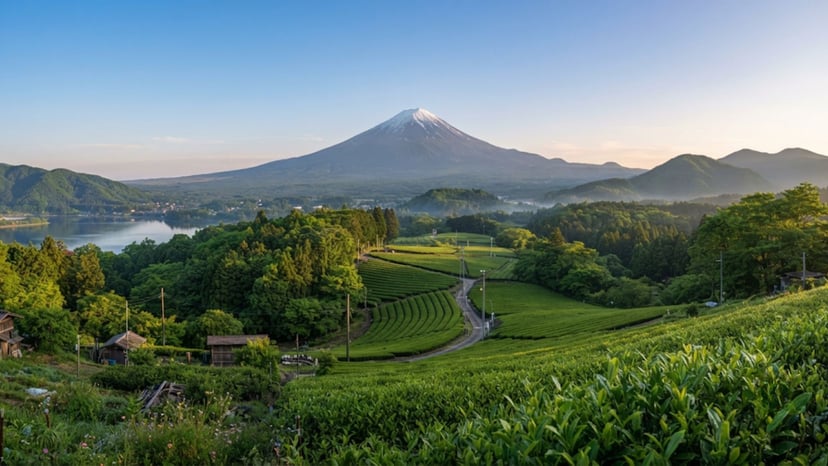
Mount Fuji towering over the surrounding forest landscape in the summer.
Is Climbing Mount Fuji Worth It?
For most travellers, climbing Mount Fuji is one of the most rewarding experiences in Japan. Watching the sunrise from Japan's highest peak, walking across volcanic landscapes, and reaching the summit after hours of hiking creates a sense of achievement that few other destinations can match. Whether you choose a day climb or an overnight ascent, the journey offers spectacular scenery, cultural significance, and unforgettable memories.
Mount Fuji Hiking Tips for First-Time Visitors
If this is your first Mount Fuji hike, proper preparation will make the experience far more enjoyable. Wear waterproof hiking boots, layered clothing, gloves, and a headlamp if climbing overnight. Carry enough water, high-energy snacks, and cash for mountain huts, as card payments may not always be accepted. Starting slowly from the Mount Fuji 5th Station helps your body adapt to the altitude, while taking regular breaks reduces fatigue during the long ascent. Respect the mountain environment by staying on marked trails and carrying all rubbish back with you.
Conclusion
So, how long does it take to climb Mount Fuji? The answer varies, but most climbers spend between 8 and 12 hours completing the journey. Choosing the right route, planning your itinerary, and preparing properly can significantly improve your experience. Whether you opt for a same-day climb or an overnight adventure, Mount Fuji offers a unique and unforgettable journey that combines physical challenge with breathtaking scenery.