

Introduction to Hakone Ropeway
Hakone Ropeway Quick Overview
• Location: Hakone, Japan
• Type: Scenic ropeway (aerial gondola)
• Route: Sounzan → Owakudani → Togendai
• Duration: ~25–30 minutes from Sounzan se Togendai
• Best for: Scenic views, Mount Fuji, volcanic landscapes
• Included in: Hakone Free Pass
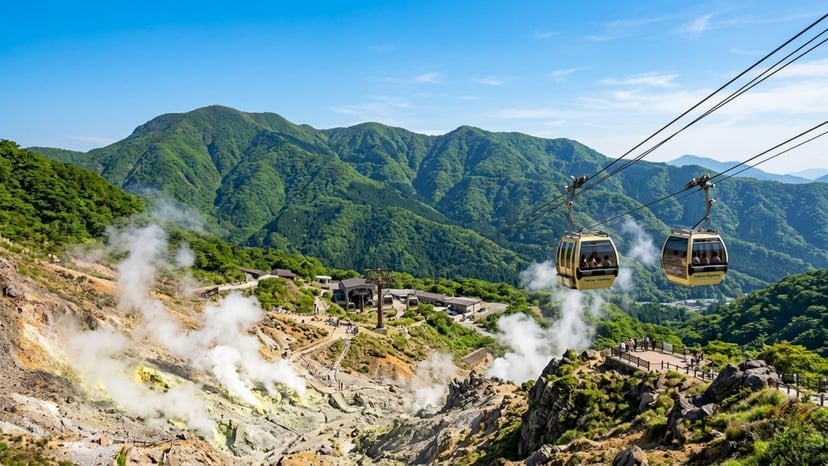
Experience the dramatic volcanic landscapes of Hakone from the air.
Hakone Ropeway Route and Stations Guide
Ropeway Route Overview
The Hakone Ropeway follows a scenic route connecting mountain areas to Lake Ashi. The Hakone ropeway route map includes key stops like Sounzan, Owakudani, and Togendai. This route offers stunning views of volcanic landscapes and is a vital connection within the Hakone sightseeing network, making it both practical and visually impressive.
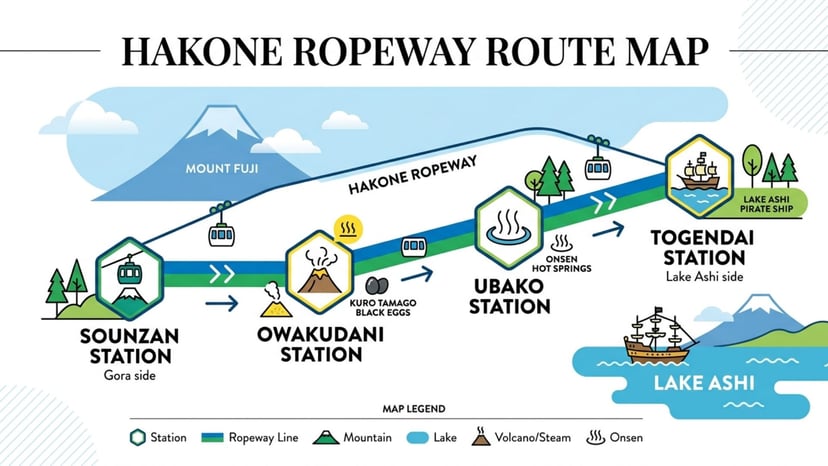
The Hakone Ropeway connects four key stations between Sounzan and Togendai.
Major Stations Explained
The ropeway includes major stations such as Sounzan Station, the starting point connected to the cable car, Owakudani, known for its volcanic activity, and Togendai Station near Lake Ashi. Each station offers unique experiences and serves as a gateway to nearby attractions.
Connection with Hakone Loop
The Hakone Ropeway is an essential part of the Hakone round course transport system. It integrates seamlessly with trains, buses, and lake cruises, forming a multi-transport route. This connection allows visitors to explore Hakone efficiently while enjoying diverse landscapes, making it one of Japan’s most popular sightseeing loops.
Hakone Ropeway Tickets, Price and Schedule
Hakone Ropeway Ticket Prices
If you are planning to travel solely on the ropeway, you can purchase tickets at the station counters. Below is the current fare breakdown:
|
Ticket Type |
Adult (18+) |
Child (6-11) |
|
One-Way Ticket |
¥2,000 |
¥700 |
|
Round-Trip Ticket |
¥3,000 |
¥1,000 |
Note: Children under 6 years old can ride for free when accompanied by an adult.
The Smarter Choice: Hakone Freepass
For most travellers, buying individual tickets is not cost-effective. If you plan to use the Tozan train, cable car, or sightseeing cruise, the Hakone Freepass is the best value option. It covers the entire Hakone transport loop, including unlimited rides on the Hakone Ropeway.
|
Pass Duration |
Price (From Shinjuku) |
|
2-Day Hakone Freepass |
¥6,800 - ¥7,100 |
|
3-Day Hakone Freepass |
¥7,500 |
Hakone Ropeway Operating Hours
To avoid travel disruptions, please plan your visit according to the seasonal operating schedule. The ropeway maintains specific hours throughout the year:
- February to November: 9:00 AM – 4:45 PM (Owakudani Station remains open until 5:00 PM).
- December to January: 9:00 AM – 4:15 PM (All stations).
Important Note: Service may be suspended or hours may be altered without prior notice due to inclement weather or volcanic activity. We strongly recommend checking the official real-time status before you depart.
Accessibility and Special Assistance
The Hakone Ropeway is designed to be accessible for all travellers, including families with strollers and visitors with mobility requirements.
- Wheelchair & Stroller Access: The gondola cabins are spacious and can accommodate standard wheelchairs and strollers. All ropeway stations are equipped with elevator access to ensure a smooth transition from the platform to the cabin.
- Boarding Assistance: Our platform staff are trained to assist with boarding and can temporarily slow down or pause the ropeway operation to ensure you have enough time to board safely.
- Disability Discounts: A companion discount is available for visitors with disability certificates. Please be sure to present your documentation at the ticket counter.
- Special Assistance: If you require extensive assistance, we recommend contacting us in advance of your visit to coordinate your arrival and ensure the smoothest possible experience.
Owakudani Ropeway Experience
Volcanic Valley Views
As the ropeway passes over Owakudani, visitors can see sulphur vents, hot springs, and rocky volcanic formations. The landscape is constantly active, with steam rising from the ground. This rare aerial view of a volcanic valley creates a dramatic and unforgettable sightseeing experience in Hakone.
Black Eggs Tradition
A popular attraction at Owakudani is the Kuro Tamago, or black eggs, boiled in the sulphuric hot springs. According to local tradition, eating one egg adds years to your life. This cultural experience adds a unique and fun element to visiting the volcanic valley.
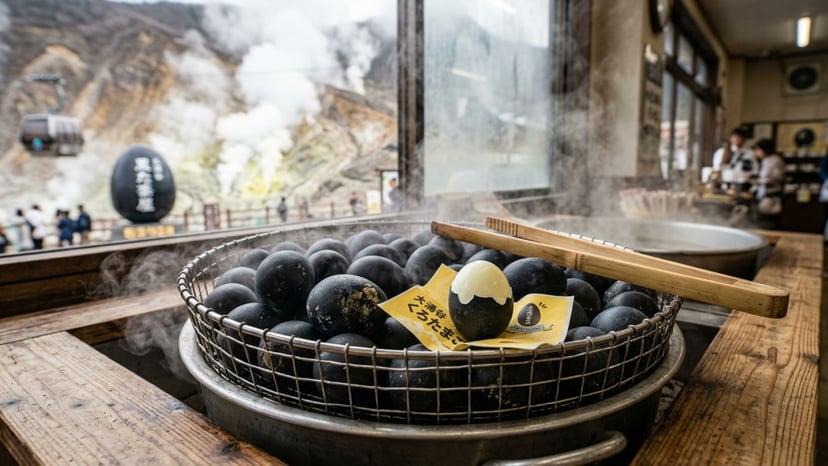
Eating a famous black egg boiled in Owakudani's sulphurous hot springs is a must-do tradition.
Safety and Weather Conditions
The Hakone Ropeway operates under strict safety guidelines, but services may be temporarily suspended due to volcanic activity or strong winds. Weather conditions play a major role in operations, so checking updates before visiting is essential. Following safety instructions ensures a secure and enjoyable ropeway experience.
What to Expect on Hakone Ropeway Ride
Riding the Hakone Ropeway offers a scenic and comfortable aerial journey over mountains and valleys. The experience combines smooth travel with breathtaking views, making it one of the most popular attractions in Hakone for both sightseeing and transportation.
Scenic Gondola Experience
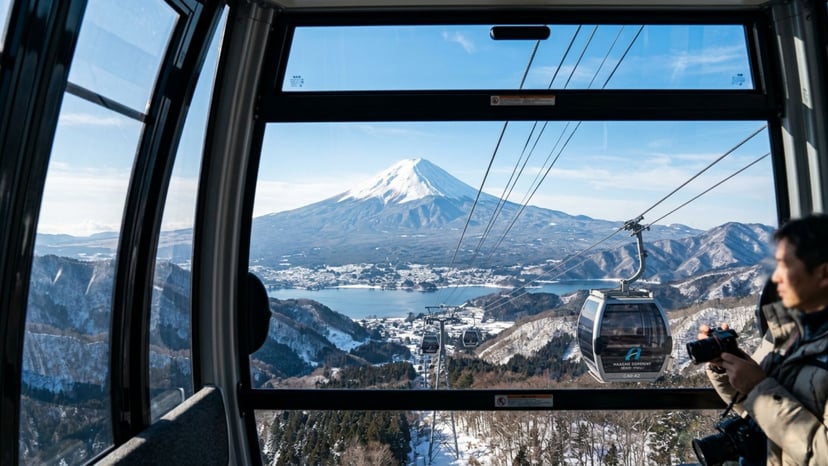
The aerial gondola ride in Hakone provides panoramic views of mountains, forests, and volcanic landscapes. The cabins are spacious and designed for comfort, allowing passengers to enjoy the scenery from all angles. This scenic cable car ride is a highlight for visitors seeking a unique travel experience.
Mount Fuji and Lake Ashi Views
Best Seats and Tips
For the best experience, position yourself near the windows for clear views. Moving slightly within the cabin can help capture different angles of the landscape. Boarding early or during less crowded times improves your chances of getting the best viewing spots during the ride.
How to Ride Hakone Ropeway
Riding the Hakone Ropeway is simple and well-organised, making it accessible even for first-time visitors. The ropeway is part of the Hakone sightseeing loop, connecting multiple transport systems. With clear signage and frequent departures, travellers can easily navigate the route and enjoy a seamless journey through Hakone’s scenic volcanic landscapes.
Step-by-Step Travel Guide
To ride the ropeway, start at a station like Sounzan Station and purchase tickets or use a travel pass. Follow signs to the boarding area, where staff guide passengers into cabins. Transfers at stations like Owakudani are straightforward, allowing you to explore and continue your journey easily.
Access from Tokyo
From Tokyo, travel to Hakone via the Odakyu Romancecar or Shinkansen to Odawara. From there, connect to Hakone transport systems leading to the ropeway. This route is efficient and popular for day trips, offering both convenience and scenic travel experiences.
Transport Connections
The ropeway connects seamlessly with the Hakone Tozan Railway, cable cars, and buses. These connections form part of the Hakone loop, allowing visitors to explore multiple attractions efficiently. Combining these transport modes makes travel smooth and enhances the overall sightseeing experience.
Best Time to Visit: Seasonal Experiences
The Hakone Ropeway offers a distinct experience throughout the year. Your choice of season will significantly impact your views of Mount Fuji and the surrounding volcanic landscape.
- Spring (March – April): This is the season of cherry blossoms. While the ropeway itself travels above the treeline, you can enjoy stunning views of the pink-hued blossoms in the Gora area and lower mountain slopes during your transfer.
- Summer (June – August): The mountains are covered in lush, vibrant green. However, be aware that summer is the cloudiest season; Mount Fuji is often obscured by mist or low clouds. If you visit, go as early as possible in the morning for the best chance of clear skies.
- Autumn (October – November): Widely considered the best time to visit. The mountain slopes transform into a blanket of brilliant red, orange, and gold foliage. The peak colour typically arrives in late October to early November.
- Winter (December – February): If your primary goal is to see Mount Fuji, winter is your best bet. The cold, crisp air results in the highest number of clear days, offering the most dramatic and unobstructed views of the peak.
Note: Operating hours are shorter during these months.
Crowd and Timing Strategy
To avoid crowds, visit early in the morning or on weekdays. Peak times include weekends and holidays when tourist traffic is higher. Planning your visit during off-peak hours ensures a more relaxed and enjoyable ropeway experience with better viewing opportunities.
Things to Do in Hakone Ropeway Area
The area around Hakone Ropeway offers diverse attractions combining nature, culture, and adventure. From volcanic valleys to scenic lake cruises, visitors can explore multiple experiences in one trip. This region is part of the famous Hakone loop, making it easy to combine activities and enjoy a complete sightseeing journey in Hakone.
- Explore Owakudani volcanic valley
- Ride the Hakone Ropeway
- Take Lake Ashi cruise
- Visit Hakone Shrine
- Try black eggs (Kuro Tamago)
Explore Owakudani Trails
The Owakudani Nature Trail allows visitors to explore the volcanic landscape up close. Walking along these trails offers views of steaming vents, rocky terrain, and sulphur activity. It is a unique opportunity to experience Japan’s volcanic environment while enjoying scenic views and learning about the area’s geology.
Lake Ashi Cruise Experience
The Hakone Sightseeing Cruise provides a relaxing way to enjoy the beauty of Lake Ashi. This cruise connects key points and offers stunning views of the surrounding mountains. It complements the ropeway experience and is a must-do activity in Hakone.
Visit Nearby Attractions
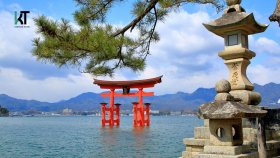
Nearby attractions include Hakone Shrine, known for its iconic torii gate, and the Hakone Open-Air Museum, which blends art with nature. These spots add cultural depth to your visit and are easily accessible from the ropeway route
Hakone Ropeway Itinerary Planning
Planning your Hakone Ropeway itinerary ensures you make the most of your time in Hakone. Whether you have a few hours or a full day, combining the ropeway with nearby attractions creates a well-balanced and memorable travel experience.
Half-Day Plan
A half-day plan for the Hakone Ropeway includes starting from Sounzan, riding to Owakudani, and continuing to Togendai Station. This quick experience allows you to enjoy volcanic views, try local specialities, and take photos. It’s ideal for travellers with limited time who want to experience Hakone’s highlights efficiently.
Full Hakone Loop Itinerary
A full Hakone loop itinerary combines the ropeway with trains, buses, and the Hakone Sightseeing Cruise. This complete route includes stops at Owakudani, Lake Ashi, and other attractions. Many visitors combine this route with a Mount Fuji Private Tour , allowing them to experience both Hakone and Mount Fuji in a single unforgettable day. It offers a comprehensive travel experience, showcasing Hakone’s landscapes and making it one of Japan’s most popular sightseeing routes.
Private and Guided Tours
Private and guided tours provide structured options for exploring Hakone Ropeway and nearby attractions. These tours include transport, expert guides, and curated itineraries, making them ideal for first-time visitors who want a hassle-free and informative experience.
Hakone Ropeway Travel Tips
Planning ahead enhances your experience on the Hakone Ropeway. From navigation to safety, following practical tips ensures a smooth and enjoyable journey through Hakone’s scenic landscapes.
Transport and Navigation Tips
Use the Hakone Free Pass for convenient access to trains, buses, and ropeways. Follow clearly marked routes and allow extra time for transfers. Efficient navigation helps maximise your sightseeing experience and reduces travel stress.
Safety and Comfort Tips
Weather conditions can change quickly in Hakone, so dress in layers and prepare for cooler temperatures. Follow safety guidelines at stations and during the ride. Checking updates for closures or delays ensures a safe and comfortable experience.
Planning Your Visit Efficiently
Start early, prioritise key attractions, and plan your route in advance. Combining the ropeway with nearby experiences like Lake Ashi or Owakudani helps save time. Efficient planning allows you to explore more while maintaining a relaxed travel pace.
Conclusion
Hakone Ropeway offers one of the most scenic and unique travel experiences in Japan. From volcanic valley views to panoramic sights of Mount Fuji and Lake Ashi, it combines adventure and natural beauty. As a key part of the Hakone loop, it is a must-do activity for anyone exploring the region.